
Adjustable Bamboo Tumbler Lid Organizer with Removable Pegs
Source an adjustable bamboo tumbler lid organizer with removable pegs. Confirm lid range, capacity, dimensions, packaging, MOQ and OEM options.
Description
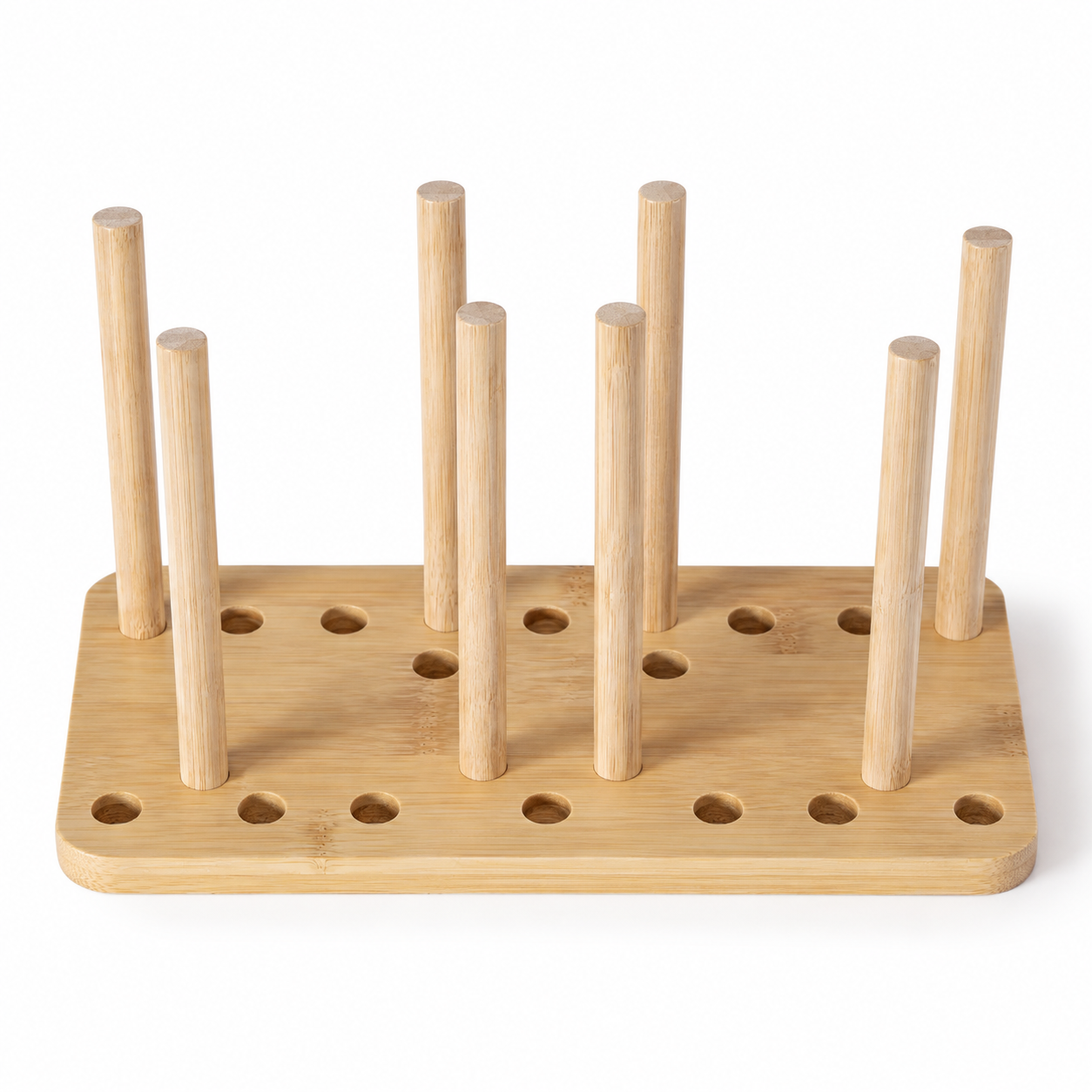
Organize reusable-cup lids by diameter and stack height. This adjustable bamboo tumbler lid organizer uses a rounded rectangular base with a visible grid of holes and upright cylindrical pegs. “Adjustable” refers specifically to moving the removable pegs among approved hole positions; it does not mean that the base expands. The pegs can be positioned around separate lid stacks to create different storage zones. This structure is suitable for B2B kitchen-organization programs, but the images do not establish universal lid compatibility or a fixed capacity. Final material, dimensions, peg quantity, hole layout, peg connection, lid count, finish and packaging must follow the approved BOM, drawings and pre-production sample.

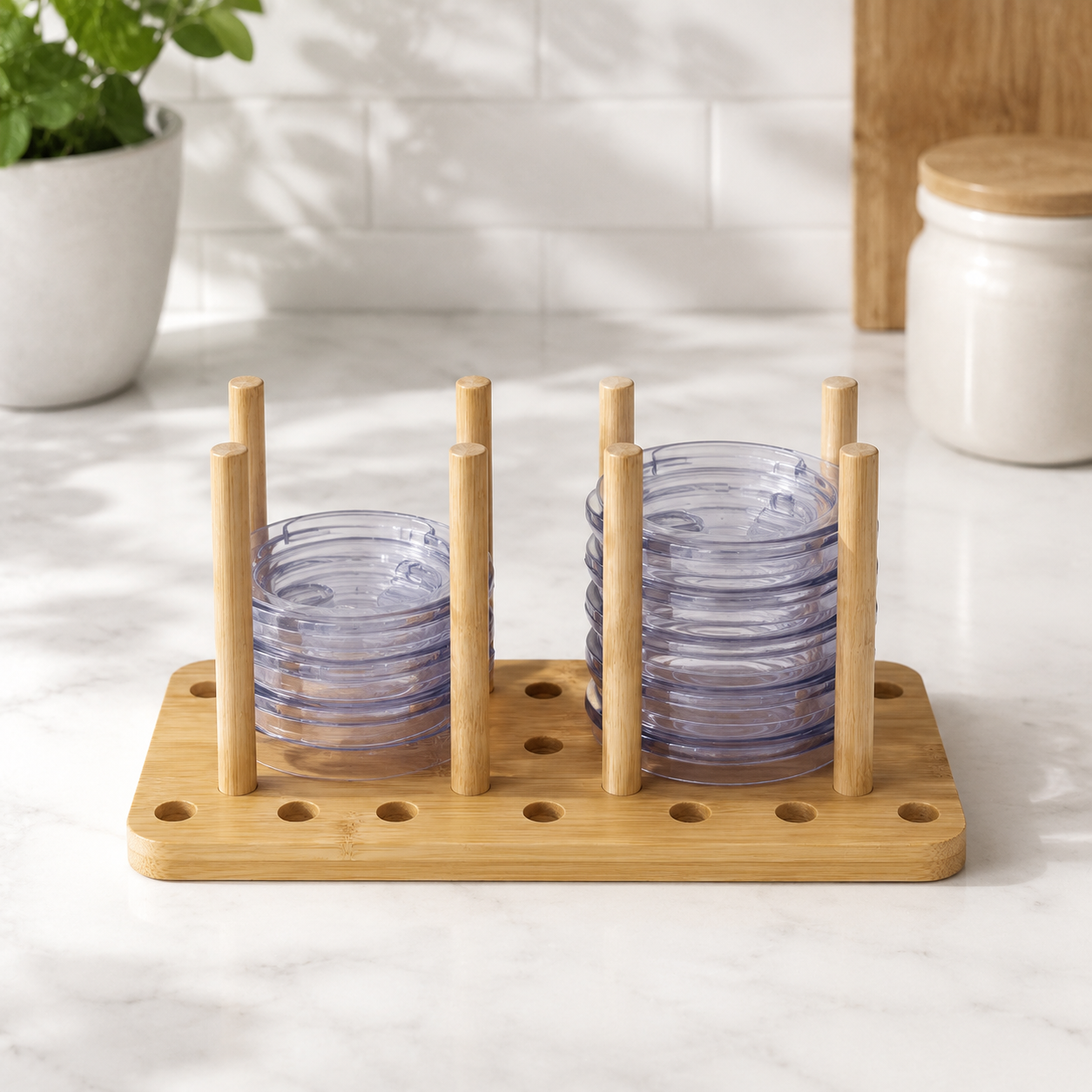
The gallery shows clear round lids stored vertically between pegs on a countertop and inside a cabinet. Its broad size and quantity statements are test targets, not specifications. Capacity changes with diameter, rim profile, thickness, protrusions and stack height. Validate the buyer's lid assortment before approving retail copy.
For a coordinated drinkware-storage range, buyers can compare this rack with our bamboo water bottle storage rack. For wider kitchen organization, see the expandable bamboo drawer organizer. Each product has a separate function, specification and item number.
Visible Product Structure
The clean gallery view shows a low rectangular platform with rounded corners. Multiple drilled positions are arranged across the upper face. Upright round pegs occupy selected holes and surround two example stacks of different diameters. Unused holes remain visible, indicating that the layout can be changed by moving pegs. The exact number of supplied pegs, usable hole positions and approved configurations still require BOM confirmation.
The peg-and-hole approach supports more than one lid stack, but not every hole combination is approved. Spacing should limit movement while leaving retrieval clearance. The instruction sheet should show validated layouts for the target assortment.
Components to Define
- One hole-grid base, with final material and construction specified.
- A confirmed quantity of upright pegs, identified by part number.
- Any sleeves, inserts, feet, pads, plugs or connectors required by the design.
- An approved layout guide for the intended lid groups.
- Retail packaging, labels and user instructions listed separately.
Tumbler lids shown in the photographs are display items and are not assumed to be included.
Reference Specification for Quotation
| Specification Item | Current Reference | Required Approval |
|---|---|---|
| Product type | Vertical organizer for stacked tumbler lids | Confirm intended lid category and sales channel |
| Base form | Rounded rectangular hole-grid platform shown | Approve dimensions, hole pattern, thickness and tolerances |
| Peg system | Removable upright round pegs shown in selectable holes | Confirm quantity, diameter, length, connection and permitted layouts |
| Main material | Bamboo appearance and product positioning | Confirm species, grade, base construction and peg material in the BOM |
| Capacity | No universal count confirmed | Validate by lid family, diameter, thickness and stack height |
| Compatibility | Several example diameters are presented visually | Approve a lid matrix and layout guide |
| Finish | Light bamboo tone shown | Approve finish system, color range and care method |
| Use location | Countertop and cabinet scenes shown | Confirm required clearances and intended indoor environment |
| Packaging | Not established | Approve pack-out, protection, artwork and carton details |
Lid Compatibility and Capacity Planning
Tumbler lids differ in more than outside diameter. Raised drinking spouts, straw tabs, sliding closures, handles, seals and projecting rims can affect how they stack. Some lids nest closely, while others create greater height per piece. A useful compatibility statement should therefore identify the exact lid models or a dimensional envelope, not simply small, medium and large.
Build a lid matrix for the target market. Record outside diameter, maximum protrusion, total thickness, nesting thickness, rim shape and stack orientation. If a gasket or loose closure changes the profile, include it in the sample. Test each group in the proposed peg layout, then test mixed groups if the product will be marketed for mixed storage.
Suggested Fit Evaluation
- Approve the reference lids and record their critical dimensions.
- Select a peg layout from the controlled instruction drawing.
- Insert the pegs using the approved method and check seating.
- Load the planned lid quantity and observe stack alignment.
- Remove and replace lids without lifting or dislodging other components.
- Repeat after the required peg-removal and use cycles.
The final capacity claim should name the reference lid type and layout used in testing. If different lid families produce different counts, present a range or separate examples supported by test records. The lifestyle image below is illustrative: the lids are display props, and their number does not establish a rated capacity.

Countertop, Cabinet and Pantry Applications
The upright format can be considered for kitchen countertops, shelves, pantry storage and cabinets with sufficient height. It can help separate lid groups by diameter, product family, color or user. Cabinet suitability depends on the assembled height, lid-stack height, shelf depth and door clearance. Do not describe it as a drawer organizer unless the selected configuration has been measured and tested for that drawer.
Retailers may place it near reusable drinkware or kitchen storage. Shared-use programs should define the approved lid assortment and cleaning process. Instructions should explain level placement, loading, peg layout and care.
Peg Placement and User Assembly
The images support a removable-peg concept, but they do not confirm whether the connection uses friction, a sleeve, a threaded insert or another method. The drawing must define hole and peg tolerances, insertion depth and the force needed to install and remove each peg. The sample should show whether tools are required.
If pegs ship removed, include a parts list and layout guide. Numbered hole positions can reduce errors. Do not force pegs into unapproved locations. List any hole plugs as components and include them in inspection counts.
OEM and ODM Development
OEM projects can begin with the visible base-and-peg concept and a buyer's lid matrix, branding and packaging brief. Reviewable elements may include base proportions, hole pattern, peg length, approved storage zones, surface color, product marking and retail presentation. ODM development can start from a target tumbler range, cabinet envelope, desired number of lid families and price architecture, followed by layout and engineering review.
Capacity or cabinet-height changes may require a different base, peg pattern or stack height. Material and finish can affect hole tolerances. Control every version with its own BOM, drawings, tests and sample. Learn more on the About our factory page.
Private-Label Presentation
Branding may be reviewed on the base, a paper band, insert, label, sleeve or box. The marking method must suit the approved material and finish. Buyers should provide vector artwork, colors, placement dimensions, barcode data, languages, warnings and legal copy. Approve a physical sample for final mark quality and location.
Packaging and Export Preparation
A component pack should keep pegs together, protect their ends and prevent them from rubbing the base. The base needs edge and surface protection appropriate to the distribution route. The pack should make the component count easy to verify and provide an instruction sheet where user placement is required.
Possible formats include a band, bag, insert, sleeve or box. Validate the unit pack and carton for the required route. Confirm barcode, country-of-origin wording, care text, warnings and shipping marks before printing.
Quality Control Framework
A pre-production sample should establish appearance, dimensions, component count and approved layouts. Inspection can cover material identity, moisture parameters where relevant, base flatness, hole diameter and position, peg diameter and length, surface condition, edge profile, finish, color range, marking, parts count and packaging. Critical holes and pegs may require go/no-go gauges.
Functional checks need written methods, sample quantities and acceptance limits. Depending on the approved design, they may include peg insertion and removal cycles, connection retention, lid-stack alignment, level-surface movement, finish exposure, cleaning cycles and packaging tests. Compatibility checks should use named reference lids or dimensional fixtures. Promotional image text is not an inspection standard.
RFQ Checklist
- Forecast and order quantity by item, finish and destination.
- Lid matrix with model, diameter, thickness, protrusions and stack behavior.
- Required base footprint, assembled height and cabinet clearance.
- Preferred storage zones, peg quantity and validated layouts.
- Material construction, finish and appearance requirements.
- Assembly, care and functional test requirements.
- Logo artwork, retail copy, language and barcode files.
- Unit packaging, carton, shipping marks and distribution route.
- Destination-market documents and inspection plan.
Complete inputs allow the supplier to separate confirmed requirements from visual references and prepare a comparable quotation. Visit our bamboo and wooden products homepage, then use the contact page to send your lid matrix and project files.
Frequently Asked Questions
1. How does the organizer adapt to different lid diameters?
The visual design uses pegs placed in selected holes around each stack. Only layouts verified in the drawing and approved sample should be recommended.
2. How many lids does it hold?
No universal count is confirmed. Capacity depends on lid diameter, nesting thickness, protrusions, stack height, peg layout and cabinet clearance.
3. Does it fit every tumbler brand?
Compatibility must be tested with named lids or a defined dimensional envelope. Do not infer universal fit from the promotional graphics.
4. How many pegs are included?
The final peg quantity must appear on the BOM, packing list and instruction sheet for the selected item number.
5. Are the pegs removable without tools?
The images show removable placement, but the connection and required force need confirmation. Approve instructions using the production sample.
6. Can the rack be used inside a cabinet?
Yes, when the assembled organizer and loaded stacks fit the available height, depth and door clearance. Measure the target cabinet before approval.
7. Can the dimensions, finish and branding be customized?
They can be reviewed for OEM or ODM development. Feasibility and commercial conditions depend on the selected design and order plan.
8. How should the organizer be cleaned?
Care instructions depend on the verified bamboo construction, finish and peg connection. Finalize cleaning and drying guidance after sample testing.
Request a Confirmed Tumbler-Lid Organizer Quotation
Send your reference lids, required storage zones, cabinet envelope, material and finish requirements, branding files, packaging brief, quantity and destination. We can review the adjustable bamboo tumbler lid organizer, identify open engineering points and prepare a project-specific sample and quotation plan. Contact us to discuss your OEM or ODM lid-storage program.
Reviews
There are no reviews yet.