

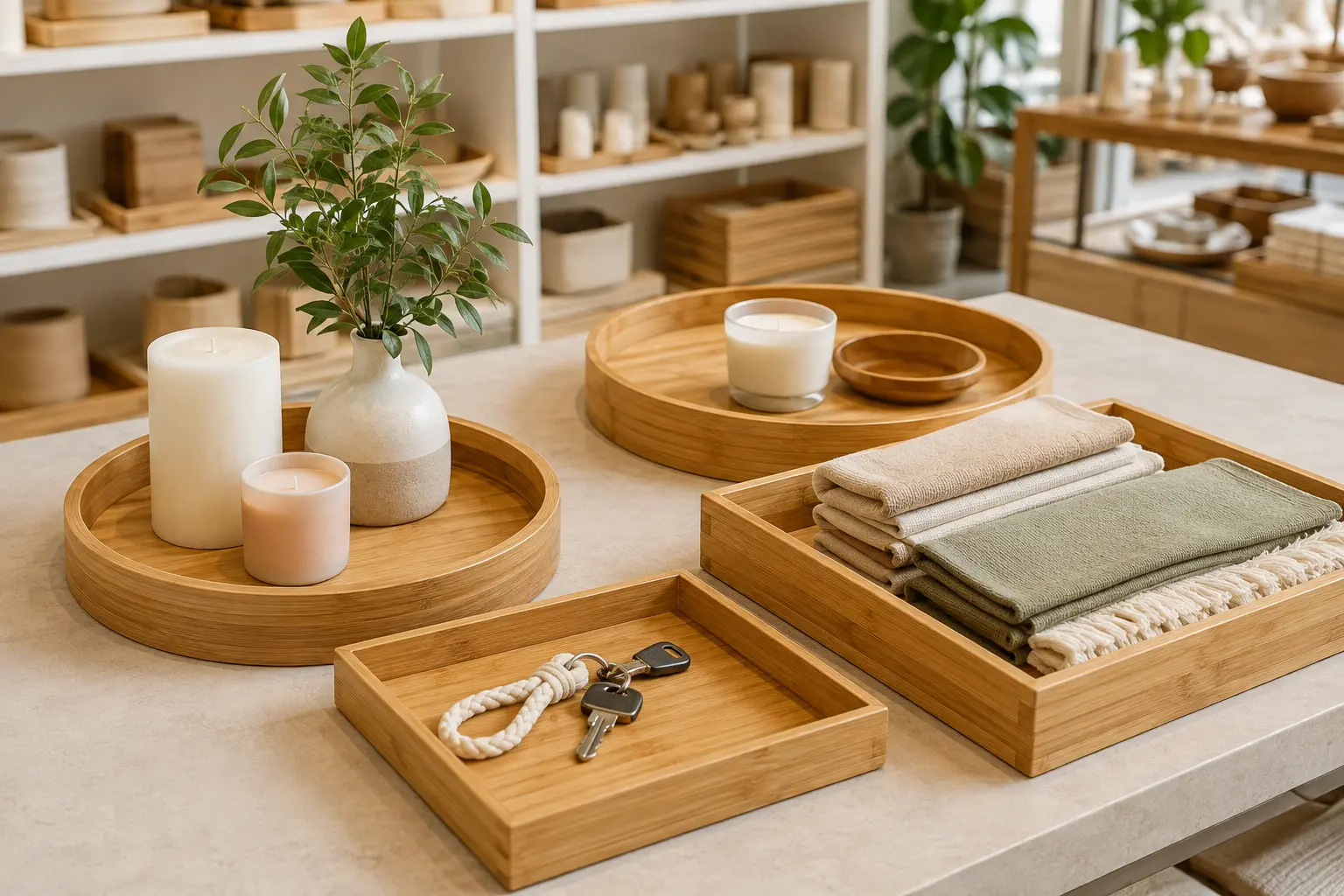
A bamboo decorative tray can do more than hold a few attractive objects. For retailers, homeware brands and hospitality buyers, the same product family can support countertop organization, seasonal displays, spa presentation, office storage and coordinated gift collections. The commercial challenge is deciding which function the tray must perform before selecting its size, material, finish and packaging.
This guide explains how to develop bamboo storage trays for home and retail programs without treating every decorative product as interchangeable. It covers use cases, dimensions, construction, moisture exposure, stacking, quality control and OEM decisions. Buyers who need a broader category overview can begin with our bamboo trays wholesale buying guide.

Where Decorative Bamboo Trays Fit in a Product Range
Decorative trays are often sold on appearance, but B2B purchasing still requires measurable performance. A tray displayed on a coffee table may hold candles, books and small accessories. A retail display tray may be lifted and restocked every day. A spa tray may encounter damp bottles. These products can share a design language while requiring different surface treatments, feet, liners and care instructions.
Home décor and coffee-table collections
A bamboo coffee table tray or bamboo coffee tray usually benefits from a low rim, balanced proportions and a finish that coordinates with neutral interiors. Handles may make rearranging easier, but they also change the silhouette and usable area. Buyers should test the proposed tray with representative books, candles, vases or remote controls instead of approving exterior dimensions alone.
Retail and hospitality display
A bamboo display tray can organize cosmetics, jewelry, tea accessories, packaged food or small promotional products. Define whether the tray will remain stationary, move between shelves or stack when not in use. Retail fixtures may need label holders or dividers, but generic graphics should not be permanently added before the buyer confirms language, artwork and store format.
Countertop and entryway organization
A shallow bamboo storage tray can collect keys, wallets, stationery or personal accessories. For an entryway program, a felt or cork base may help protect furniture. If those components are included, specify their composition, color, attachment method and replacement expectations. “Non-slip” should be treated as a performance requirement with an agreed test surface, not an automatic claim.
Bamboo Tray Organizer Applications by Room
The phrase bamboo tray organizer can refer to many layouts. A useful product brief names the contents, environment and frequency of handling. This prevents a supplier from quoting a visually similar tray that cannot support the intended routine.
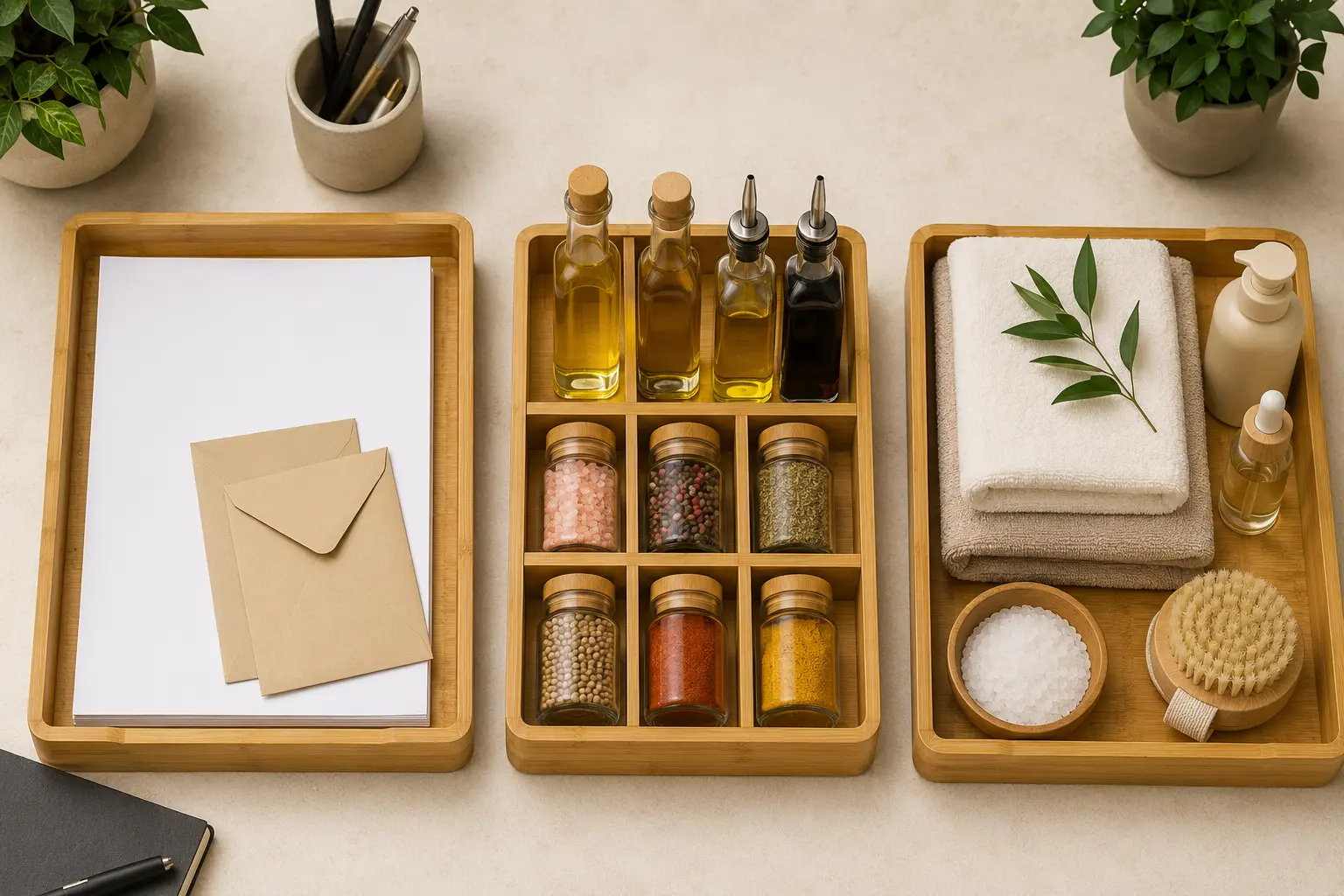
Kitchen and pantry organization
A bamboo kitchen tray may organize oils, spice jars, coffee supplies or packaged snacks. Record the largest bottle diameter, expected load and any risk of drips. A raised rim can contain small spills, but the tray should not be described as waterproof unless the final construction and finish have been validated for that exposure. For serving and direct-food-contact questions, refer to our separate bamboo food serving tray guide.
Multiple bamboo kitchen trays can be sold as a coordinated pantry or countertop set. Nesting saves carton space, while stacking may improve store presentation. The drawing should show clearance between sizes and identify whether surfaces can rub during transport.
Office, paper and document storage
A bamboo document tray, bamboo letter tray or bamboo paper tray needs internal dimensions based on the paper format and any folders or envelopes. A4 and US Letter are different, so an international assortment may need separate variants or a larger common footprint. If trays stack vertically, define the supports, access opening and acceptable movement between levels.
The term bamboo parcel tray can also describe an in-tray for mail or small packages. In that case, the brief should state the typical item size and load. An office organizer does not automatically require the same finish or care instructions as a kitchen product.
Bathroom, spa and salon presentation
A bamboo spa tray or bamboo pedicure tray may hold folded towels, bottles, tools or disposable accessories. Buyers should identify which items are wet, whether disinfectants may touch the surface and how staff will clean the product. Removable washable dishes or protective liners can separate damp contents from the bamboo, subject to the final design and material documentation.
A bamboo sink tray faces repeated splash risk. Drainage clearance, feet and prompt drying can reduce prolonged contact, but care wording must match the tested finish. Do not assume that a natural-looking bamboo surface is suitable for standing water.
Plant and botanical displays
A bamboo plant tray can act as a decorative outer platform for pots, not necessarily as a watertight saucer. State whether each pot has its own waterproof liner and whether condensation may reach the tray. If water containment is required, design around a removable insert or other verified barrier rather than relying on an unsupported “waterproof bamboo” claim.
Choose Shape and Size Around the Display
Rectangular trays suit shelves, paper formats and countertop rows. Round trays create a central display for a coffee table or cosmetics counter. Square trays can simplify modular arrangements, while oval forms soften the appearance of a decorative collection. Our dedicated bamboo tray size and shape guide explains round, rectangular, square, oval, large and small formats in more detail.
A product specification should record total external dimensions, internal usable area, rim height, base thickness, handle openings and feet. For nesting sets, list every size separately. Words such as mini, small and large are merchandising labels, not production dimensions.
| Application | Contents to measure | Important design question |
|---|---|---|
| Coffee-table décor | Books, candle bases, vase or accessories | Is the usable surface large enough after the rim? |
| Retail display | Product footprint, facings and label area | Will staff lift, stack or reconfigure the tray? |
| Kitchen organization | Bottle diameters, jar heights and expected load | How will drips be contained and cleaned? |
| Paper storage | A4, US Letter, folders and envelopes | Are separate regional sizes required? |
| Spa or bathroom | Bottles, towels, tools and removable dishes | Which surfaces may become wet? |
| Plant display | Pot base, liner and combined weight | Is the tray decorative or expected to contain water? |
Material and Surface Options
Decorative trays may use laminated bamboo panels, bamboo frames with inset bases, woven structures or molded fibre composites. These terms should not be treated as identical. Ask for a bill of materials that identifies the base, side walls, adhesive, finish, feet, liner and any metal or textile component. Our bamboo tray materials guide compares solid-looking, framed, woven, fibre and blended constructions.
Natural finishes reveal grain and color variation. Black, white, green or other colored versions may fit a retail palette but require approved color standards and an acceptable appearance range. A coating can change the cleaning method and testing plan. It should not be marketed as food-contact suitable, waterproof or antibacterial without evidence specific to the final product.
Moisture, Heat and Care Instructions
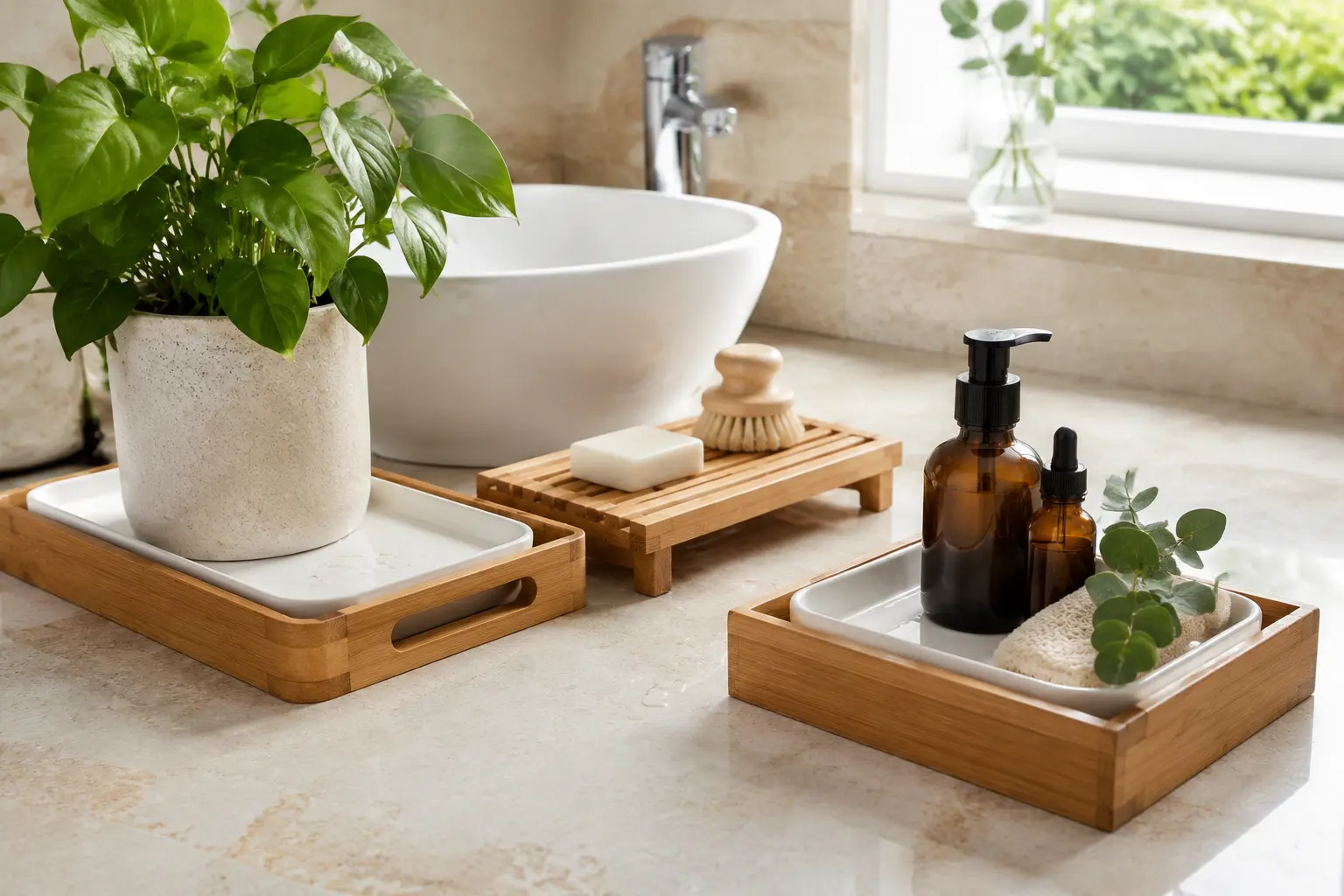
Care instructions should reflect the approved sample and intended environment. Many bamboo trays are best wiped with a soft damp cloth and dried promptly. Soaking, dishwashing, abrasive cleaners and prolonged contact with heat or standing water should be avoided unless the final product has been validated for those conditions.
Hospitality and salon buyers should provide their normal cleaning chemicals and procedures during development. A coating that looks acceptable after a household wipe may respond differently to frequent commercial cleaning. Where direct contact with food, cosmetics or disinfectants is expected, ask a qualified laboratory or compliance adviser to identify the relevant testing for the destination market and final materials.
Stacking, Feet, Handles and Modular Features
Stackable bamboo storage trays need repeatable exterior geometry. Inspectors should check that a stack sits level and can be separated without binding. Nesting sets require enough clearance to prevent abrasion but not so much movement that products knock together during transit.
Small feet can make a tray easier to lift and reduce direct contact with a wet countertop. Confirm foot height, material, color and attachment. Integrated handle openings preserve a clean construction, while attached handles add hardware and inspection points. Dividers can create a modular display but should fit without sharp edges or excessive movement.
Packaging Decorative and Display Trays
Decorative finishes are vulnerable to rubbing, corner impacts and pressure marks. Packaging should be designed around the exact tray rather than selected after production. Common options include tissue or soft protective sleeves, corner protection, molded or folded paper supports, individual cartons and master-carton dividers. The chosen materials and pack-out should be confirmed through an appropriate transport test plan.
For retail sets, specify barcode position, country-of-origin wording, care instructions, component list and any assembly information. A nested set may look compact, but hidden surfaces still need separation. E-commerce programs may require stronger individual packs than store-delivered merchandise.
Quality Control for Bamboo Decorative Trays
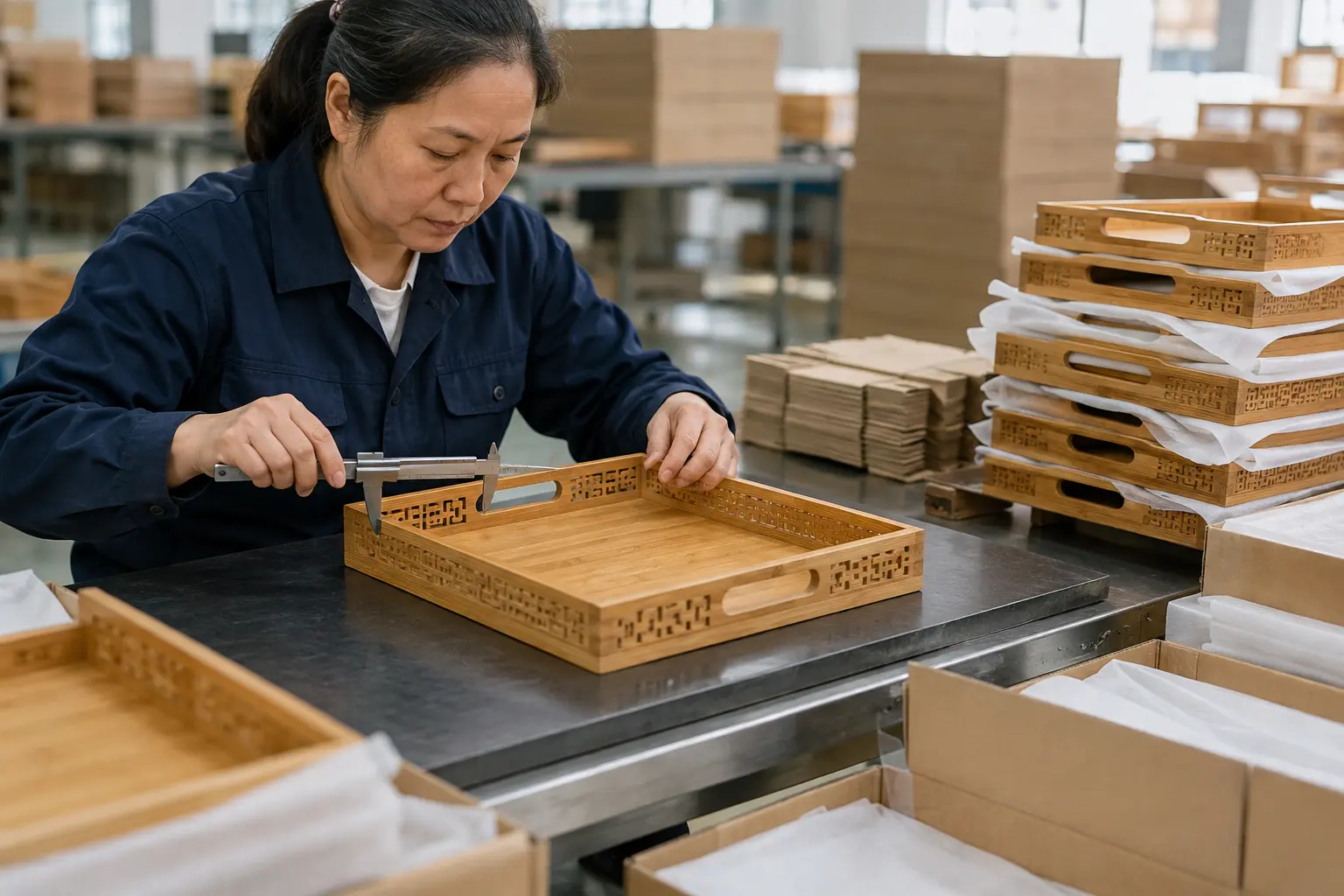
An approved sample and signed specification should define the inspection standard. A practical quality plan can include:
- external and internal dimensions, rim height, thickness and unit weight;
- flatness, rocking and level contact at all feet;
- grain, color and woven variation within the approved appearance range;
- smooth edges, corners, handle openings and divider surfaces;
- joints, adhesive marks, cracks, splinters, gaps and loose fittings;
- coating coverage, gloss, color consistency and visible contamination;
- stacking or nesting fit using multiple production pieces;
- liner, foot, label and hardware attachment where applicable; and
- retail packaging, barcode, carton quantity, marks and transit protection.
If a performance claim is important, define its test method. For example, a target load should include where the weight is placed and how long it remains. Moisture resistance should specify liquid, contact time and acceptance criteria. Vague terms such as durable, premium or waterproof are not inspection methods.
OEM and Private-Label Development
OEM options can include dimensions, edge profiles, handles, feet, dividers, nesting sets, colors, laser marking, printed branding and retail packaging. Feasibility and cost depend on the construction, artwork, quantity and tolerance. A restrained logo may suit décor collections, while retail display trays may need removable brand cards so stores can reuse the product.
Send the intended contents, room, exposure, reference images, dimensional drawing, order quantity, destination market and packaging brief with the request for quotation. This information helps a supplier separate an existing design from a new development and identify which features require drawings, samples or fixtures.
Responsible Sourcing and Documentation
Certification and compliance statements must match the actual material, factory, product scope and transaction. If an FSC claim is requested, confirm the current certificate scope and the chain for the specific order before using labels or marketing wording. The official FSC Chain of Custody overview explains how certified material claims are controlled through a supply chain. A BSCI-related audit concerns a production site and should not be presented as a product safety certificate.
Buyers can learn more about our bamboo and wooden product development, review our China and Vietnam manufacturing information, or browse the wider bamboo and wood kitchenware range. Availability, certification and project details should be confirmed for the specific order.
Frequently Asked Questions
What is the best size for a bamboo decorative tray?
There is no universal best size. Measure the intended objects, leave practical clearance inside the rim and check the total footprint against the shelf, counter or table. Packaging and carton efficiency should be reviewed before the dimensions are frozen.
Can bamboo storage trays be used in bathrooms?
They can be developed for bathroom presentation, but the moisture level, cleaning method and finish must be specified. Raised feet or removable liners may help manage exposure. Do not leave the product in standing water unless the exact design has been validated for it.
Is a bamboo plant tray waterproof?
Not automatically. A decorative bamboo tray should normally sit beneath a pot that already has a suitable watertight saucer or liner. If the tray itself must contain water, that requirement needs a verified barrier, test method and care label.
Can bamboo paper trays fit both A4 and US Letter?
A larger common format may accommodate both, but it can create extra movement or a different visual proportion. Provide the actual paper and folder sizes and decide whether one universal model or two regional models gives the better user experience.
Can decorative bamboo trays be customized in color?
Color development may be possible subject to the material, finish system, quantity and approved standard. Confirm the color reference, gloss, acceptable grain visibility, testing requirements and packaging protection before production.
What should buyers include in a bamboo tray organizer RFQ?
Include the intended contents and room, external and usable dimensions, construction, finish, moisture exposure, feet or liners, stacking requirement, branding, packaging, target quantity, destination market and required tests or documents.
Develop a Decorative Bamboo Tray Collection
A successful decorative or storage tray starts with a clear use case, not a generic catalog name. Define what the product holds, where it sits, how often it moves and what may touch its surface. Then align dimensions, material, finish, packaging and inspection around that use.
Fujian Xianxu Bamboo & Wood Co., Ltd. supports OEM/ODM development for importers, wholesalers, retailers, hospitality buyers and private-label brands. Send our team your tray concept, dimensions, quantity, branding and packaging requirements so we can review feasibility and identify the information needed for sampling and a project-specific quotation.