
By Amy Lv | Source review: September 30, 2026
The new US-China $30 billion tariff framework matters to bamboo and wood buyers, but a headline cannot tell you the duty on a particular cutting board, storage box or chair. The practical question is whether the finished product falls within the relevant import list, whether a reduction has legally taken effect, and which duty measures apply to the shipment.
The September announcements concern recommended future tariff treatment for approximately $30 billion of non-sensitive goods in each direction. USTR describes the recommendations as goods that could receive more favorable treatment in the future. This is a proposed reduction framework, not a new $30 billion tax charge or a blanket exemption for Chinese exports. [1]

What does the US-China “30-for-30” framework mean?
The two lists use 2024 bilateral trade values as their reference: roughly $30 billion of Chinese goods imported by the United States and roughly $30 billion of American goods imported by China. The framework provides for subsequent implementation through each country’s domestic legal processes. It does not supply a final duty rate or an implementation date for an individual product. [3]
MOFCOM states that more than 90% of the selected products are intended to receive relief from the mutually imposed additional tariffs and return to most-favored-nation treatment. The announcement says implementation will follow domestic legal procedures. “More than 90%” concerns the selected goods; MFN treatment does not necessarily mean a zero ordinary tariff. [5]
For purchasing teams, keep three events separate: publication of a recommendation, adoption of an implementing measure, and application of that measure to a particular customs entry. A supplier quotation should identify which event it assumes. A planned shipment should use the rules applicable on its relevant entry date, rather than a rate inferred from a news headline.
Which product categories are covered by the recommendations?
The White House publishes separate U.S. and China import lists. Direction matters: an item on China’s list concerns American goods entering China, not Chinese goods entering the United States. [2]
Chinese goods imported into the United States
The U.S. recommendations contain 77 numbered lines. Check each provision and any “Ex-Out” restriction. [4]
| General group | Selected examples |
|---|---|
| Household and textile products | Plastic tableware; blankets, household linen and curtains |
| Appliances and personal-use products | Selected kitchen appliances, grooming appliances and flashlights |
| Children’s products and soft furnishings | Specified child seats and enclosures; sleeping bags and cushions |
| Games, seasonal goods and recreation | Toys, table games, Christmas ornaments, selected sporting and fishing goods |
| Other selected goods | Fireworks, garden umbrellas, artificial flowers, certain brushes and vacuum vessels |
American goods imported into China
China’s list contains 1,619 tariff lines. Alongside broader agricultural, personal-care, medical, coal and other categories, it includes specific wood-material lines. The examples below are Chinese import codes, not U.S. HTS codes. [6]
| Chinese import code | Selected listed material |
|---|---|
| 44039100 | Oak logs |
| 44079100 | Oak wood over 6 mm |
| 44079300 | Maple wood over 6 mm |
| 44079400 | Cherry wood over 6 mm |
| 44079500 | Ash wood over 6 mm |
The business effect of these two directions is different. A concession on a finished product can affect the American buyer’s import cost. A concession on American timber entering China can affect a Chinese manufacturer’s material purchasing cost. The second route does not automatically reduce U.S. import duties on the finished product.
Are bamboo boxes, cutting boards, baskets and chairs included?
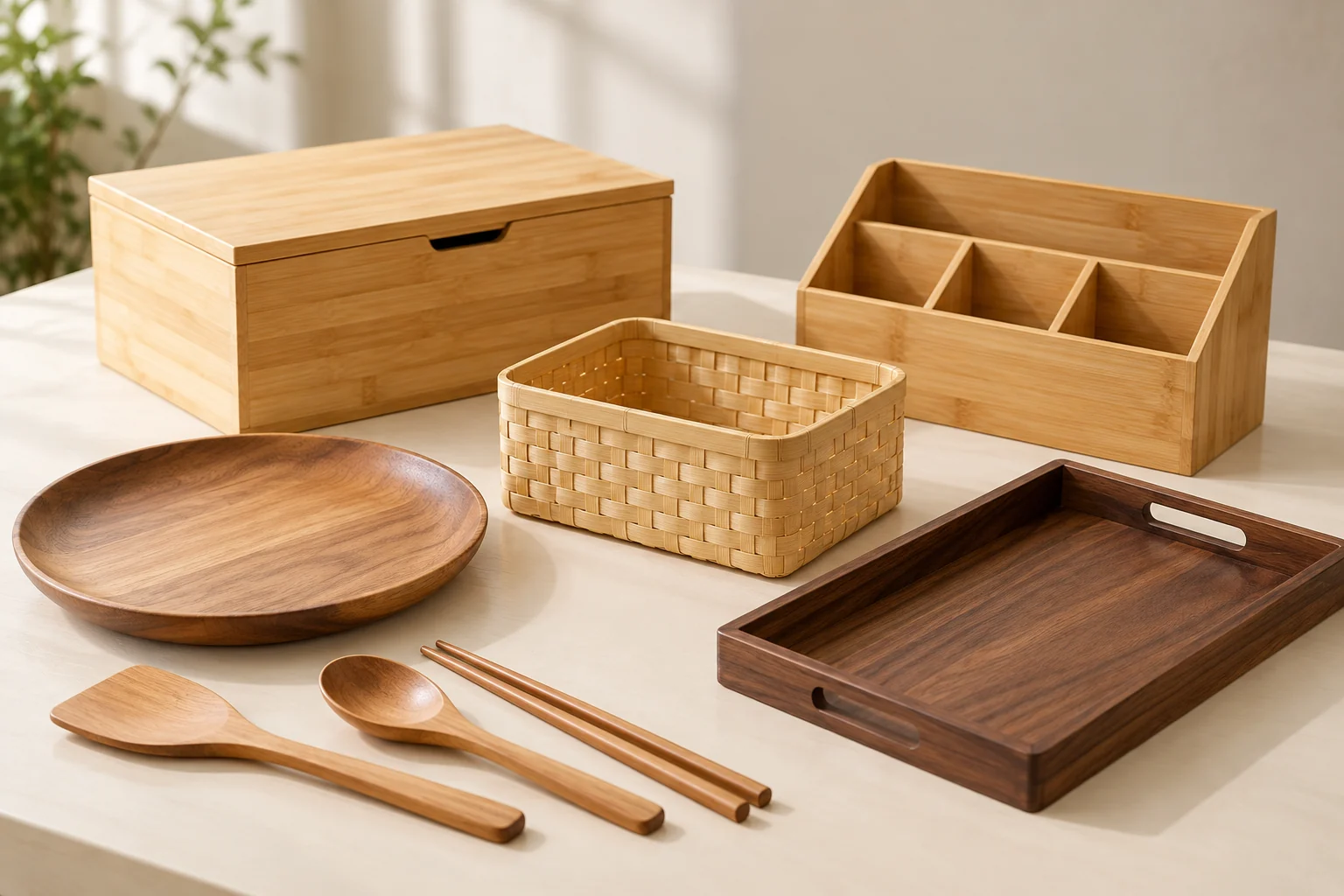
The published U.S. list contains no Chapter 44 or Chapter 46 tariff lines. Its Chapter 94 child-product lines cover specified seat and enclosure designs, rather than ordinary bamboo/wood furniture. Ordinary bamboo or wood boxes, boards, baskets and adult furniture therefore cannot be declared covered simply from their material or household use. [4]
| Product to review | Relevant point in the U.S. recommendations |
|---|---|
| Wooden Christmas ornaments | 9505.10.15 is explicitly listed |
| Bamboo/wood toys and puzzles | 9503.00.00 has an Ex-Out excluding RF, Wi-Fi, Ethernet or Bluetooth-enabled items |
| Wooden table/parlor-game articles | 9504.90.90 may warrant a classification review |
These examples show why function can matter as much as material. A wooden seasonal ornament, a wooden storage organizer and a wooden game may look similar in a product catalogue but perform different functions. A product name such as “bamboo gift” is too broad to establish eligibility. Review the actual construction, intended use and complete tariff description.
Mixed-material products also need individual review. Describe a steel insulated vessel with a bamboo exterior as the complete vessel, rather than treating its decorative shell as the whole product. Record the principal components, insulation, capacity, lid and intended use. A bamboo finish does not by itself establish either a tariff classification or a reduced rate.
How buyers should evaluate bamboo and wood import costs
A lower duty, if implemented for a qualifying item, changes one part of landed cost. Product price, freight, insurance, port charges, inland transport and other applicable costs remain separate. Importers should compare quotations on the same delivery basis and identify which charges are included. Otherwise, a cheaper factory price can be confused with a cheaper delivered product.
Start with a specification sheet rather than a keyword list. Include the item’s dimensions, materials, assembly method, primary function and packaging configuration. Photographs should show the whole item and any features relevant to its use. A catalogue description written for marketing may leave out details needed for a classification review.

Prepare a duty comparison that can be updated
Use one row per SKU and keep the rate inputs editable. Maintain a current-rule scenario and a proposed-relief scenario, clearly marking the latter as conditional. This makes it possible to assess an opportunity without promising that an announced reduction already applies. Keep freight and product-price assumptions constant when isolating the effect of a duty change.
| Comparison field | What to record |
|---|---|
| Product and origin | SKU, specification version and country-of-origin evidence |
| Classification | Full tariff code and any applicable restricted description |
| Duty assumptions | Applicable ordinary and additional measures, with their legal basis |
| Timing | Planned entry date and the implementing notice relied upon |
| Commercial terms | Delivery basis, included charges and quote validity |
Do not use an average tariff quoted for all bilateral trade as a bamboo-product rate. Different products can face different legal measures. Depending on the applicable rules, ordinary duties, Section 301 or other additional duties may require separate consideration. A proposed concession should not be treated as removing every duty layer unless the implementing measure says so.
Could American timber tariff relief benefit manufacturers in China?
There is a possible indirect cost channel for factories using American hardwood. If China implements relief for a qualifying U.S.-origin material, a purchaser sourcing that material may face a lower import-duty cost. That is a conditional commercial inference, not an announced saving for every bamboo and wood manufacturer.
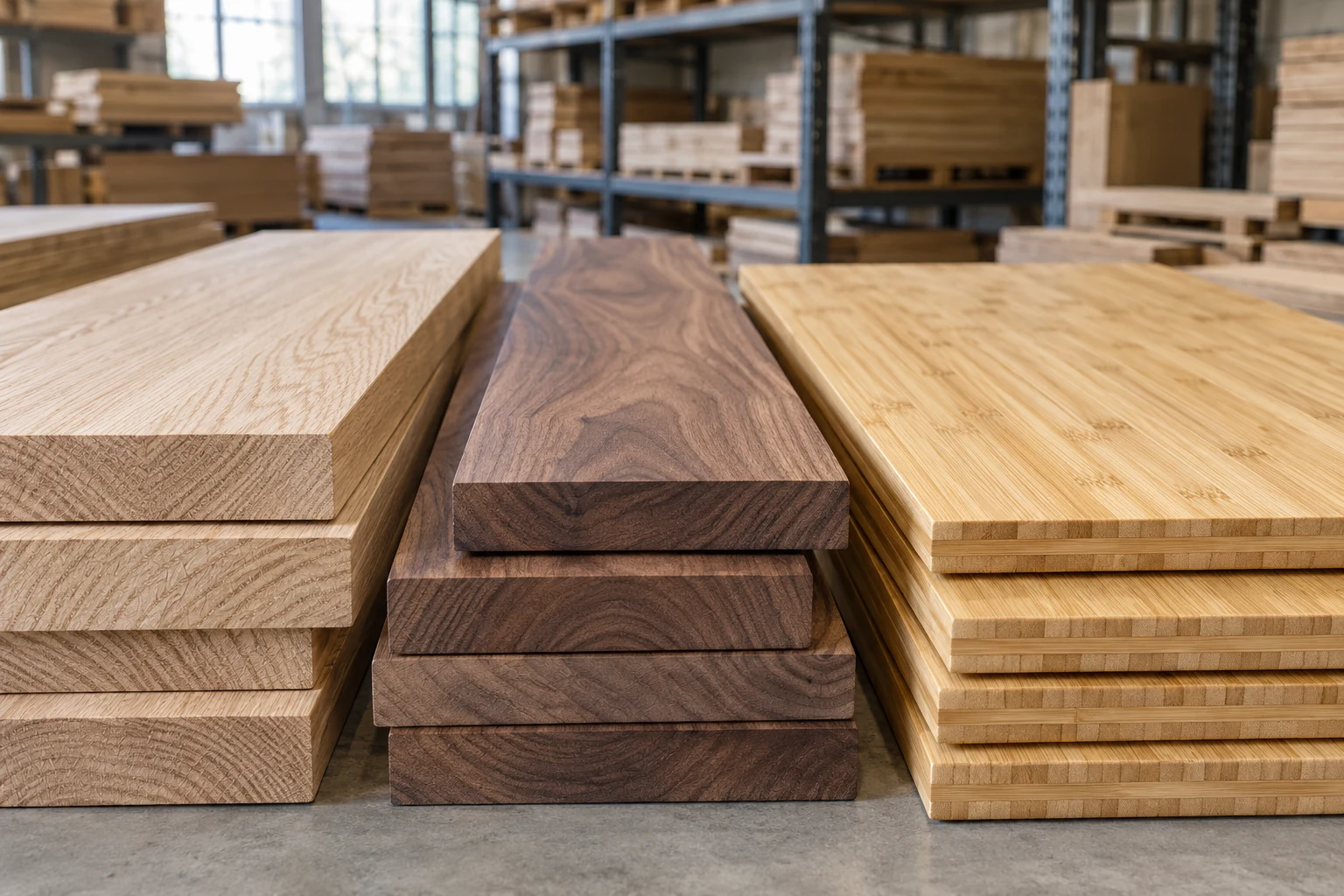
The effect depends on the actual supply chain. A factory that uses domestically sourced bamboo may have little direct exposure to American timber duties. A factory buying oak or maple through a distributor may see a benefit only if the distributor passes through the change. Existing inventory and contracts can also delay any adjustment in material prices.
For a product combining bamboo and wood, separate the material purchase from the finished-product import. Ask which wood species and origins the quotation assumes, whether substitutes are acceptable, and how a material-price revision would affect an approved sample. A different species can alter grain, color, machining behavior and the buyer’s product specification.
Do not budget for a universal price reduction. Obtain a revised quotation against the same drawings, finish, quality requirements and order terms. If a supplier changes a material at the same time as its price, the new quotation needs a technical comparison as well as a commercial one.
A practical preparation checklist for bamboo and wood orders
- Build a SKU file. Keep drawings, photographs, component descriptions and intended-use information together. Avoid relying on an umbrella label such as household goods.
- Check the correct import direction. Use the U.S. list for Chinese products entering the United States and the China list for American products entering China.
- Review the entire provision. Confirm the classification and any Ex-Out conditions with the importer’s customs specialist. Material names alone are insufficient.
- Confirm operative instructions. Record the applicable notice, effective date and covered entries before applying a proposed reduction to a purchase calculation.
- Align the quotation. State the specification, delivery basis, validity period and responsibility for duty changes. Do not silently replace the agreed cost assumptions.
- Preserve product requirements. Continue checking relevant testing, labeling, packaging and documentation needs. A tariff change should not be assumed to remove them.

How this framework should influence sourcing decisions
The most useful response is to improve the information behind an order. Buyers with accurate specifications and documented cost assumptions can react faster when operative measures appear. Buyers who depend on a broad product description may need to repeat their classification and pricing work when a shipment is already scheduled.
Keep product suitability central to supplier selection. Assess sample quality, dimensional consistency, finish, packaging and communication alongside cost. An anticipated duty saving cannot compensate for a specification mismatch or damaged goods. Changes to product construction should be approved for commercial and technical reasons, then reviewed for their customs consequences.

For custom bamboo and wood purchasing discussions, share the intended product, market, dimensions, material preferences, finish and packaging needs with Fujian Xianxu Bamboo & Wood Co., Ltd.. A clear specification supports a more useful quotation and provides the product information buyers need for their own import assessment.
Frequently asked questions
Does “$30 billion” mean a 30% tariff or a $30 billion tax?
No. It describes the approximate trade value used for each direction of the framework. A shipment’s actual duty still depends on its applicable classification, origin, entry timing and legally operative measures.
Can I assume a lower rate because my product appears to match a list?
Treat a possible match as a reason to review the product. Verify the complete provision, restrictions and implementing instructions before applying a reduced rate to an entry or customer quotation.
Will bamboo and wood products become cheaper automatically?
No automatic price change follows from a recommendation. Any eventual effect depends on product eligibility, sourcing, contracts and the costs included in a quotation. Ask for a documented comparison using the same specification and delivery terms.
What should an importer do while implementation remains unconfirmed?
Keep the current-duty calculation available, prepare a conditional alternative, and monitor the relevant official implementing notices. Recheck the assumptions when the shipment schedule or product specification changes.
Official sources and update basis
This article reviews the September 27–28, 2026 announcements and accompanying lists as of September 30, 2026. Those published framework documents do not provide the operative date or full line-by-line implementation instructions. Confirm subsequent notices before using a new rate for an actual customs entry.