

Expandable Bamboo Bathtub Tray with Foldable Center
Source an expandable bamboo bathtub tray with a foldable center, book/tablet stand and accessory sections. Ask about size, finish, packaging, MOQ and OEM.
Description
Develop a bath-accessory tray around a verified tub-fit specification. This expandable bamboo bathtub tray is positioned as a bridge-style caddy for placement across compatible bathtub rims. The reference structure visibly combines sliding end extensions with a true center hinge for folding storage. It can be evaluated by importers, retailers, hospitality suppliers and private-label bathroom brands. Exact construction, dimensions, bamboo structure, surface finish, working load, moisture performance, contact components, accessories and packaging must follow the final bill of materials, controlled drawings and approved pre-production sample.

A bath caddy works as a system with the bathtub, not as an isolated object. Rim width, inside span, wall curvature, tub profile and intended items can all affect fit and balance. Buyers should therefore provide target-tub measurements and required use scenarios before sampling. Compare this combined folding-and-sliding design with our adjustable black bathtub tray and freestanding adjustable-height bathtub tray table. Each has a separate structure and specification.
Combined Expandable and Foldable Structure
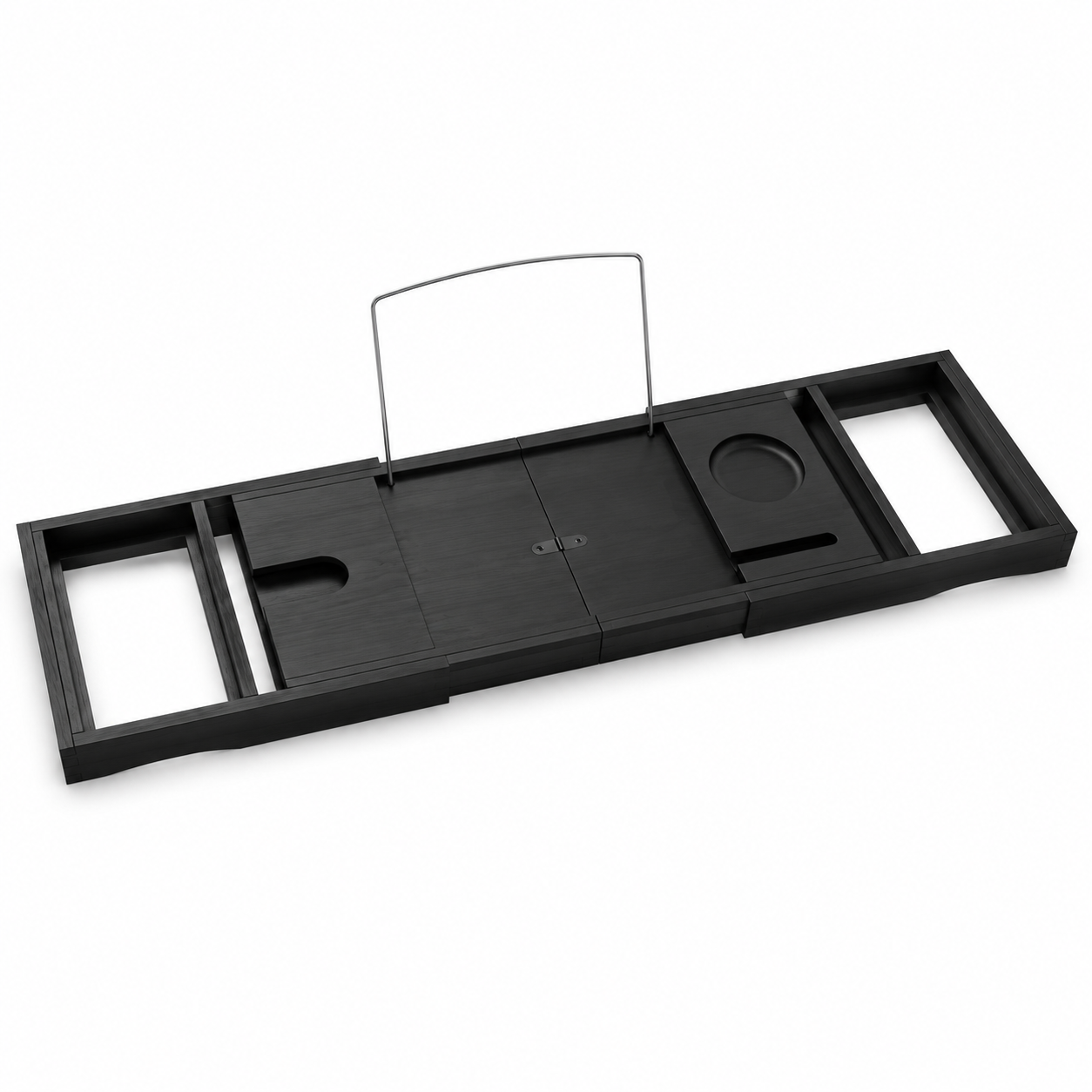
The reference design combines two distinct mechanisms. Its left and right support sections slide outward to change the span across a bathtub, while a center hinge allows the two main halves to fold together for storage. The approved drawing should identify rail travel, hinge construction, locking or stop features, open and folded dimensions, hand-clearance areas, fasteners and assembly status.
The visible mechanism establishes the design direction, but it does not establish tolerances or performance. Samples should be extended, retracted, folded, opened and placed on representative tubs to check alignment, panel travel and user access. If parts can pinch fingers, move unexpectedly or separate during adjustment, the design and instructions need review. Any stop, hinge, rail, screw, dowel, adhesive, pad or metal component must appear on the BOM.
Key Structural Questions
- Does the tray fold, slide, telescope or combine multiple motions?
- What are the closed, open and usable platform dimensions?
- How is adjustment limited, and can sections be removed unintentionally?
- Which surfaces contact the bathtub rims?
- Are pads, strips or other contact components required?
- Does the unit ship assembled, partly assembled or flat packed?
- What use and care instructions are required for the approved construction?
Reference Specification for Quotation
| Specification Item | Current Position | Approval Requirement |
|---|---|---|
| Product type | Bridge-style bathtub caddy tray | Confirm intended use and target sales channel |
| Adjustment method | Center folding plus sliding end extensions shown | Approve mechanism drawing, stops, travel and physical operation |
| Main material | Bamboo positioning from current name | Confirm species, grade, panel construction and bonding in the BOM |
| Dimensions | Not confirmed | Approve closed, open, usable and packed dimensions with tolerances |
| Tub fit range | Not confirmed | Define rim support, span range and excluded tub profiles |
| Surface finish | Not confirmed | Approve finish system, appearance and care method |
| Working load | No rating established | Define test method, load distribution and acceptance limit |
| Accessories | Not confirmed | List every insert, holder, pad and loose part |
| Packaging | To be developed | Approve unit pack, protection, artwork and carton specification |
Bathtub Fit and Compatibility
Compatibility should be defined with measurements rather than a general “fits most tubs” statement. The caddy needs sufficient support on both rims while keeping its usable center area in the intended position. Buyers should record the minimum and maximum inside span, rim width on each side, rim slope, wall obstruction, faucet location and any curved surface that may reduce contact.

Freestanding, alcove, inset and irregular tubs can have different geometry. A sample that fits one model may not fit another with the same nominal width. Include a consumer measurement diagram and conditions outside the approved fit range.
Recommended Fit Evaluation
- Measure the target tub at the exact position where the caddy will sit.
- Check the support area on both rims and note slope or curvature.
- Adjust the sample according to the proposed instructions.
- Place the intended item assortment across the platform.
- Evaluate balance, movement, deflection and access under the defined test method.
- Repeat with representative minimum and maximum tub profiles.
The tray is an organizer, not a seat, step, handhold or body-support device. Warnings should state those limitations clearly.
Intended Uses and Item Layout
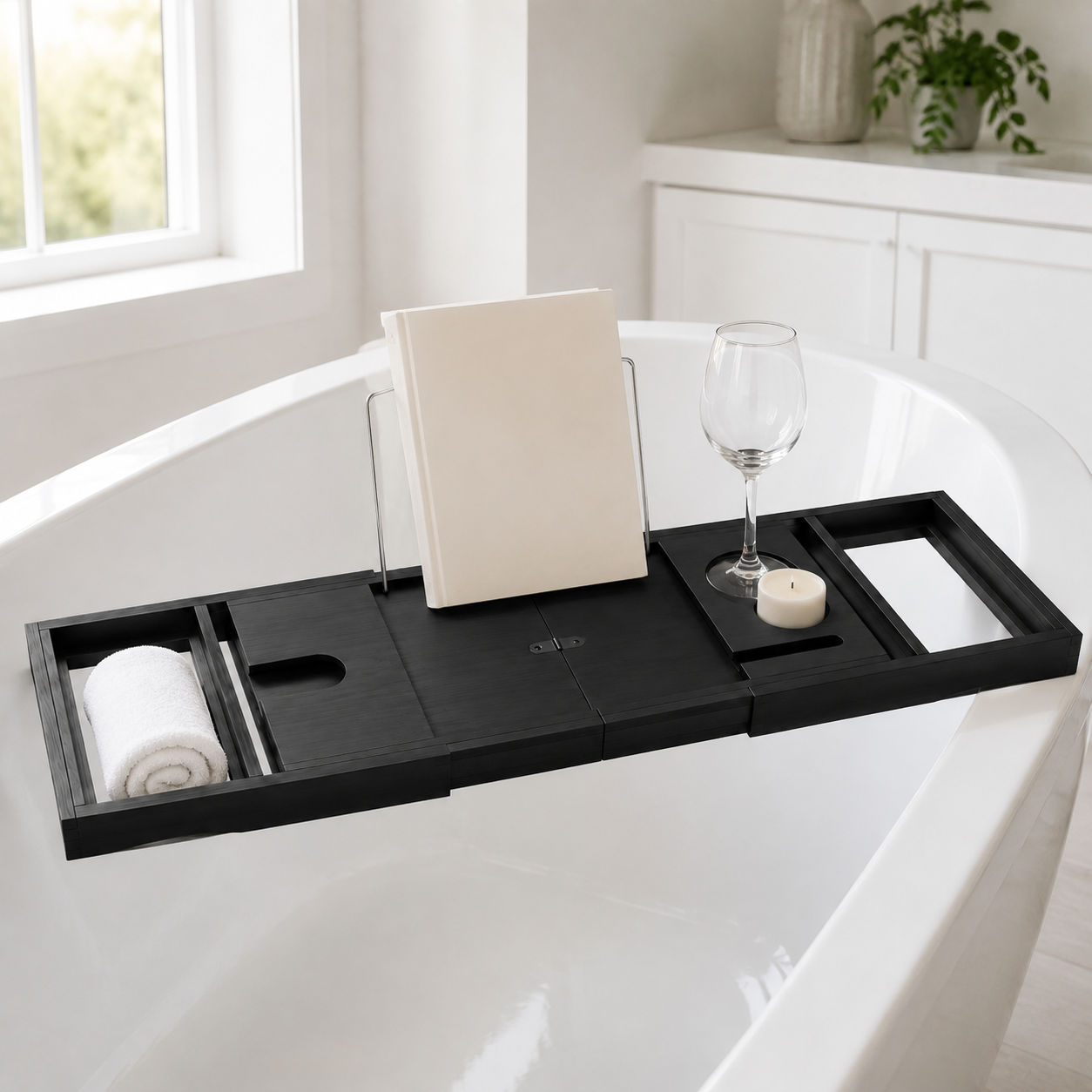
The reference layout visibly includes a raised book or tablet support, a stemmed-glass slot, a narrow device groove, a round recess and shallow accessory sections. Buyers may develop the tray for selected bath items such as soap, folded cloths, grooming products, a closed beverage container or reading material. Final dimensions and intended uses for every recess or support must appear on the approved drawing; photographed props are not included unless listed on the packing specification.
Item placement matters. Tall, fragile, hot, open or electronic objects can create additional risks around bath water. The user guide should specify intended items, prohibited uses and the tested working load. Buyers are responsible for reviewing warnings and consumer instructions for the destination market. Lifestyle staging should match the validated configuration and should not imply unattended or unsafe use.
Material, Finish and Care Confirmation
The bamboo description must be supported by a material specification covering grade, strip or panel construction, bonding method, moisture parameters and visible appearance range. If other wood, board, textile, silicone, polymer or metal parts are used, each should be identified separately. The finish specification should state application method, target appearance and inspection criteria.
Bathroom exposure can involve splashes, condensation, toiletries and temperature changes. A general bathroom image does not verify surface performance. The buyer should define exposure tests, cleaning agents, cycle counts and acceptance limits appropriate to the intended market. Care instructions should be written after those checks and the approved build are complete.
OEM and ODM Development
OEM programs can start with a selected reference structure and the buyer's dimensions, branding and packaging brief. Reviewable elements may include overall span, folding or sliding layout, platform arrangement, side panels, accessory positions, color direction, logo placement and unit-pack presentation. ODM development can begin with target-tub profiles, consumer use cases, retail price architecture and distribution channel, followed by engineering review.
Custom features may change balance, tooling, material use, packed volume and inspection requirements. A cup recess for one container may not suit another. A deeper slot may affect panel strength or folding clearance. Each approved version should receive an item number, controlled drawing, BOM and artwork revision. Learn about development scope on the About our factory page.
Private-Label Options
Brand presentation may be developed through an approved product mark, paper band, insert, hangtag, label, sleeve or color box. Buyers should provide vector artwork, brand colors, placement dimensions, barcode data, language versions, warnings and legal copy. The marking process must suit the confirmed finish. Digital artwork approval controls layout; a physical sample controls the commercial appearance.
Packaging for Folding and Sliding Components
Packaging should protect panel edges, adjustment mechanisms, contact surfaces and loose accessories while controlling movement in transit. If the product folds, the pack must prevent sections from rubbing or opening unexpectedly. If it slides, spacers or restraints may be needed to hold the approved shipping position. Fasteners, pads, inserts and instructions should be counted during pack-out.
The final solution may use paper, board, a bag, molded protection, dividers or a box. Validate the complete unit pack and master carton using the required handling method. Confirm barcode placement, country-of-origin wording, warnings, care instructions and shipping marks before printing.
Quality Control Framework
A pre-production sample should establish appearance, dimensions, mechanism operation and pack-out. Inspection can review material identity, moisture parameters where relevant, construction, panel flatness, joints, finish, edges, mechanism travel, stops, fasteners, contact parts, accessory count, marking and packaging. Dimensional checks should include the closed, open and critical support measurements.
Functional evaluation must use written methods. Depending on the approved design, the control plan may cover repeated opening and closing, distributed and point loading, movement on representative rims, deflection, finish exposure, cleaning cycles and packaging tests. Specify sample quantity, fixtures, duration and acceptance limits. An image claim or general adjective is not an inspection standard.
RFQ Checklist
- Forecast and order quantity by item, finish and destination.
- Target-tub measurement drawings and required fit range.
- Preferred folding, sliding or combined adjustment method.
- Required open, closed, usable and packed dimensions.
- Material construction, finish and appearance requirements.
- Intended items, accessory list and working-load test method.
- Logo artwork, retail copy, warnings, language and barcode files.
- Unit packaging, carton, shipping marks and distribution route.
- Destination-market documents, testing and inspection plan.
Complete inputs make it easier to identify engineering gaps and prepare a comparable quotation. Visit our bamboo and wooden products homepage for the broader range, or use the contact page to send your project brief.
Frequently Asked Questions
1. Does the caddy fold or expand?
The reference design does both: its end sections slide outward, and its main body folds at a center hinge. Final rail travel, stops, hinge details and dimensions must still be confirmed by drawing and sample.
2. What bathtub sizes does it fit?
No universal fit range is stated. Provide target-tub measurements and approve minimum and maximum support conditions through physical evaluation.
3. What are the product dimensions?
Dimensions are not confirmed here. Request controlled drawings showing closed, open, usable, support and packed measurements with tolerances.
4. What bamboo construction is used?
The species, grade, strip or panel structure, bonding method and moisture criteria must be identified in the final BOM.
5. How much weight can the tray carry?
No load rating is provided. Define the intended item arrangement, test fixture, load distribution, duration and acceptance limit before making a claim.
6. Are holders or accessories included?
Only components on the signed packing list are included. Confirm every recess, insert, rest, pad and loose accessory for the selected item number.
7. Can the dimensions, finish and branding be customized?
They can be reviewed for OEM or ODM development. Feasibility and commercial conditions depend on the requested structure, production route and order plan.
8. How should the caddy be cleaned and stored?
Care instructions depend on the verified material, bonding and finish. Approve cleaning, drying and storage guidance after the required sample tests.
Request a Confirmed Bathtub-Caddy Quotation
Send target-tub drawings, mechanism requirements, dimensions, material and finish requirements, item layout, branding files, packaging brief, quantity and destination. We can review the expandable bamboo bathtub tray, define the open engineering points and prepare a project-specific sample and quotation plan. Contact us to discuss your OEM or ODM bathroom-accessory project.
Reviews
There are no reviews yet.