

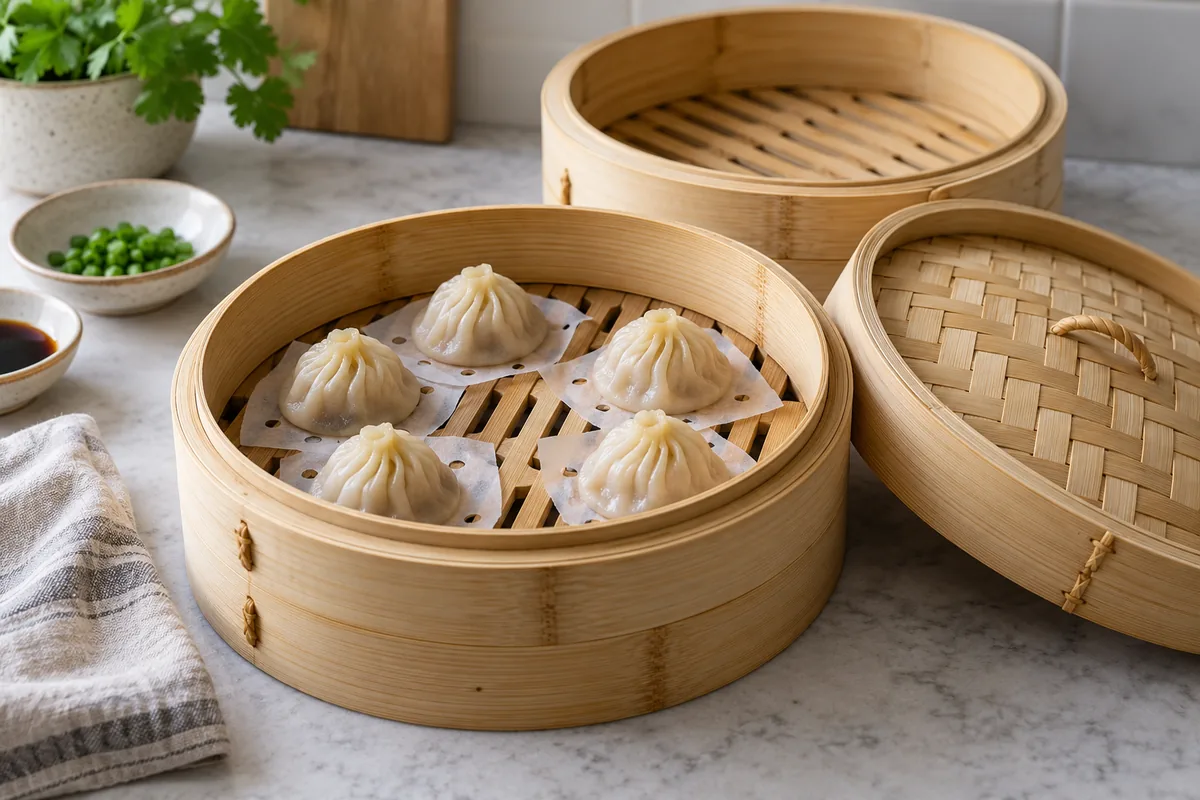
Searching for a bamboo cooking basket can bring up round dim sum steamers, cone-shaped rice baskets and decorative woven containers. They may share a natural appearance, but their construction and intended use differ. Buy the tool for the dish you want to make, then check that it works with your cookware.
A purpose-built steamer should come with cooking and care instructions. A basket described only as storage, decoration or serving ware should not be placed over heat simply because it is made from bamboo.
Understand the main cooking basket designs
| Design | Typical buying purpose | Key question |
|---|---|---|
| Round tiered bamboo steamer | Dumplings, buns, momo and other specified steamed dishes | Does the base fit the recommended pan or pot? |
| Cone-shaped sticky-rice steaming basket | A compatible sticky-rice cooking setup | Is the basket matched to its steaming pot? |
| Small lidded serving basket | Presenting cooked rice or food | Is it approved for cooking, or serving only? |
| Decorative woven basket | Display and household organisation | Does the maker expressly permit heat and food use? |
Check the stated material as well as the product name. ImportFood's Thai sticky-rice steaming basket, for example, is described as handwoven from natural reeds. Products found through bamboo-related searches are not necessarily bamboo. This matters when comparing specifications or ordering replacements.
Measure the cookware before choosing the steamer
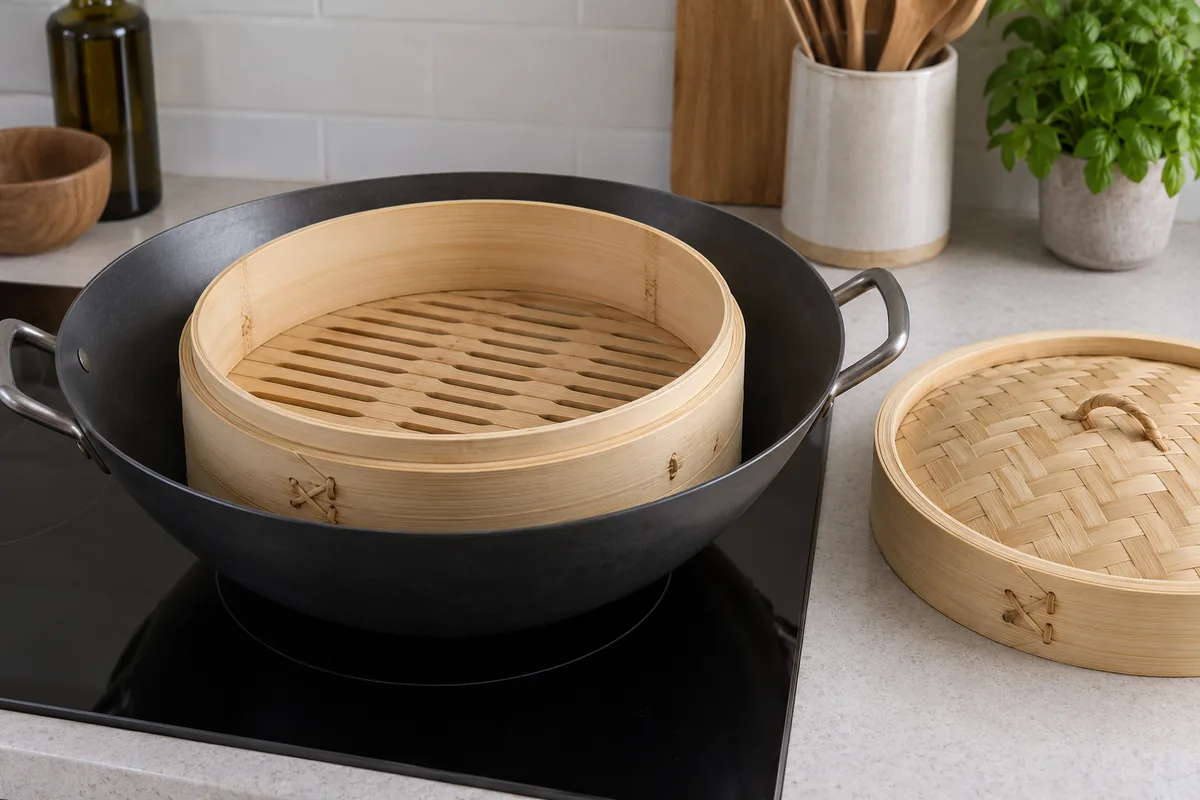
A diameter printed in a product title is only the beginning. Measure your pan or pot and compare its shape with the manufacturer's illustrated setup. A steamer needs the support and positioning specified for that model; guessing from a photograph can produce a poor fit.
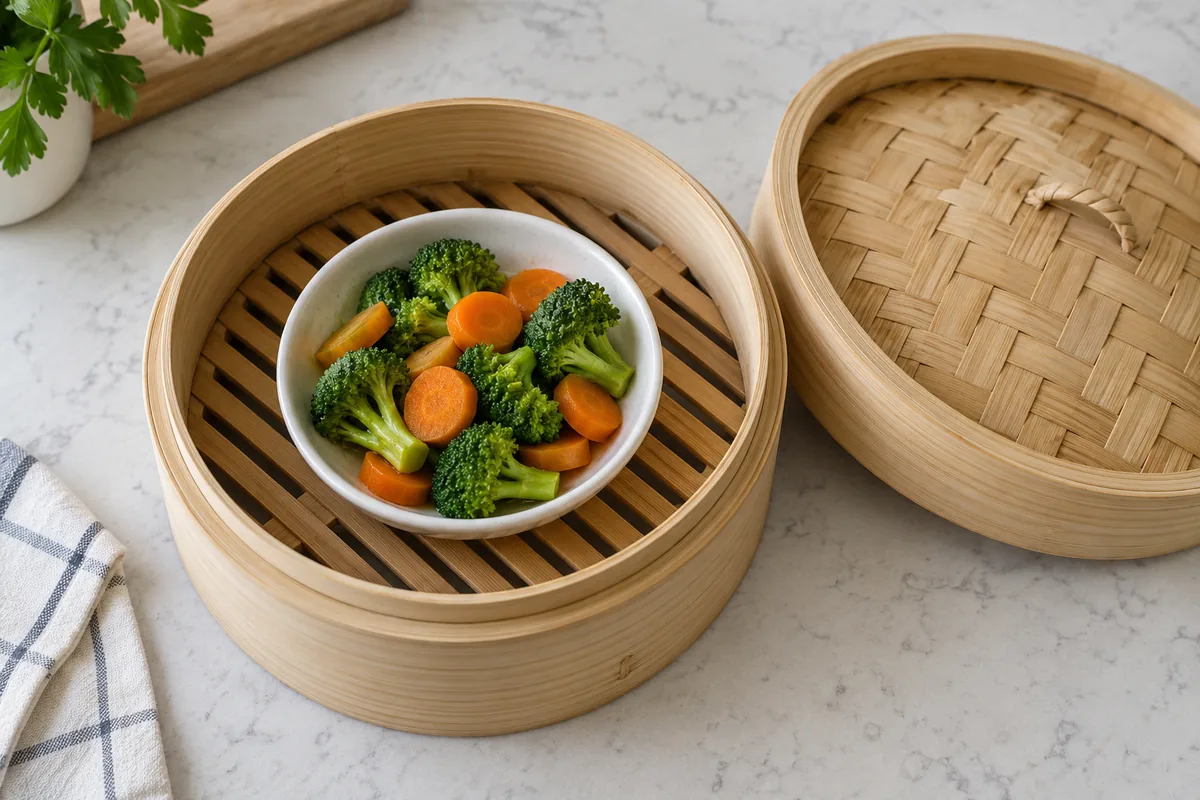
Also check the cooking space inside. A plate may fit the opening yet leave too little clearance for steam or the lid. Tall buns need headroom, and a full basket of tightly packed dumplings may be less practical than cooking in batches.
Manufacturer limits can be specific. IKEA's KLOCKREN instructions describe compatible cookware, keeping water below the basket and using only its specified two-basket arrangement. Do not assume that extra tiers are suitable merely because they seem to stack.
Identify the parts shown in the manual: the lower rim forms the bottom edge of the frame, while the food-support floor sits inside it. They are different reference points. Match the illustrated support and water position for your model rather than interpreting every instruction about the “bottom” as the same universal setup.
Plan the food layout and liner together
For a bamboo momo basket or dim sum steamer, look at the recipe before buying accessories. The dish may call for a suitable liner, a heat-safe plate or another arrangement. Check that the liner is intended for the cooking conditions and sized for your particular steamer.
Leave the steam paths required by the product instructions open. IKEA's KLOCKREN guide warns against completely blocking the basket with its paper lining. A liner should support the food arrangement without turning the basket into a sealed tray.
Resolve fit problems before cooking
| Problem during a cold fit check | Specification to review | Next step |
|---|---|---|
| Lid touches the planned food | Usable height above the plate | Choose a lower compatible dish or a roomier steamer |
| Plate nearly fills the chamber | Required steam clearance | Use a smaller approved heat-safe dish |
| Basket rocks on the cookware | Recommended rim and pan geometry | Correct the setup before using heat |
| Tiers do not seat properly | Part compatibility and permitted stack | Verify the model; do not force mismatched parts |
Use the actual manual and recipe
There is no single cooking time for everything that cooks in a bamboo basket. Food size, filling and recipe all matter. Use the recipe and the relevant food-safety guidance to determine doneness; the basket's appearance is not a doneness test.
The Joyce Chen bamboo steamer user guide instructs users to monitor water during cooking, never let it boil away and open the lid away from the face and body. Its instructions also explain plate clearance and lid positioning. Read your model's guide before the first use, including how water is replenished safely.
Ask for the instruction sheet before ordering if it is missing from the listing.
Compare care and replacement options
Choose a steamer that fits your storage space when separated for drying. Follow its own cleaning directions, then let components dry as instructed before putting them away. The Joyce Chen guide specifically calls for cooling and drying the parts before reassembly.
For frequent use, ask whether lids, tiers and liners are available separately. Confirm the exact model and dimensions before combining replacement parts. Matching colour alone does not establish compatibility.
For a broader introduction to steaming methods, see our existing bamboo steamer basket guide. This comparison focuses on choosing the correct basket type and checking compatibility.
Frequently asked questions
Is a bamboo cooking basket the same as a dim sum steamer?
The search phrase is broad. A round bamboo steamer may suit dim sum, but a rice cone or serving basket is a different design. Check the manufacturer's intended use.
Can I cook momo in any bamboo basket?
Choose a purpose-built cooking steamer compatible with your recipe. A decorative woven basket or a lidded storage box should not be substituted without explicit manufacturer approval.
Should I soak every bamboo steamer before using it?
Follow the instructions for the model you own. Do not transfer soaking, washing or seasoning advice from another product simply because both are made from bamboo.
Can I keep adding tiers to cook more food?
Only within the manufacturer's stated limits. Confirm the permitted configuration and use a recipe designed for it. Cooking additional batches is preferable to improvising an unsupported stack.