

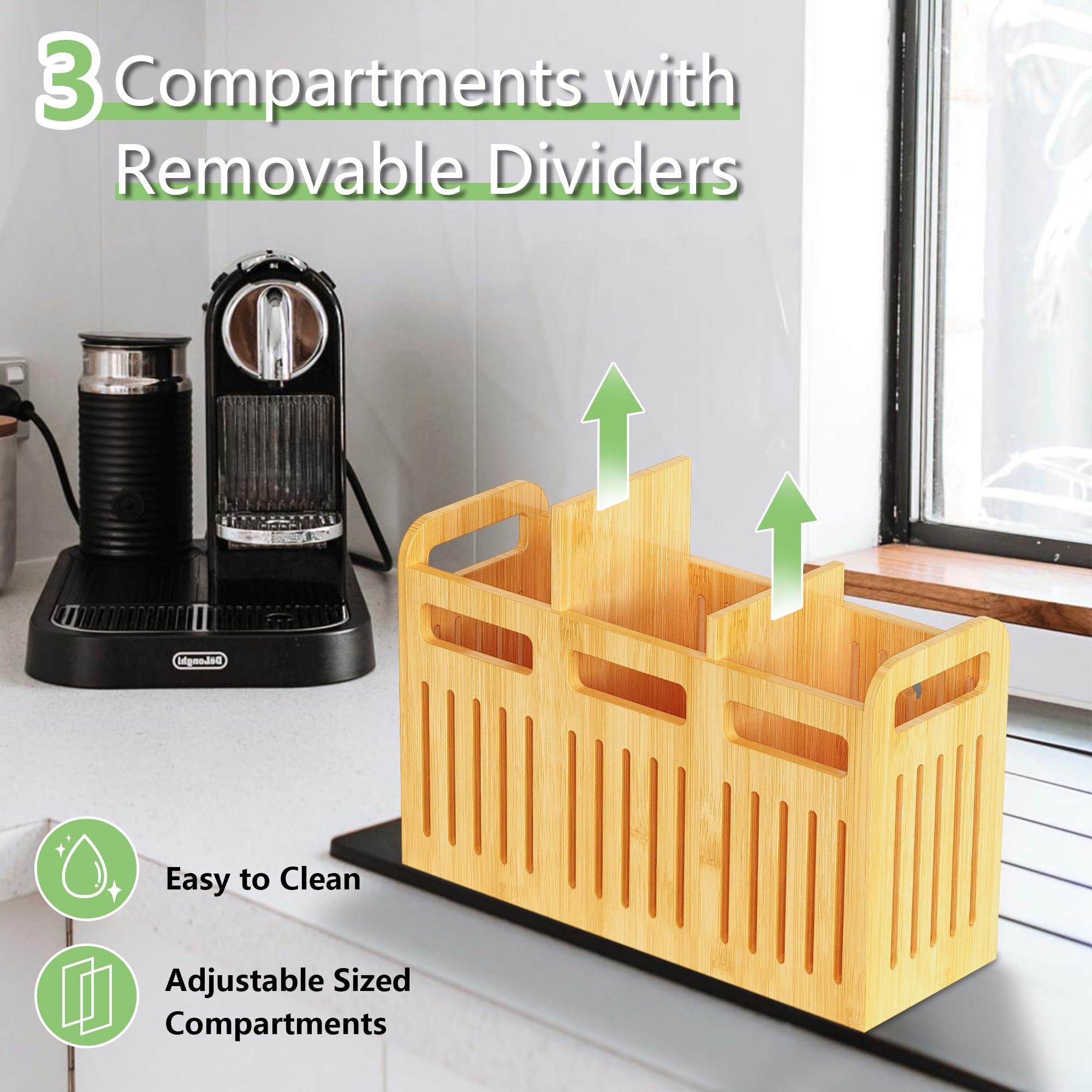
3 Compartment Bamboo Utensil Holder with Removable Dividers
Source a 3 compartment bamboo utensil holder with two removable dividers, slotted panels and side handholds. Reference size: 11 × 3.9 × 6.9 in.
Description
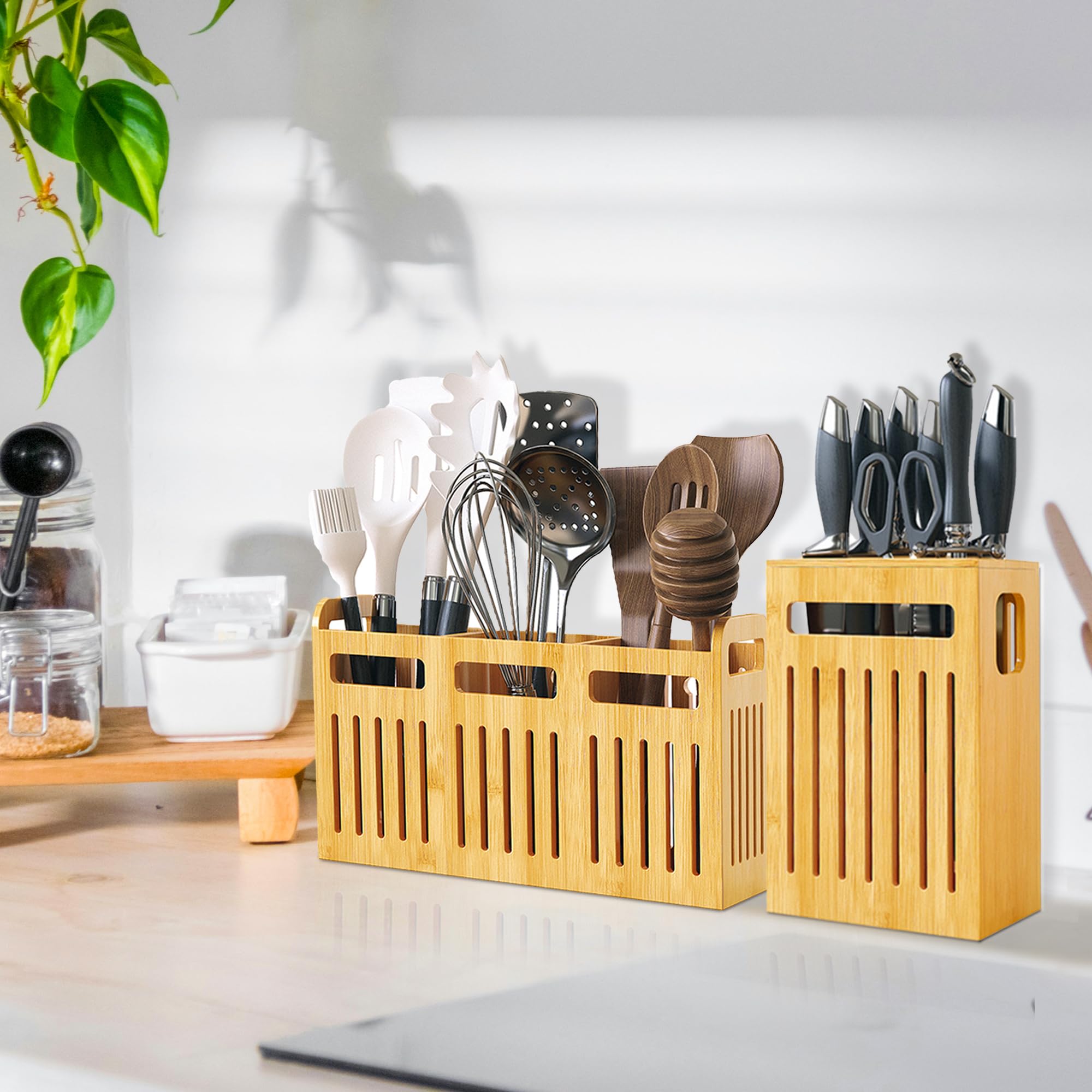
The primary configuration is a 3 compartment bamboo utensil holder with two removable dividers, elongated vertical slots, and handle openings near the top. A second, narrower unit shown in the gallery has a taller profile suited to upright display of selected knives, scissors, or cooking tools. Together or separately, these concepts give importers, wholesalers, retailers, hospitality suppliers, and private-label brands a flexible starting point for countertop organization.
This page describes a configurable B2B program, not a fixed off-the-shelf specification. The two holders may be requested together or evaluated separately. Material composition, panel construction, surface treatment, adhesives, hardware, wall-mount accessories, capacity, loading, dimensions, packaging, order quantity, and production schedule must be confirmed in the final bill of materials, drawings, approved sample, and quotation. Product images communicate the design direction only.

Two Organizer Configurations
| Configuration | Visible design | Typical sourcing discussion |
|---|---|---|
| Wide three-compartment holder | Low, rectangular organizer with two removable dividers, three storage zones, front and side slots, and top handle openings. | Countertop utensil sorting, divider layout, internal clearances, base construction, carrying method, and optional mounting concept. |
| Tall narrow holder | Upright rectangular unit with a smaller footprint, elongated slots, and openings near the upper edge. | Vertical presentation of selected knives, scissors, or tools; blade protection, internal structure, stability, and intended contents require approval. |
Wide Holder with Removable Dividers
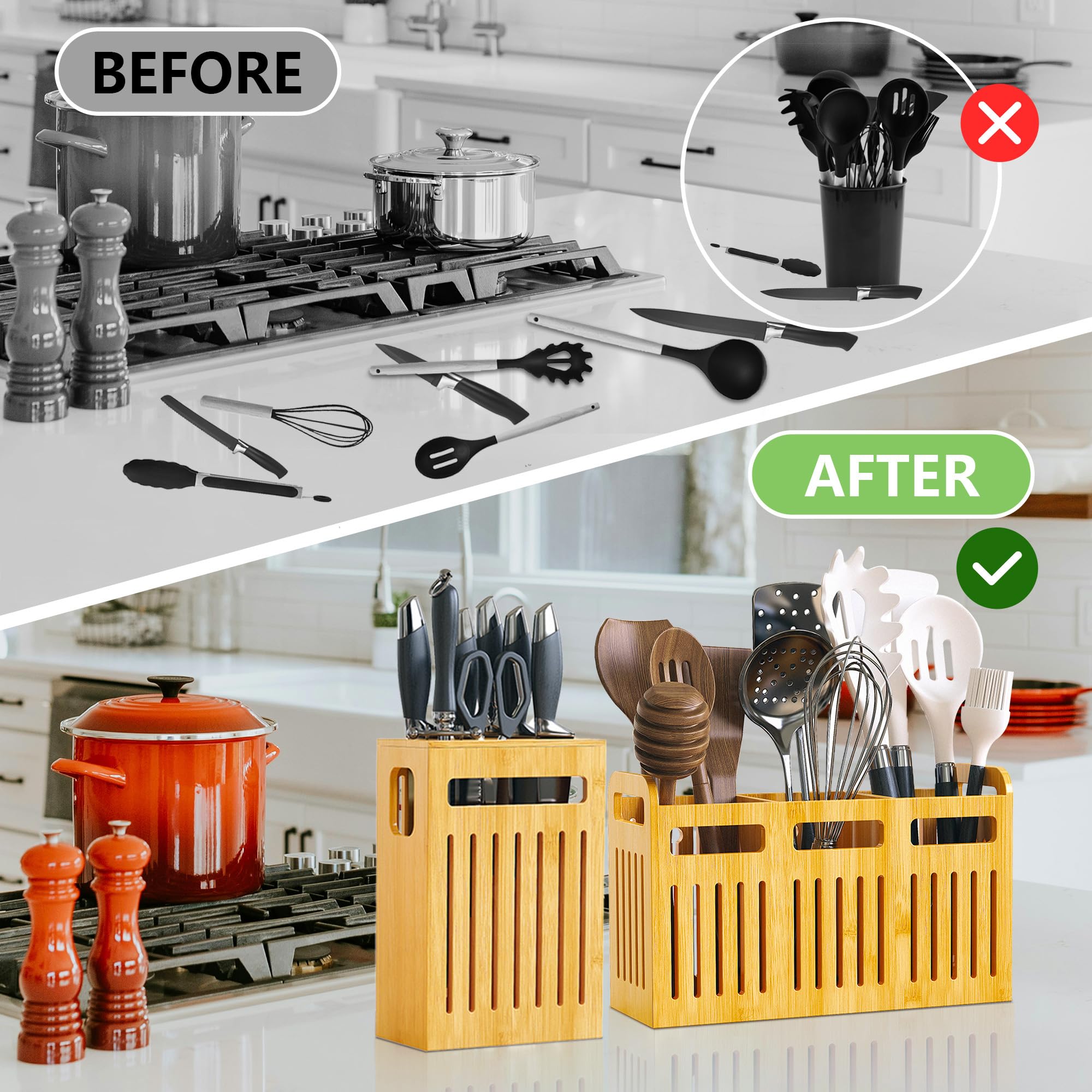
The wider format provides a clear merchandising story: separate long-handled tools by function, material, or frequency of use. Buyers can retain all three sections or remove one or both dividers when the approved construction allows it. The visible slots create openings through the side panels, but airflow and drainage performance depend on the final base design, slot geometry, placement, contents, and use conditions. Capacity should be established with an agreed test load rather than inferred from the number of tools pictured.
Tall Holder for a Focused Tool Assortment
The narrow unit is shown with knives and scissors, yet its internal retention system is not verified. Before positioning it as a knife organizer, define blade sizes, edge orientation, access, clearances, tip protection, center of gravity, and stability testing. It may alternatively be specified for spatulas, whisks, brushes, or other compatible items. Final consumer instructions should identify permitted contents and any relevant safety limitations.
3 Compartment Bamboo Utensil Holder Specifications
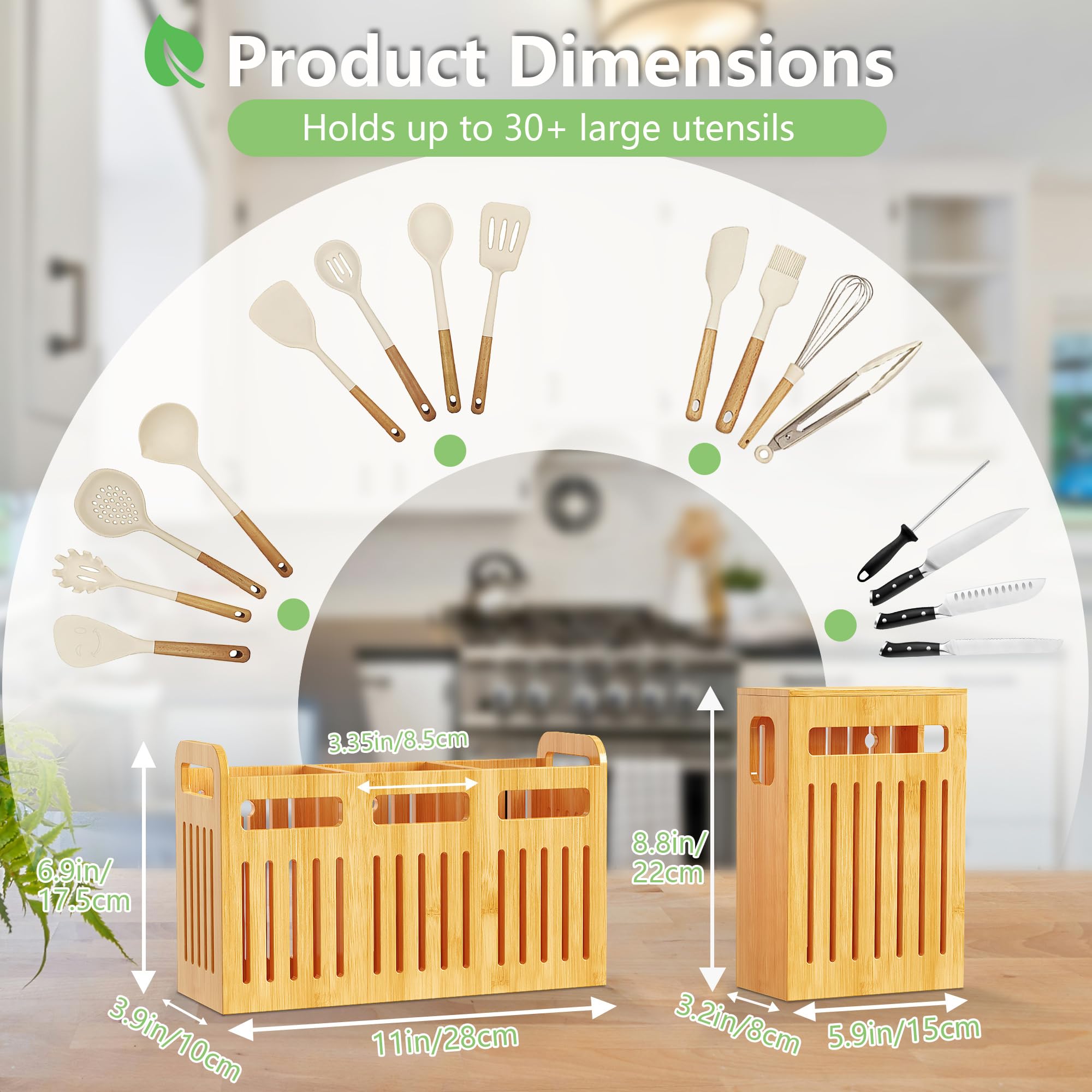
The following dimensions are approximate values read from the gallery artwork. They are useful for early shelf, carton, and assortment planning, but they are not controlled production dimensions.
| Item | Approximate gallery size | Details to confirm |
|---|---|---|
| Wide holder | 11 × 3.9 × 6.9 in (28 × 10 × 17.5 cm) | Overall tolerances, usable internal dimensions, divider thickness and positions, slot geometry, base, and handle openings. |
| Internal image reference | 3.35 in (8.5 cm) | The exact feature represented by this callout and its measurement points must be identified on the approved drawing. |
| Tall narrow holder | 5.9 × 3.2 × 8.8 in (15 × 8 × 22 cm) | Usable opening, internal support or insert, wall thickness, stability, and intended tool dimensions. |
Applications for Retail and Commercial Ranges
This bamboo utensil organizer for countertop presentation can support kitchen-storage collections, cooking-tool bundles, housewares promotions, new-home assortments, and hospitality or serviced-apartment supply programs. The wide format may group ladles, turners, spatulas, whisks, and similar tools. The tall format can support a focused display when its internal construction has been engineered for the specified contents. Outside the kitchen, buyers may assess the wide configuration for craft, studio, or desk accessories, provided the use does not conflict with the approved materials, openings, load limits, or care instructions.
How to Select the Right Configuration
Start with the actual items to be stored. Provide the maximum length, width, thickness, weight, quantity, and any sharp-edge considerations. For mixed utensils, review whether three compartments keep handles accessible without crowding. For a narrow footprint, check tipping resistance with the tallest intended tool placed in the least favorable position. If both units are sold as a set, define whether they sit independently or are expected to work as a coordinated system, then verify color, grain range, height relationship, and pack contents on the approval sample.
Countertop or Wall-Mount Program?
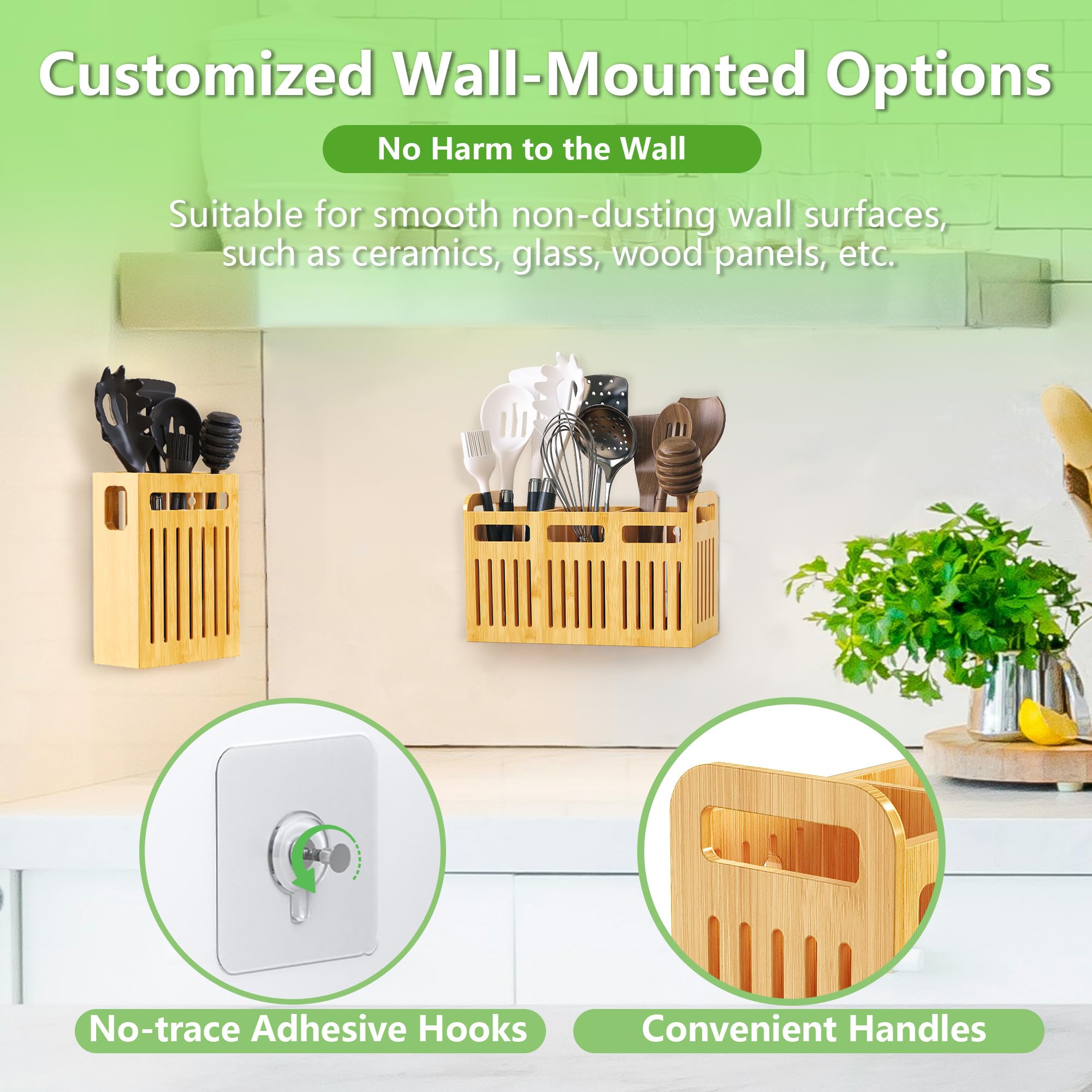
The gallery presents an adhesive-hook wall-mount concept. This is not confirmation that hooks are included or that the product is suitable for every wall. Specify the mounting component, attachment method, installation instructions, compatible surfaces, environmental conditions, static and dynamic load test, safety factor, and removal test before making wall-mount or surface-protection claims. Performance can vary with wall coating, texture, cleanliness, humidity, temperature, installation, and time. If testing is not completed, position the approved item for countertop use only.
Material and Construction Approval
The visual appearance supports a bamboo positioning, but the production specification should identify every substrate and component. Confirm bamboo grade or panel type, lamination direction, thicknesses, joinery, adhesives, surface preparation, coating system, base parts, inserts, fasteners, and optional wall hardware. Agree on acceptable grain and shade variation with representative limit samples. Any market-specific chemical, contact-use, labeling, or documentation requirement should be stated by the buyer and applied to the finished, order-specific construction.
OEM and ODM Development
OEM discussions can cover configuration, dimensions, divider positions, slot pattern, edge profile, color direction, logo size and location, unit labeling, and retail packaging. ODM work may extend to revised compartment geometry, a purpose-designed insert, another footprint, or an evaluated mounting solution. Feasibility and decoration methods depend on the approved materials and process. Supply vector artwork, color references, annotated drawings, target use, destination market, and acceptance criteria. Release production only after the BOM, drawings, finish sample, logo sample, and packaging sample share controlled revision numbers. Learn more about the company’s broader capabilities on the About page.
Packaging Choices for Distribution
Packaging can be developed around a single holder or a defined two-piece set. Discuss a plain or printed paper box, protective wrap, inserts, dividers, corner protection, labels, instructions, and master-carton arrangement. The structure should reduce movement and surface contact during distribution while keeping removable parts accounted for. Confirm pack orientation, exact accessories, barcode placement, origin marking, language, carton quantity, carton dimensions, gross and net weight, pallet assumptions, and any drop or transit test requested by the buyer. Final packaging, quantities, and logistics data belong in the quotation and packing specification.
Suggested Quality-Control Plan
A project-specific inspection plan can check material identity, overall dimensions, internal clearances, divider fit, panel alignment, slot dimensions, handle openings, edge condition, surface appearance, and base flatness. Functional checks may cover divider removal and reinstallation, countertop stability, fit with approved reference tools, and the agreed load protocol. If a wall-mount version is ordered, inspect the specified hardware and test the complete installed system under defined conditions. Pack-out checks should verify model, quantity, accessories, instructions, logo orientation, labels, barcode readability, artwork revision, unit-pack condition, and shipping marks.
Care Guidance to Validate
Until the finish and construction are approved, use conservative care language. Empty the holder before cleaning. Wipe it with a soft, lightly damp cloth and mild cleaner, remove residue, and allow all surfaces and slots to dry completely before refilling. Avoid prolonged soaking, dishwashers, standing water, abrasive tools, and placement beside strong heat sources unless the final product has been validated for those conditions. Remove dividers only as described in the approved instructions. The final care label should reflect coating, adhesive, hardware, and performance testing.
RFQ Checklist
- Wide holder, tall holder, or a clearly defined two-piece set
- Target dimensions, tolerances, intended contents, and reference tool sizes
- Material, construction, finish, color range, and wall-mount requirement
- Divider quantity and layout, internal insert needs, and accessory list
- Logo artwork, decoration location, labels, languages, and sales channel
- Unit packaging, master-carton requirements, destination, and test protocol
- Estimated order volume, requested delivery window, and inspection criteria
- Required documents or market-specific compliance brief
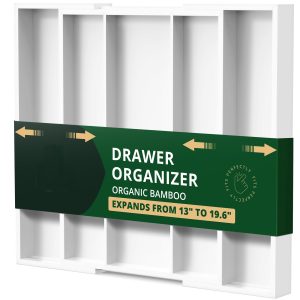
For range planning, compare this organizer with a bamboo magnetic knife block and cooking utensil holder or an expandable bamboo drawer organizer with a removable knife block. Each linked product has its own specification and should be evaluated separately.
Frequently Asked Questions
1. Are both holders included in one standard package?
Not necessarily. The gallery shows both formats, but inclusion is determined by the final quotation, BOM, and packing specification. State whether you need the wide holder, tall holder, or both.
2. Does the wide holder always have three compartments?
The visible version uses two removable dividers to create three sections. Divider fit, removal method, section dimensions, and any alternative layout must be confirmed through drawings and a sample.
3. How many utensils will it hold?
No fixed capacity is promised. Usable capacity changes with tool dimensions, shapes, weight, divider layout, and acceptable access. Send a reference assortment so fit and stability can be evaluated.
4. Is the tall unit a finished knife block?
It is pictured with knives, scissors, and tools, but its internal support has not been verified. Knife positioning requires an approved insert or structure, blade-fit review, stability test, and suitable instructions.
5. Are adhesive wall hooks supplied?
That has not been confirmed. Hooks, fasteners, or mounting parts must appear in the approved BOM and pack list. Their load, compatible surfaces, installation, and removal performance require testing.
6. Are the gallery dimensions final?
No. They are approximate image references. Final measurements, tolerances, internal clearances, and measurement methods should be established in controlled drawings and checked against the signed sample.
7. Can the design and packaging be customized?
Customization can be evaluated for size, compartments, slot pattern, finish direction, branding, inserts, labels, and packaging. Availability, tooling, cost, order quantity, and timing follow the approved brief and quotation.
8. What should buyers approve before ordering?
Approve the BOM, drawings, materials, finish, accessories, intended-use statement, test plan, logo execution, packaging, labels, inspection criteria, and representative sample. Confirm commercial terms in the final quotation.
Request a Specification-Based Quote
Turn the gallery concept into a purchase-ready 3-compartment bamboo utensil holder. Visit the homepage to review the wider collection, then contact the sales team with your chosen configuration, intended contents, target dimensions, branding files, packaging brief, order estimate, destination, and required tests. Ask for a quotation based on confirmed materials, drawings, samples, pack contents, order quantity, and production schedule.
Reviews
There are no reviews yet.