

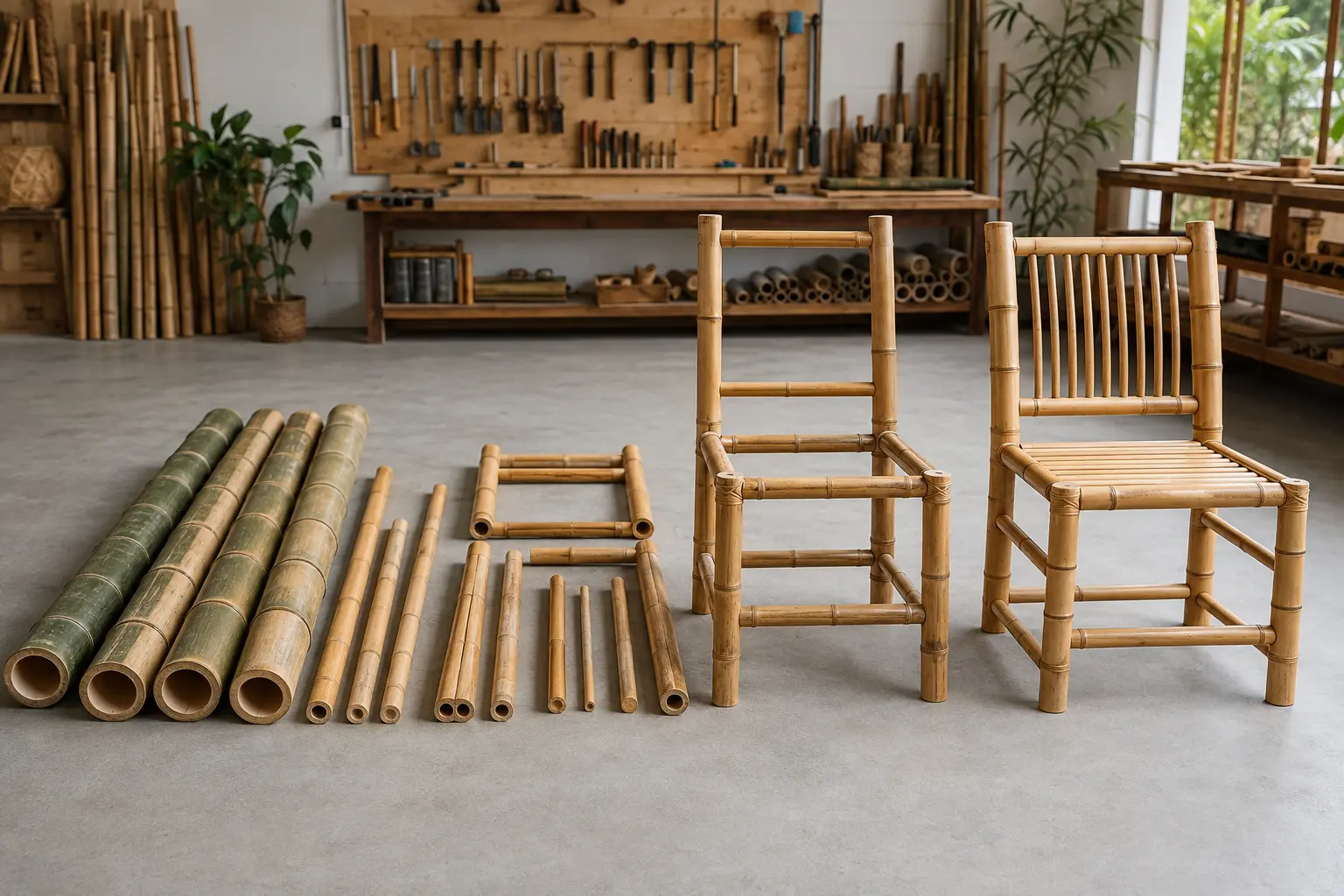
A bamboo chair may look simple, but a safe, durable chair is a structural product rather than a quick craft project. The material must be mature, properly treated and dried; the frame must resist racking; the joints must stay tight; and the seat and back must distribute load without sharp edges or loose strands. This guide explains how to make a bamboo chair from concept to final inspection while distinguishing a decorative DIY model from seating intended for regular use.
The process can use round bamboo culms, laminated bamboo parts, woven bamboo strips, or a combination of bamboo with wood, cane, rope, upholstery or approved hardware. Each route needs different tools and controls. There is no single universal joint or finish for every design, so builders and commercial buyers should evaluate the complete structure rather than judge a chair only by its appearance.

Before Making a Bamboo Chair: Define Its Real Use
Start with the user, location and expected service conditions. A lightweight display chair, an indoor dining chair and a contract restaurant chair do not carry the same risk or require the same construction. Write a short design brief before cutting material:
- Is the chair decorative, occasional-use or intended for daily seating?
- Will it be used indoors, in a covered area or outdoors?
- Does the design include arms, a woven seat, a cushion or a separate back panel?
- Will the chair be shipped assembled or in knock-down packaging?
- Which market, buyer specification and applicable furniture standards must it satisfy?
- How will the finished design be tested and inspected?
Anyone researching how to build a bamboo chair or how to make a bamboo chair at home should treat the first result as a prototype, not as proven load-bearing furniture. A qualified person should review the design, and the finished chair needs appropriate stability, strength and durability checks before regular use. Never assume a visually neat joint is structurally adequate.
Choose the Right Bamboo Format
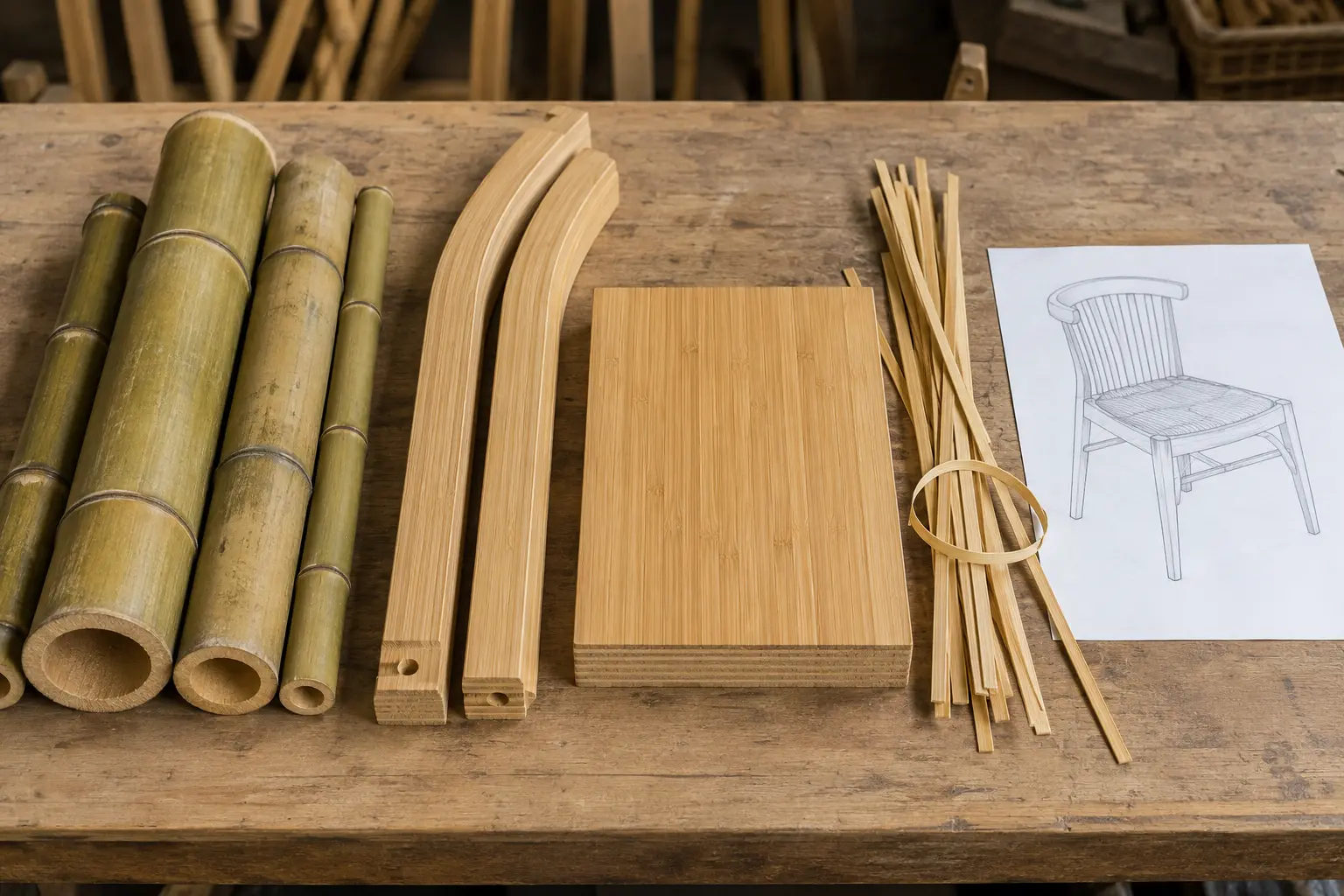
The phrase “chair made of bamboo” can describe several very different constructions. Identifying the material format prevents confusion when comparing drawings, samples and quotations.
| Bamboo format | Typical chair application | Key production concern |
|---|---|---|
| Whole or partial culm | Legs, rails, arms and traditional frames | Diameter variation, nodes, cracking and joint fit |
| Laminated bamboo | Machined legs, seats, backs and modern frames | Glue-line quality, machining direction and edge finishing |
| Strand-woven or engineered bamboo | Dense machined components and selected structural parts | Weight, tool wear, fastener design and supplier data |
| Split bamboo strips | Woven chair seats, backs and decorative panels | Uniform width, smooth edges, tension and repairability |
| Mixed material | Bamboo-and-rope, bamboo-and-cane or upholstered chairs | Compatibility, attachment details and different movement rates |
A bamboo stick chair made from round culms preserves bamboo's recognizable natural form, but every pole differs slightly. Laminated components allow more repeatable machining and a modern bamboo chair design, yet their quality depends on material preparation and bonding. A responsible specification states which parts are bamboo and which are another material instead of using “bamboo chair” as a vague style label.
Why Fresh Bamboo Is Not Ready for Chair Making
Fresh bamboo contains substantial moisture and naturally occurring nutrients. If it is cut into a frame immediately, it can shrink, split, distort or become vulnerable to biological damage as it dries. A search for a “fresh bamboo chair” often leads to rustic demonstrations, but production furniture normally requires controlled preparation before assembly.
The exact treatment depends on species, construction, destination and manufacturer. Common stages may include cleaning, removing selected outer or inner material, heat or solution treatment, controlled drying and conditioning. The objective is not to make bamboo indestructible; it is to bring the material into a documented condition that is appropriate for machining, bonding and service. Buyers should ask how moisture is monitored and how treated material is stored before production.
Develop the Chair Drawing and Full-Size Jig
A simple bamboo chair still needs controlled geometry. Prepare front, side and top views showing the seat height, seat depth, back angle, rail locations, arm position, joint type and component dimensions. Mark the bamboo grain or culm orientation and identify where a node is desirable or unsuitable.
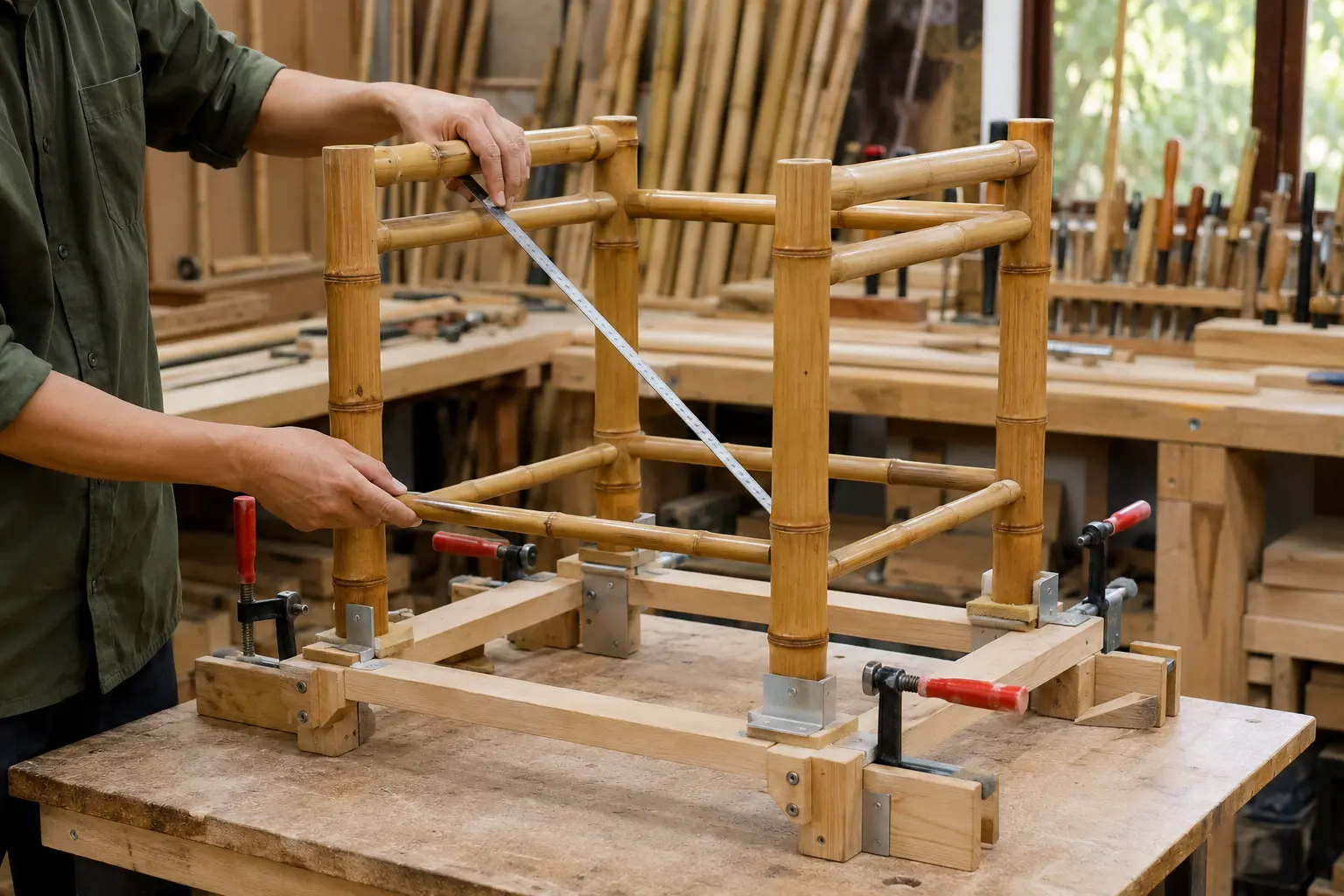
For repeatable production, build jigs for cutting, drilling, bending and assembly. An assembly jig keeps the legs and rails square while joints cure or fasteners are installed. Diagonal measurements help reveal a twisted frame before finishing. This step is one of the main differences between an improvised homemade bamboo chair and a repeatable commercial product.
How to Make a Bamboo Chair Frame
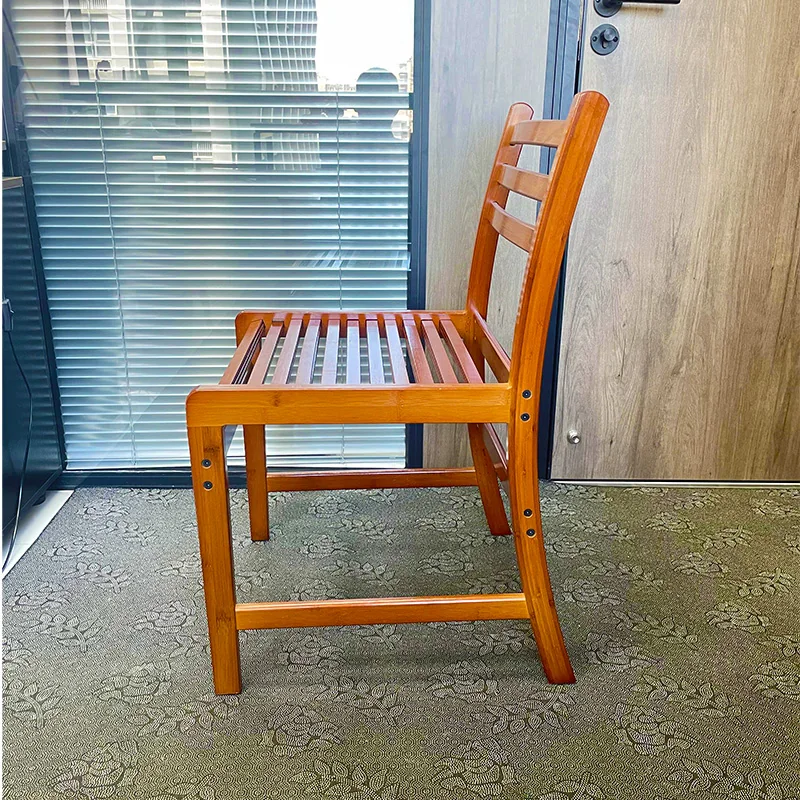
The following sequence is a process overview, not a substitute for an engineered production specification:
- Sort the prepared bamboo. Match culm diameter, wall condition, straightness and color to the drawing. Reject pieces with uncontrolled splits, severe insect damage or defects at critical joint locations.
- Cut components with a jig. Produce legs, seat rails, stretchers, back posts and arms with adequate allowance for final fitting. Support round culms securely during cutting.
- Fit the joints. Depending on the design, this may involve shaped sockets, dowels, pins, wrapped joints, mechanical connectors or accurately machined laminated parts.
- Dry-assemble the frame. Check contact surfaces, symmetry, seat plane, back angle and diagonals before applying adhesive or permanent fixings.
- Assemble and clamp. Use a flat jig and controlled pressure so the frame stays square. Adhesives and hardware must suit the materials, finish and target market.
- Add cross-supports. Stretchers or braces reduce racking. Their location and joint design matter as much as their visual thickness.
- Condition and inspect. Allow the assembly system to reach the required cure or stabilization condition before sanding and load-related evaluation.
Round bamboo culms are typically hollow between nodes, so conventional solid-wood screws can crush a wall or create a split if the detail is poorly designed. Drilled holes, inserts, dowels and connector spacing require trials using the actual material. Do not copy a joint from a photograph and assume it will perform the same way.
Watch: How to Make a Bamboo Chair
This short video shows a hands-on bamboo chair-making sequence and complements the frame, joint and assembly steps explained above.
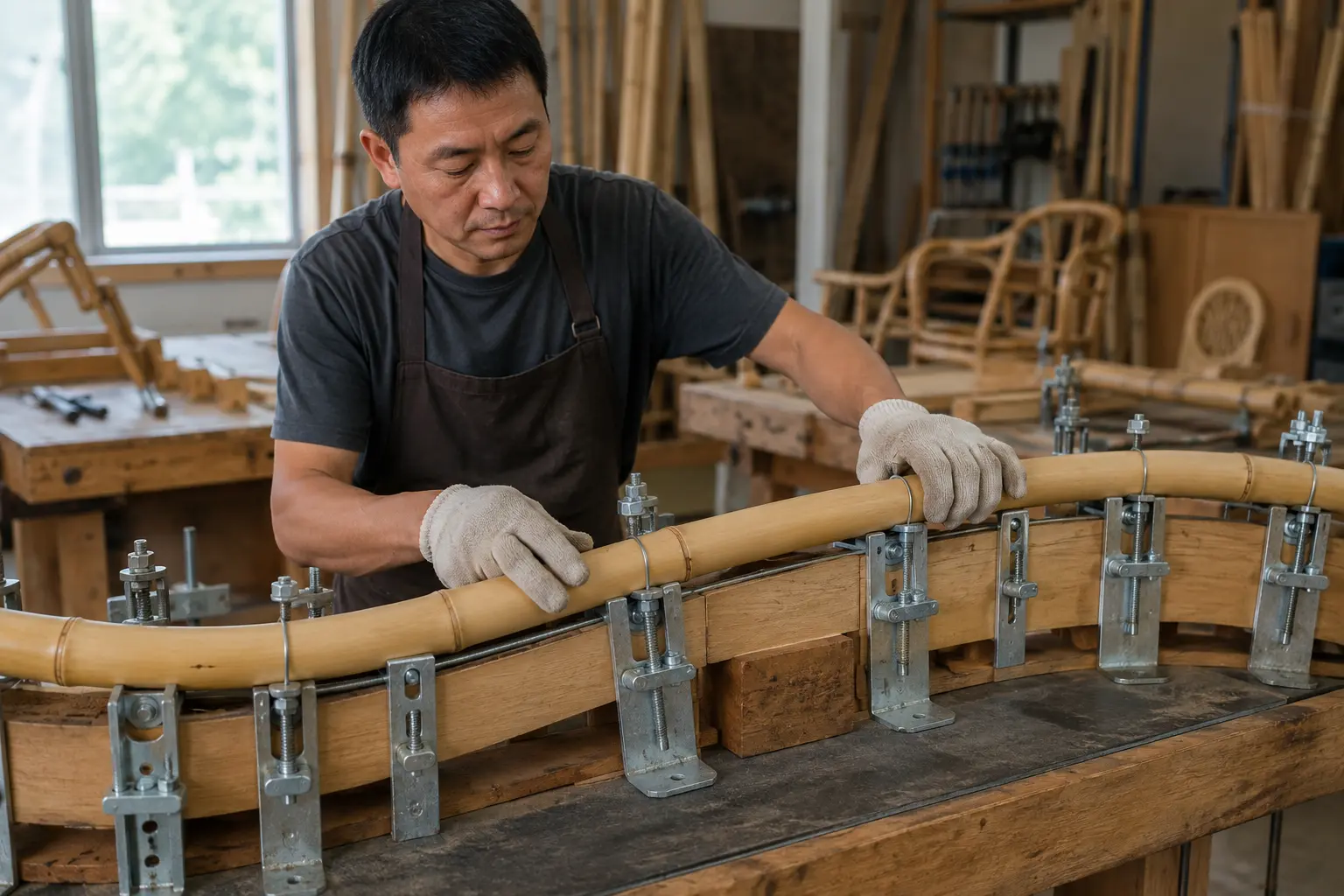
Bent Bamboo Chairs Need Controlled Heat and Tooling
A bent bamboo chair can create flowing arms, back rails or continuous-looking frames, but bending is a controlled operation. Species, culm age, wall thickness, node position, moisture, bend radius, temperature and heating uniformity all influence the result. Local overheating can scorch the surface while an aggressive radius can cause longitudinal splitting or wall collapse.
Professional processes may use heat, internal support, forms and cooling fixtures. The part remains in a jig until its geometry is stable enough for the next stage. Operators need suitable training, ventilation, fire controls and personal protective equipment. For a DIY bamboo chair, buy prepared bent components or work with an experienced craftsperson rather than improvising with open flame.
Making a Woven Bamboo Chair Seat or Back
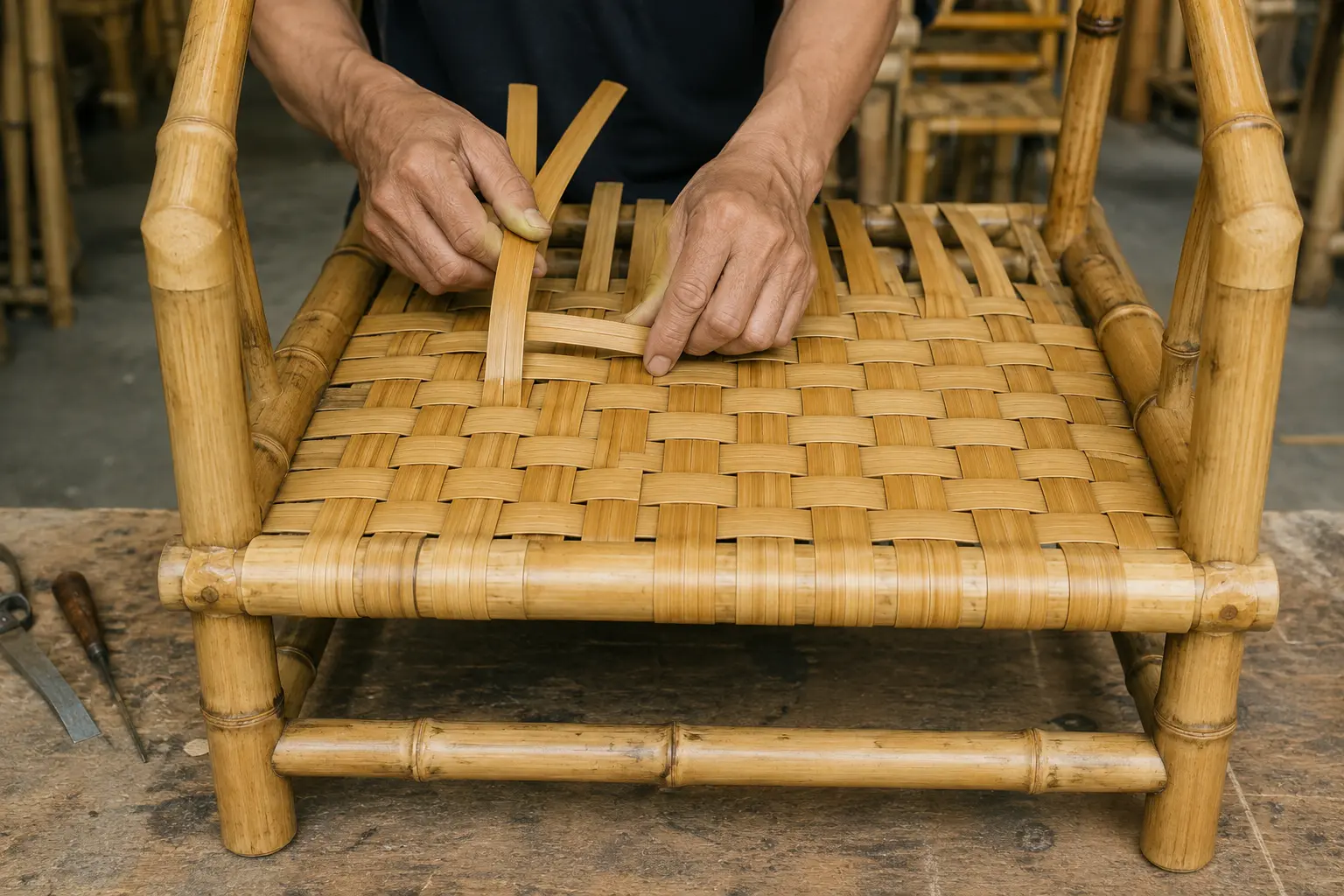
A bamboo woven chair uses thin, prepared strips for the seating surface or back. Wicker describes a weaving method, not one specific plant, so a “wicker bamboo chair” may combine bamboo framing with rattan, cane, fiber cord or synthetic weave. The bill of materials should name each component accurately.
For bamboo weaving, strips are selected and prepared to a consistent width and thickness, their edges are smoothed, and the pattern is tensioned evenly across the frame. Uneven tension can create pressure points, distortion or early breakage. Attachment edges must be secured and protected so they do not lift during use. A replaceable woven panel can make maintenance easier than a seat permanently trapped inside the frame.
Sanding, Edge Control and Surface Finishing
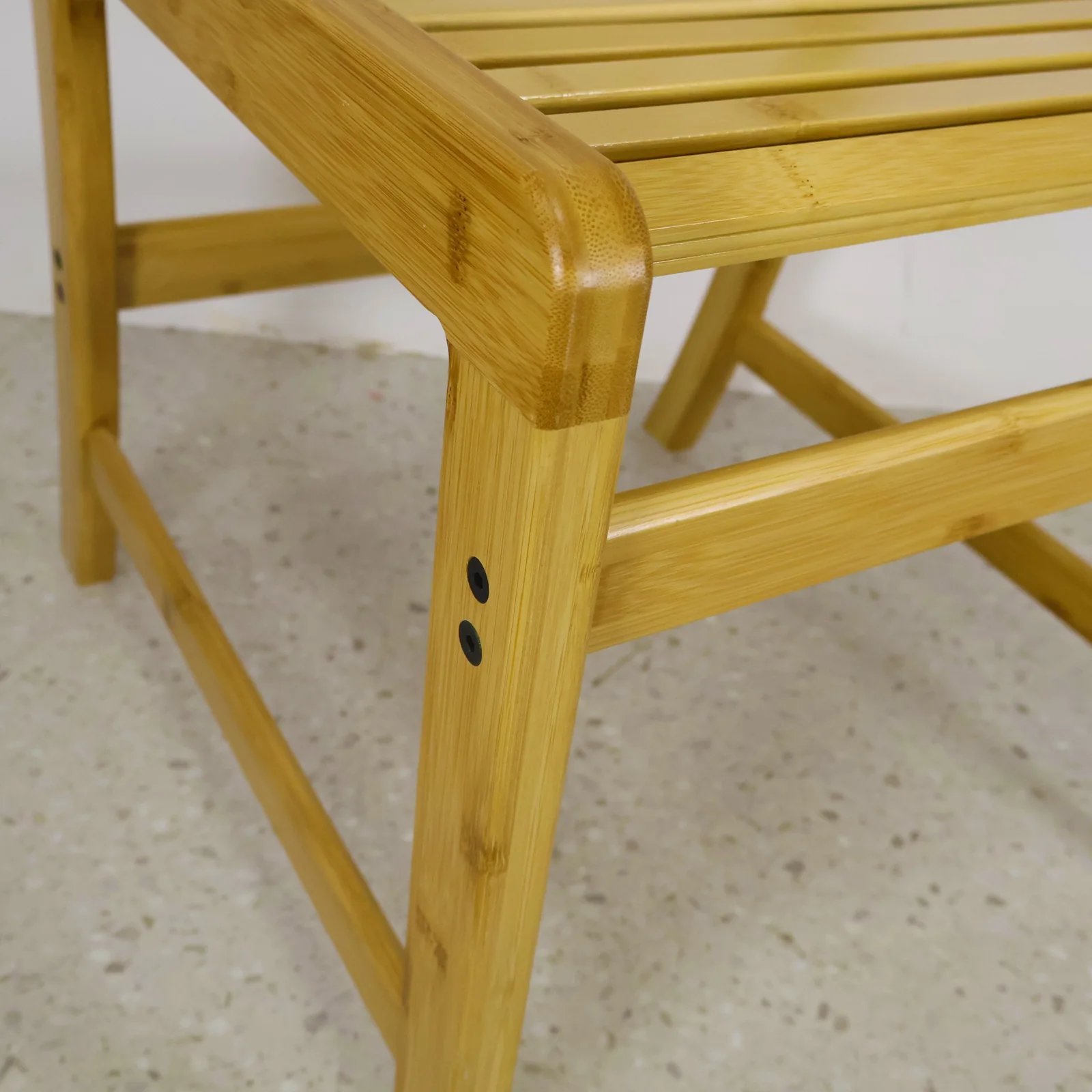
After assembly, inspect every area a hand, leg or garment can touch. Remove burrs and sharp strip ends without thinning a structural member. Ease exposed edges consistently, clean dust from joints and confirm that no fastener projects from the frame.
The finish system should be specified for the intended environment and market. A coating can help with cleaning and surface protection, but it does not turn an indoor chair into weatherproof outdoor furniture. Color samples should use the same bamboo construction as production because whole culm, laminated bamboo and woven strips can absorb stain differently. Record the coating sequence, approved sample and acceptable color range.
Inspect and Test Before Anyone Uses the Chair
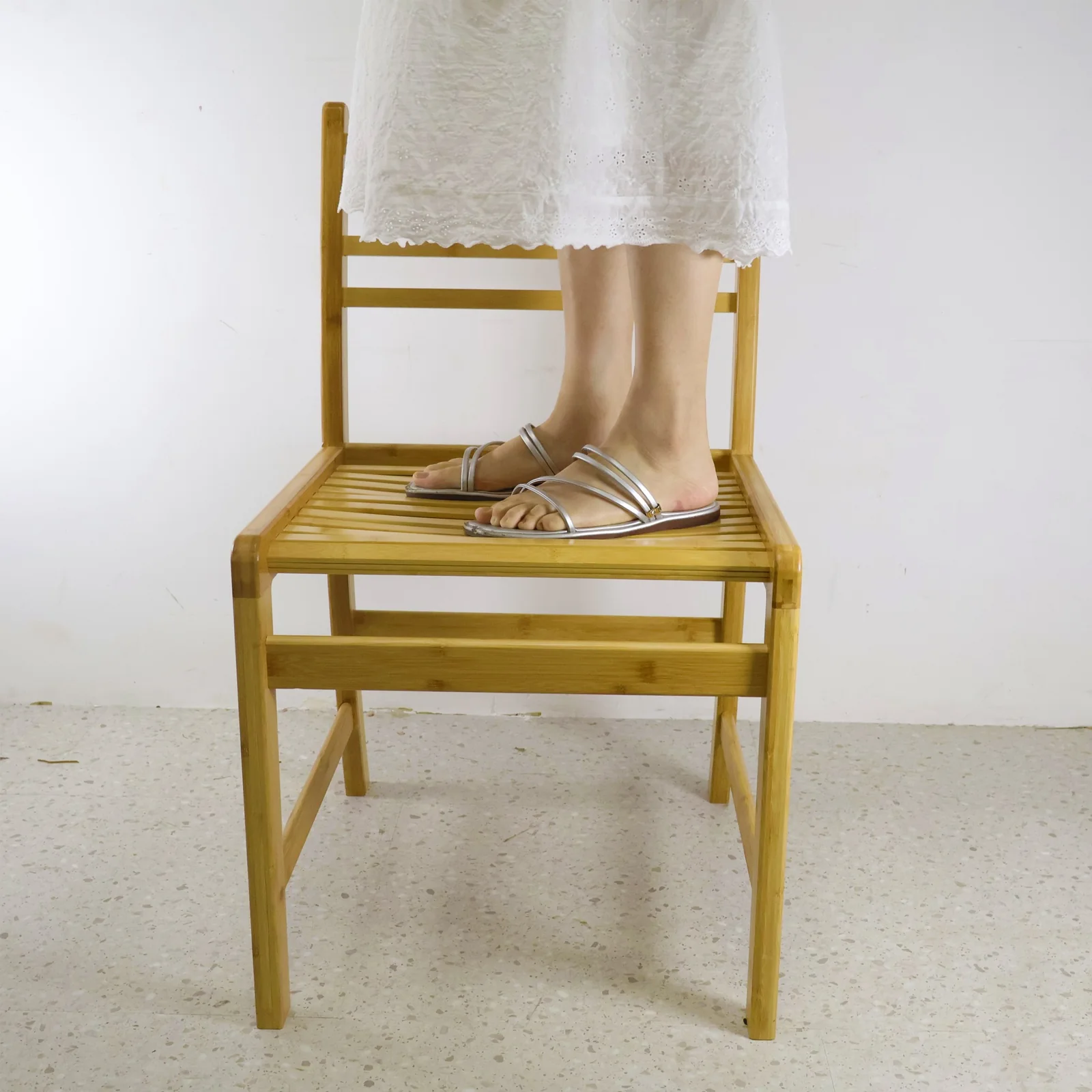
Final inspection is more than checking the color. A chair should be reviewed for dimensional conformity, level contact, stability, joint closure, cracks, splinters, loose weave, hardware security and finish defects. Production samples then need appropriate tests for the intended category and destination. These may address static loads, impact, fatigue, back and arm performance, stability and durability, but the exact method and acceptance criteria must come from the applicable standard or buyer specification.
Do not publish an unverified weight-capacity claim. Capacity depends on the complete tested design, not on a generic statement about bamboo's strength. Any structural change—including a thinner rail, new joint, different adhesive or revised knock-down connector—can justify renewed evaluation.
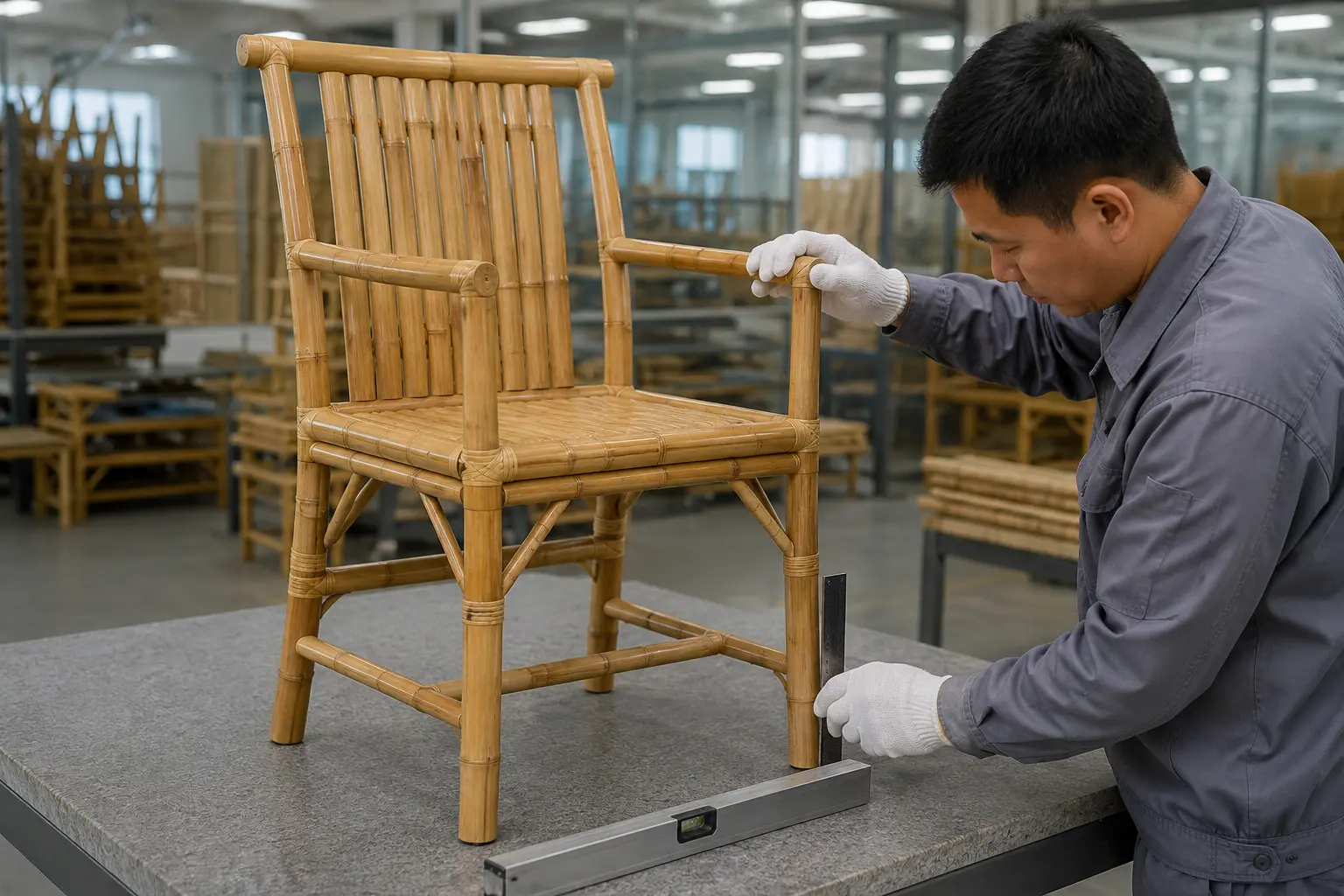
DIY Bamboo Chair vs. Repeatable Manufacturing
| DIY or craft prototype | Repeatable production chair |
|---|---|
| Material selected by eye | Documented grading and preparation criteria |
| One-off fitting | Controlled drawings, gauges and jigs |
| Manual adjustment during assembly | Defined joint tolerances and work instructions |
| Visual trial after completion | Inspection plan plus product-specific testing |
| Finish chosen for appearance | Approved coating schedule for market and use |
| Personal-use repair decisions | Traceability, packaging and corrective-action process |
Handmade bamboo chair techniques remain valuable because they reveal how the material behaves. Commercialization adds repeatability: controlled raw material, drawings, fixtures, approved samples, quality checkpoints and documented packaging. A beautiful prototype is the beginning of development, not proof that hundreds of chairs will be identical.
Common Bamboo Chair Making Problems
- Splitting near a fastener: check hole preparation, edge distance, culm condition, connector type and installation force.
- Frame rocking: inspect component length, jig accuracy, assembly sequence and floor-contact points.
- Loose joints: verify fit, surface preparation, adhesive compatibility, cure conditions and mechanical reinforcement.
- Woven seat sagging: review strip preparation, pattern, tension, attachment and service environment.
- Color variation: define an approved range, sort visible components and control treatment and coating batches.
- Mold or cracking after shipment: review moisture management, drying records, packaging ventilation and storage conditions.
Frequently Asked Questions
How do you make a chair out of bamboo?
The general route is to define the use, select mature treated and dried bamboo, prepare a drawing and jigs, cut and fit the components, dry-assemble, join and brace the frame, add the seat and back, finish the surfaces, and inspect and test the completed chair. The exact joints and treatment depend on the design and target market.
Can I make a bamboo chair at home?
You can make a decorative model or supervised prototype with suitable tools and experience. A chair intended to support a person needs a reviewed structure and relevant testing. Do not use an untested DIY chair as regular seating.
Is green or fresh bamboo suitable for a chair?
Fresh bamboo is generally unsuitable for a finished production chair because its moisture and dimensions change during drying. It should be prepared, treated, dried and conditioned using a process appropriate to the design.
What is the best joint for a bamboo chair?
There is no universal best joint. Whole culm, laminated bamboo and mixed-material frames behave differently. Select and test the joint as part of the complete chair design, considering racking, repeated loading, assembly method and service environment.
Can a woven bamboo seat be replaced?
It can be replaceable if the frame and attachment system are designed for access. Confirm this during product development; many permanently captured woven panels are difficult to repair without damaging the frame.
Turn a Chair Idea Into a Testable Product Brief
Before requesting samples, prepare dimensioned drawings, material definitions, intended-use conditions, finish references, packaging needs and market requirements. If your project involves custom bamboo or wooden components, Fujian Xianxu Bamboo & Wood Co., Ltd. can review the product concept and clarify which development information is needed before feasibility and sampling are discussed. Final construction, claims and compliance should always be confirmed for the actual order.