

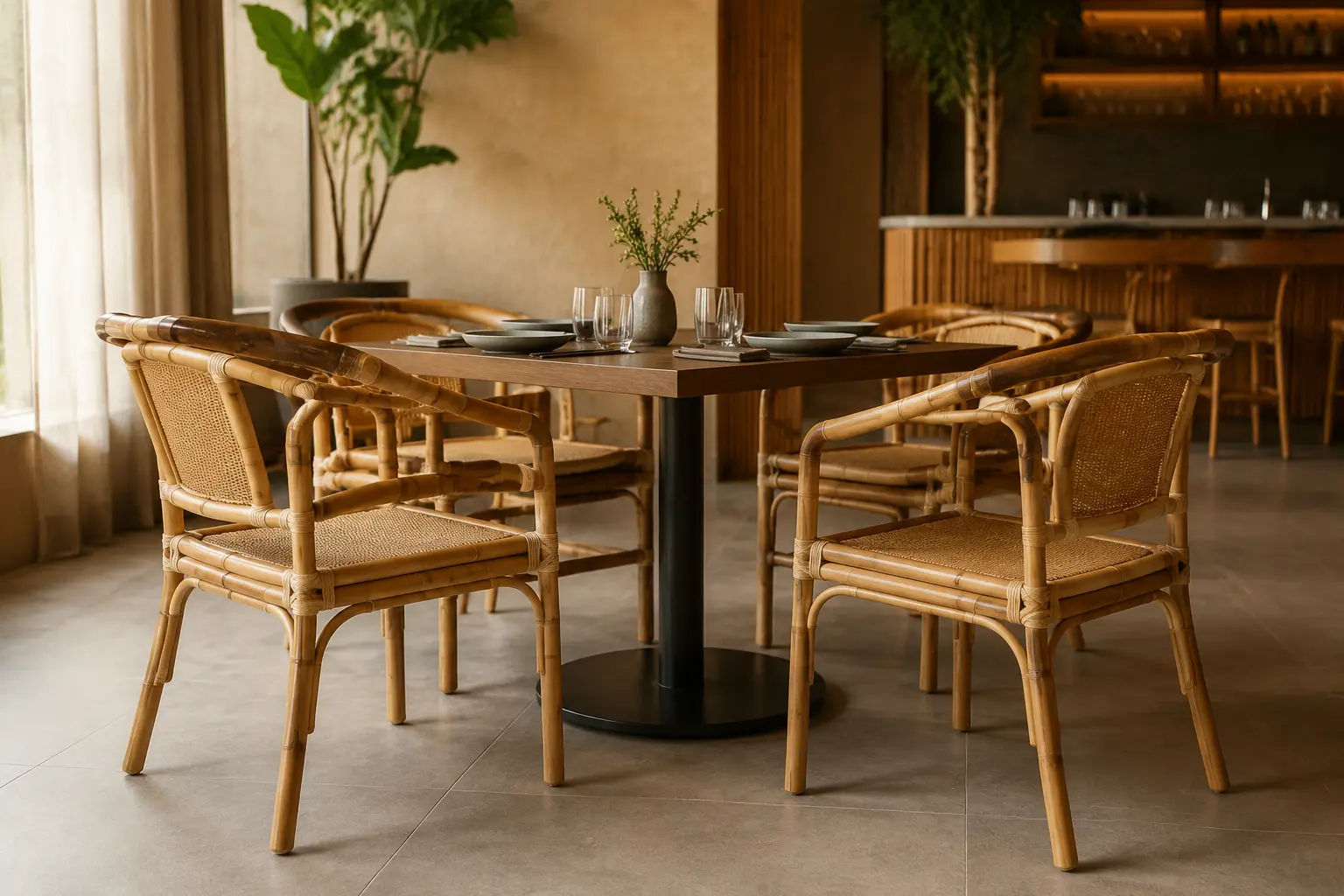
A bamboo chair can be a light dining seat, a sculptural living-room accent, a compact reading chair or a simple piece of everyday bamboo seating. Yet products sold under the same name may be built in very different ways. One may use round bamboo culms for the frame, another may be machined from laminated bamboo board, and a third may only have a bamboo-look finish over metal. Those distinctions affect appearance, comfort, maintenance and how a chair should be specified.
This guide explains what a genuine chair made of bamboo can look like, how the frame, seat and back work together, and which designs suit common indoor settings. It also gives homeowners, retailers and project buyers a practical method for comparing bamboo chairs without relying on vague product names or unsupported performance claims.

What Is a Bamboo Chair?
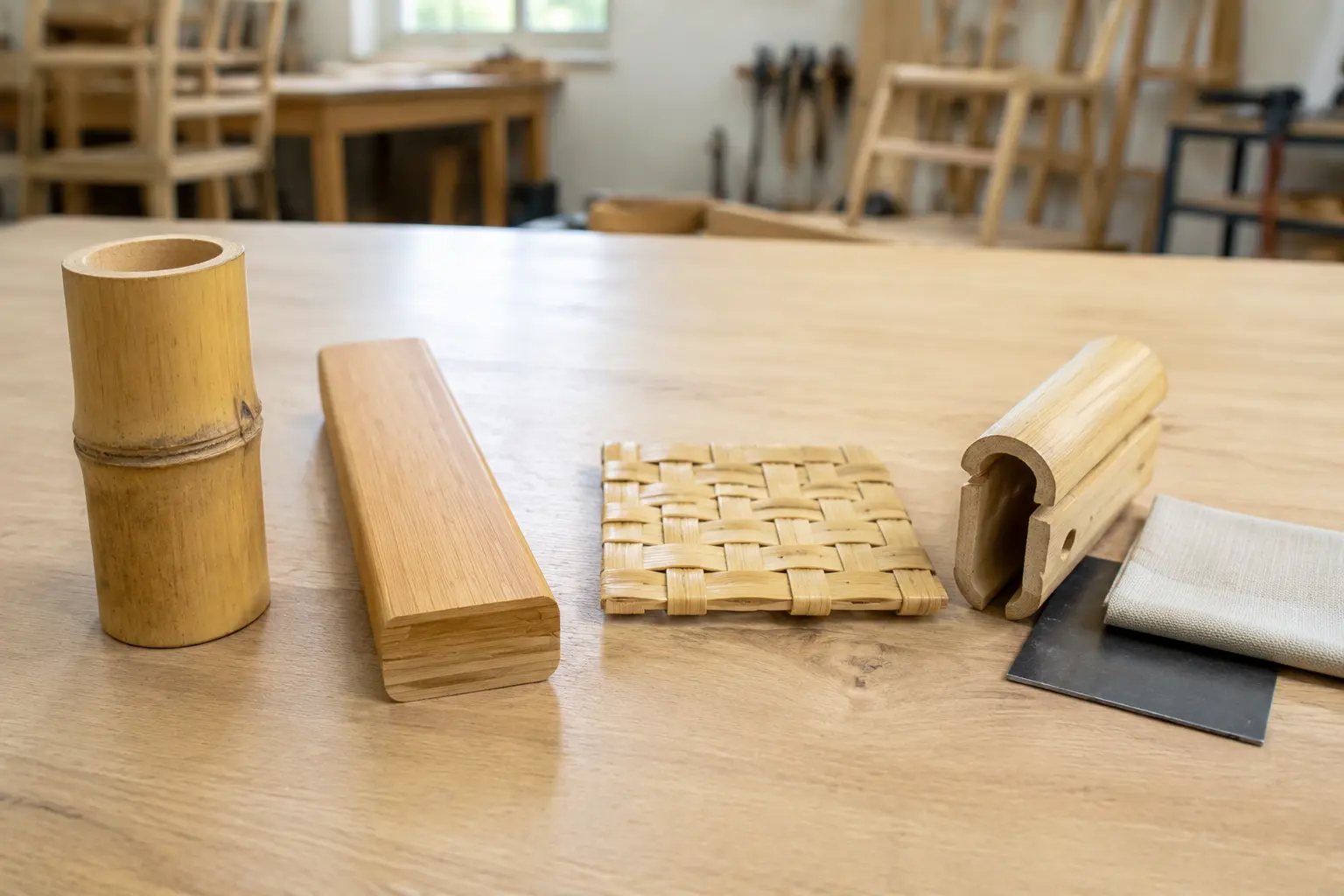
In the strictest sense, a bamboo chair uses bamboo as a meaningful structural or surface material. However, the phrase covers several construction families. Understanding them is more useful than assuming that all chairs made from bamboo are identical.
| Construction | What the buyer sees | Typical design character | What to verify |
|---|---|---|---|
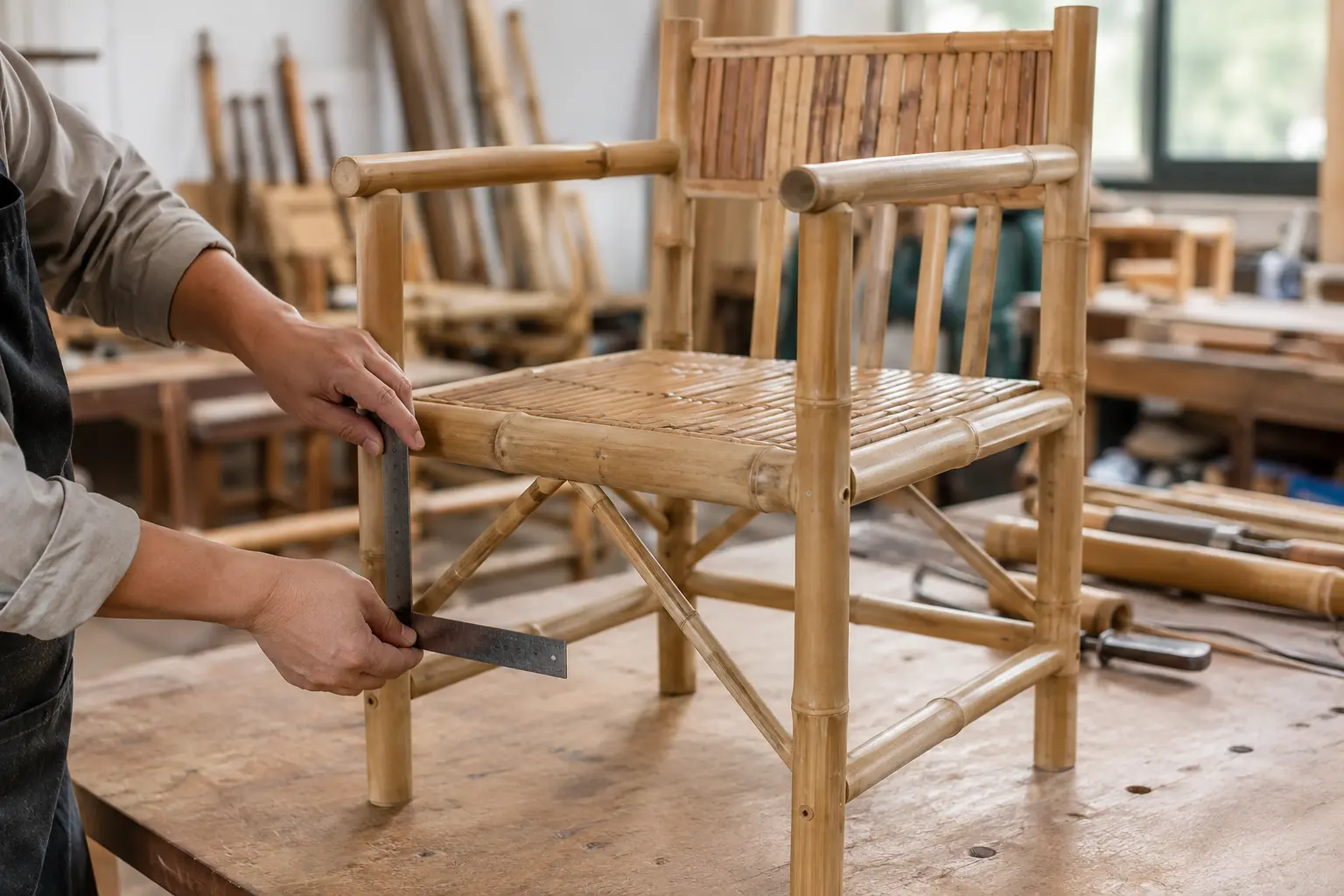
| Whole-culm or split-bamboo frame | Visible round sections, nodes and natural variation | Traditional, organic or handcrafted | Drying, treatment, joint reinforcement and surface finish |
| Laminated bamboo | Smooth boards or shaped components with fine strip lines | Clean, modern and precise | Lamination quality, edge finishing and joint construction |
| Woven bamboo surface | Flexible strips forming the seat or back | Textural, light and decorative | Weave tension, edge security and replaceability |
| Hybrid chair with bamboo | Bamboo combined with timber, metal, fabric, leather or rope | Broad range from minimal to boho | Which components are bamboo and how unlike materials are joined |
| Bamboo-style chair | Color, printed grain or molded details that resemble bamboo | Decorative imitation | Actual substrate; do not assume the frame is bamboo |
A listing for a wooden bamboo chair may describe a timber chair with bamboo panels, while a bamboo wood chair may refer to laminated bamboo that is worked much like wood. Neither phrase identifies the material precisely. A useful specification lists the material of the legs, rails, seat, back and decorative parts separately.
The Anatomy of a Well-Designed Bamboo Chair
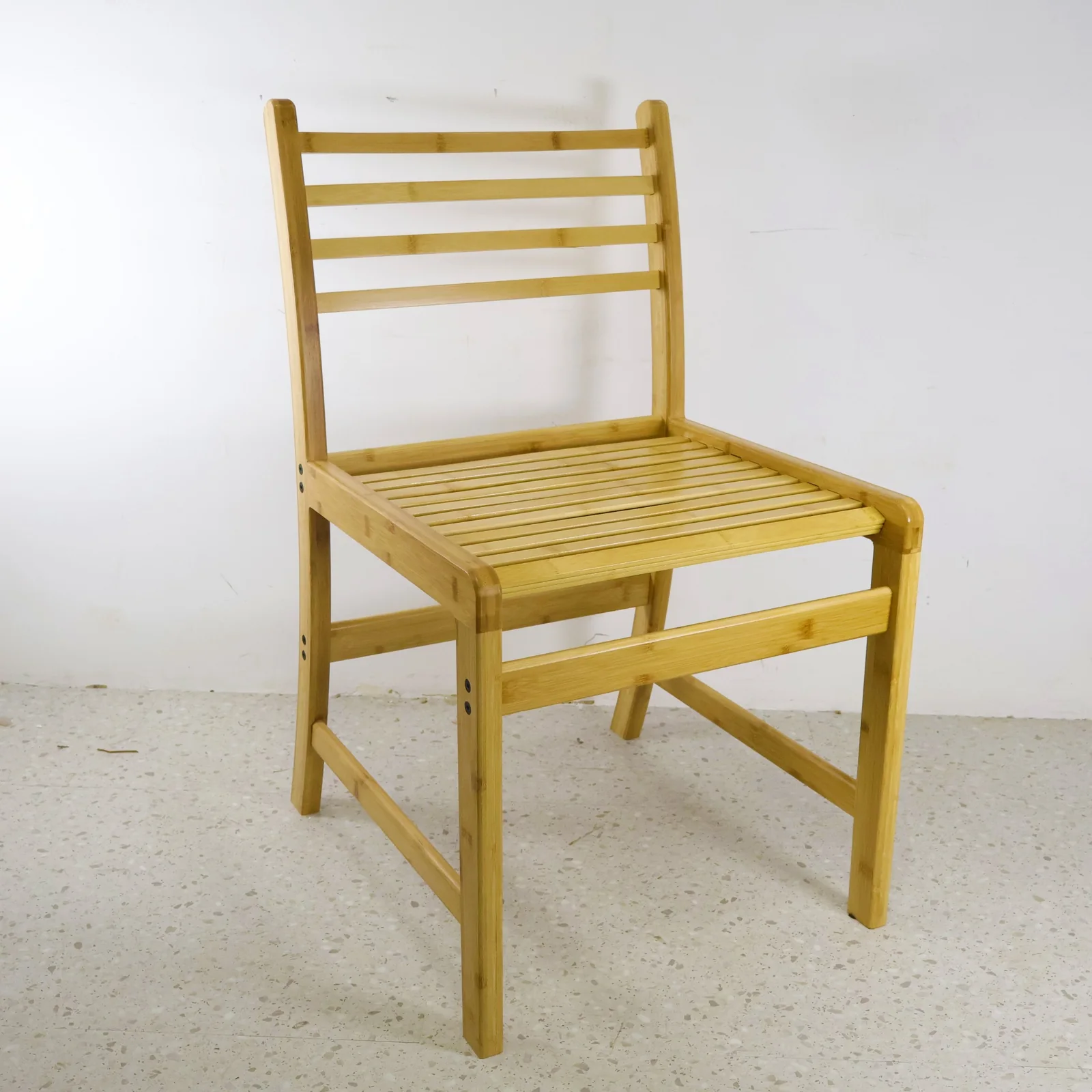
A chair is a load-bearing object, not simply a collection of attractive bamboo pieces. Its comfort and stability depend on how several components behave as one system.
- Frame: The front and rear legs, side rails and cross rails establish the chair's geometry. A bamboo chair frame may use culms, laminated members or a hybrid of bamboo and another structural material.
- Joints: Dowels, mortise-like connections, mechanical fasteners, adhesives, bindings or combinations may be used. The appropriate method depends on the component shape and expected load.
- Seat: A bamboo chair seat can be slatted, paneled, woven, upholstered or supported by fabric or rope. The surface should distribute weight without sharp edges or excessive local flex.
- Back: Bamboo back chairs may use vertical spindles, a curved laminated panel, woven strips or a shaped frame. Back angle and lumbar contact matter more to comfort than decoration alone.
- Bracing: Stretchers and cross supports help resist side-to-side racking. Their placement should not interfere with feet while seated.
- Floor contact: Level legs and suitable glides reduce rocking and protect indoor floors.
Natural culms vary in diameter and wall thickness, so material selection and controlled preparation are important. Laminated bamboo offers more regular dimensions, but it still requires sound machining, adhesive control and finished edges. Neither construction is automatically superior; the right choice follows the intended design, production method and use conditions.
Common Bamboo Chair Types and Their Best Uses
Dining and kitchen chairs
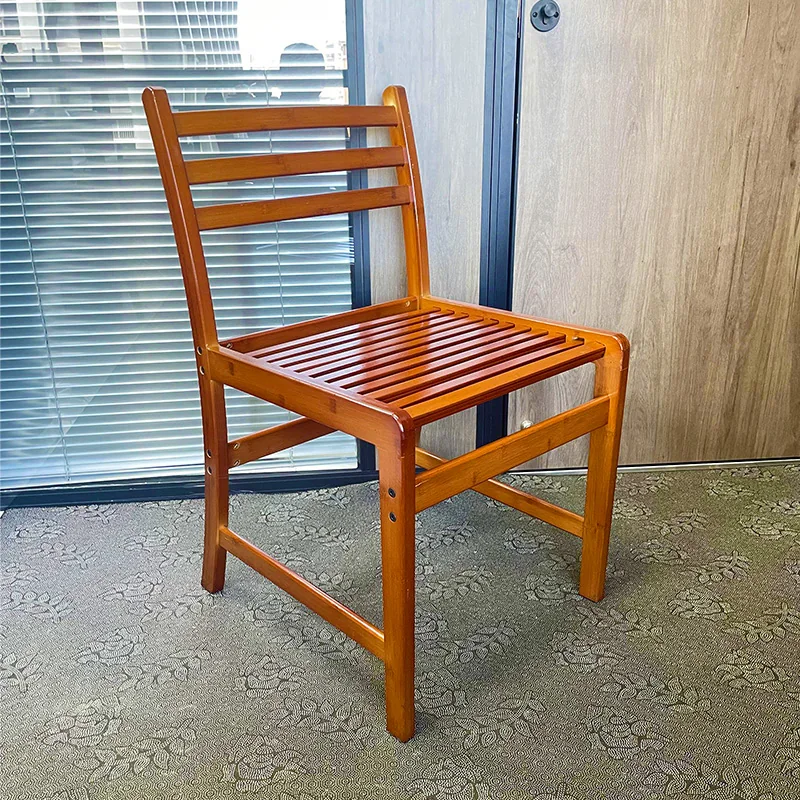
A dining bamboo chair normally needs a relatively upright back, practical seat height and a footprint that works around the table. For a coordinated set, compare variation in color, leg alignment and seat height across all units rather than judging one sample. A simple bamboo chair with a shaped solid seat can suit a compact kitchen; woven or cushioned versions bring more texture to longer meals.
Living-room and occasional seating
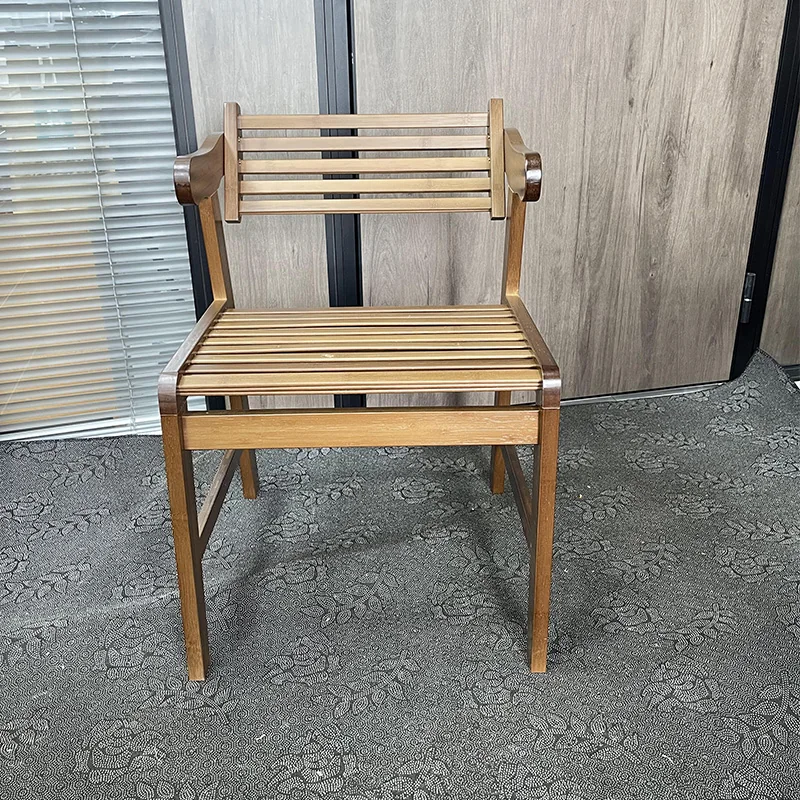
Living-room bamboo chair design can be more relaxed and expressive. A low lounge form, curved back, open-frame armchair or bamboo single chair can soften an interior dominated by flat cabinetry and straight lines. Cushion thickness, seat depth and back angle should match the expected posture: conversation seating differs from a chair intended for reading for an hour.
Bistro, café and flexible seating
For hospitality or multifunction rooms, repeatability and handling may matter as much as appearance. Check whether chairs stack or fold, how exposed fasteners are finished, and whether replaceable glides are available. Products advertised as bamboo café chairs may actually use aluminum with a bamboo-pattern coating, so the material schedule should be explicit.
Reading, meditation and floor chairs
A reading chair usually benefits from arm support, a deeper seat and a supportive cushion. Meditation and floor-level bamboo seating prioritizes a lower center of gravity, compact storage and posture support. These categories should not be treated as interchangeable: dimensions that feel comfortable for a brief floor session may not suit desk work or dining.
Bedroom and entryway chairs
Smaller chairs can provide a place to dress, place a bag or sit briefly without visually crowding the room. An open bamboo frame chair is especially useful where lightness matters. Measure the available circulation space and door swing before choosing a wide barrel or armchair form.
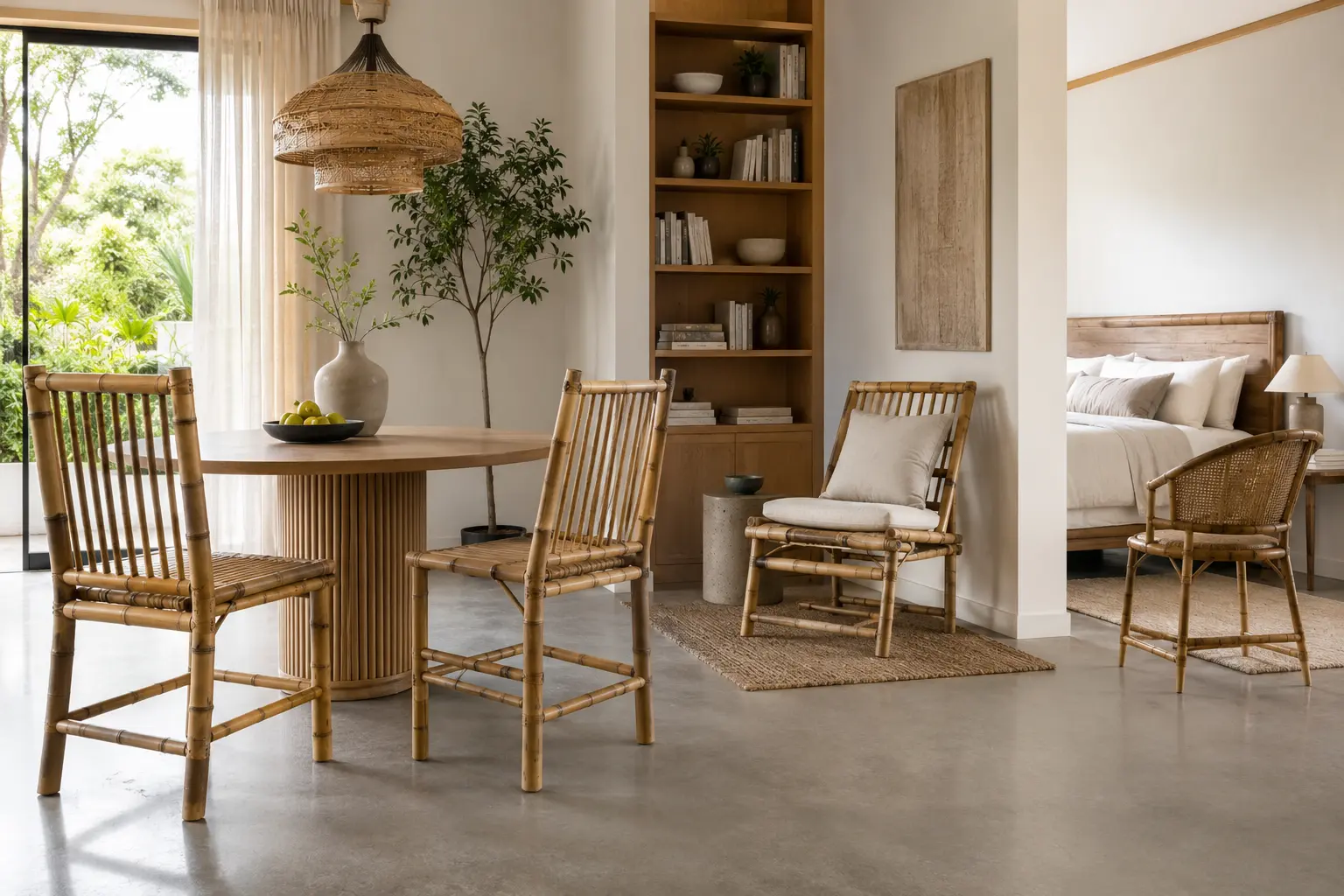
Bamboo, Cane, Rattan and Wood: Do the Names Mean the Same Thing?
No. Bamboo is a grass whose culms are segmented and often hollow. Rattan is a climbing palm commonly used as a solid flexible cane or split into material for weaving. “Cane” can describe rattan material or a weaving technique, depending on the seller and market. Wood comes from trees and has a different internal structure.
A chair with bamboo may legitimately combine these materials: a bamboo frame, rattan-cane back and upholstered seat can be a sensible hybrid. The problem occurs only when a vague label hides the actual construction. Ask for a component-level material declaration, especially when product claims, labeling or import documentation depend on composition.
How to Choose a Bamboo Chair Design for an Interior
For a simple or modern room
A modern bamboo chair works best when the silhouette is controlled. Look for consistent radii, restrained joinery, clean edge treatment and a limited material palette. Laminated bamboo components pair naturally with neutral upholstery and matte metal. A simple design is not necessarily easy to make: minimal forms expose uneven gaps, rough edges and misalignment more clearly.
For an organic or boho room
Visible nodes, woven panels, rope details and rounded frames bring warmth and texture. Variation should feel intentional, not uncontrolled. Repeat one material or color elsewhere in the room—perhaps a lamp, basket or table detail—so the chair feels connected rather than themed.
For a mixed-material interior
A chair with bamboo does not need to be entirely natural in appearance. Bamboo and leather can feel tailored; bamboo and rope can appear casual; bamboo with fabric adds color and softness. Specify the contact points carefully because different materials expand, flex and wear in different ways.
Comfort and Dimensions: What to Check Before Buying
Photographs rarely reveal whether a bamboo sitting chair will feel right. Request a dimensioned drawing and evaluate at least these points:
- Seat height: It should relate to the table, desk or activity, including any cushion compression.
- Seat depth and width: Deeper is not always better; users should be able to contact the back without pressure behind the knees.
- Back angle: Dining, working and lounging require different postures.
- Arm height: Arms should support the user without preventing the chair from fitting under a table.
- Front edge: A rounded or softened edge is generally more comfortable than a sharp rail.
- Stability: The chair should sit evenly and resist tipping or noticeable racking during normal movement.
There is no universal “best” dimension because body size and intended use differ. For a commercial program, a physical sample and documented testing plan provide more useful evidence than a generic load number copied from a listing.
A Practical Quality Checklist for Bamboo Chairs
| Check | What to look for | Why it matters |
|---|---|---|
| Material identity | Clear distinction between bamboo, wood, rattan, metal and bamboo-look surfaces | Prevents inaccurate expectations and labeling |
| Frame geometry | Level feet, symmetrical rails and consistent angles | Supports stable seating and consistent sets |
| Joints | Tight fit, appropriate reinforcement and no exposed sharp hardware | Joints are frequent stress points |
| Bamboo condition | No obvious active splitting, insect holes, mold or poorly finished nodes | Material condition influences appearance and service life |
| Seat and back | Even slats or weave, secured edges and suitable support | Directly affects comfort and durability |
| Finish | Consistent coating, smooth touch and completed hidden edges | Improves handling, appearance and cleaning |
| Sample testing | Tests selected for the chair type, target market and claimed use | A dining chair and a floor chair do not share identical requirements |
| Packaging | Protection at corners, arms, legs and rubbing points | Reduces transit damage and finish abrasion |
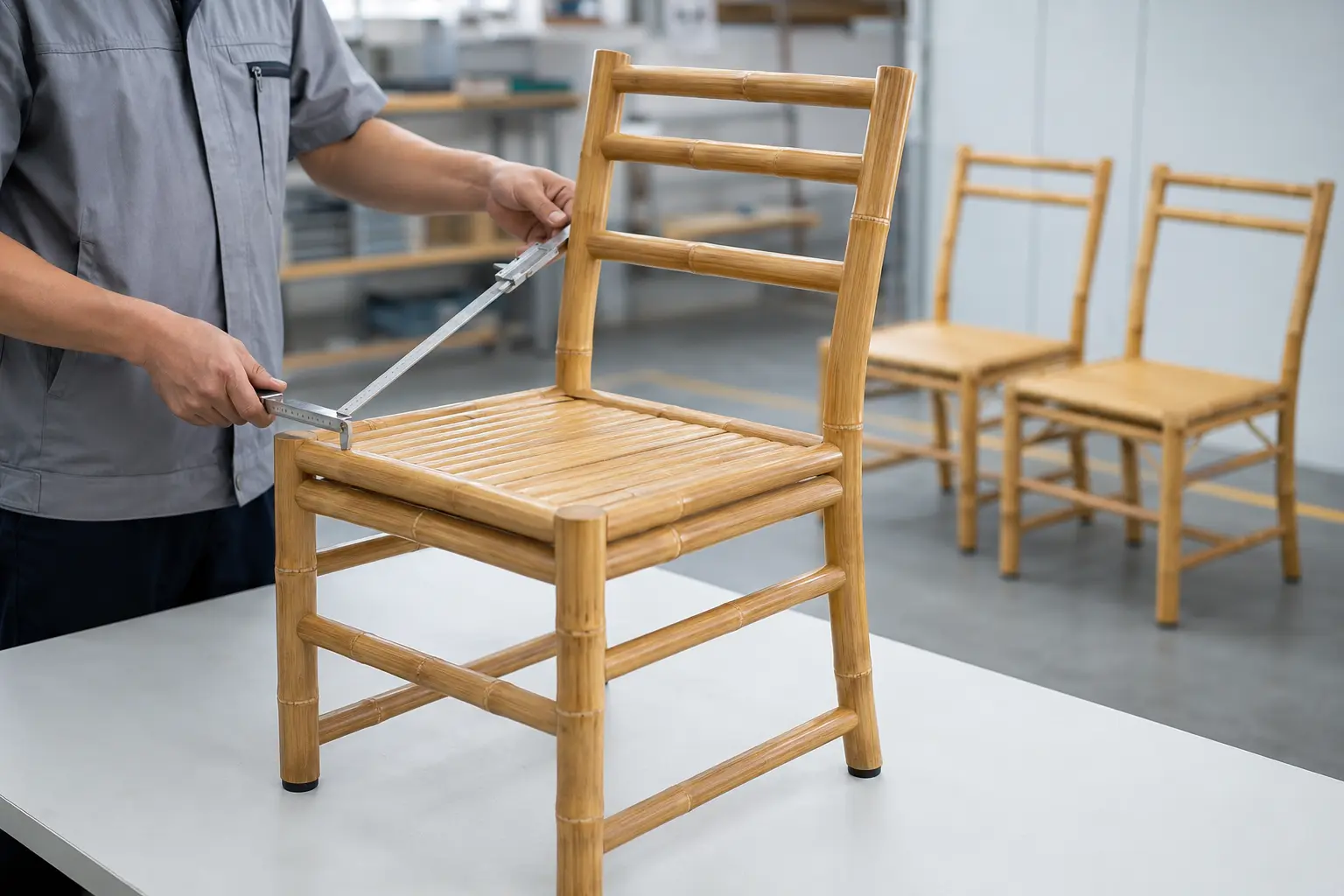
For wholesale or custom projects, approve a reference sample before production and define tolerances for dimensions, color range, rocking, surface defects and packaging. If a seller quotes a load capacity or compliance result, ask which model was tested, under which method and by whom. Evidence should match the exact construction being purchased.
Watch: How to Choose a Bamboo Chair
This short video demonstrates seven practical details to review when comparing bamboo chair materials, construction, comfort and finish quality.
Indoor Placement and Everyday Care
Indoor bamboo chairs generally benefit from a reasonably stable environment. Avoid prolonged contact with standing water, direct heat and extreme humidity swings unless the product has been specifically designed and validated for those conditions. “Natural” does not mean maintenance-free, and an indoor finish should not automatically be treated as an outdoor coating.
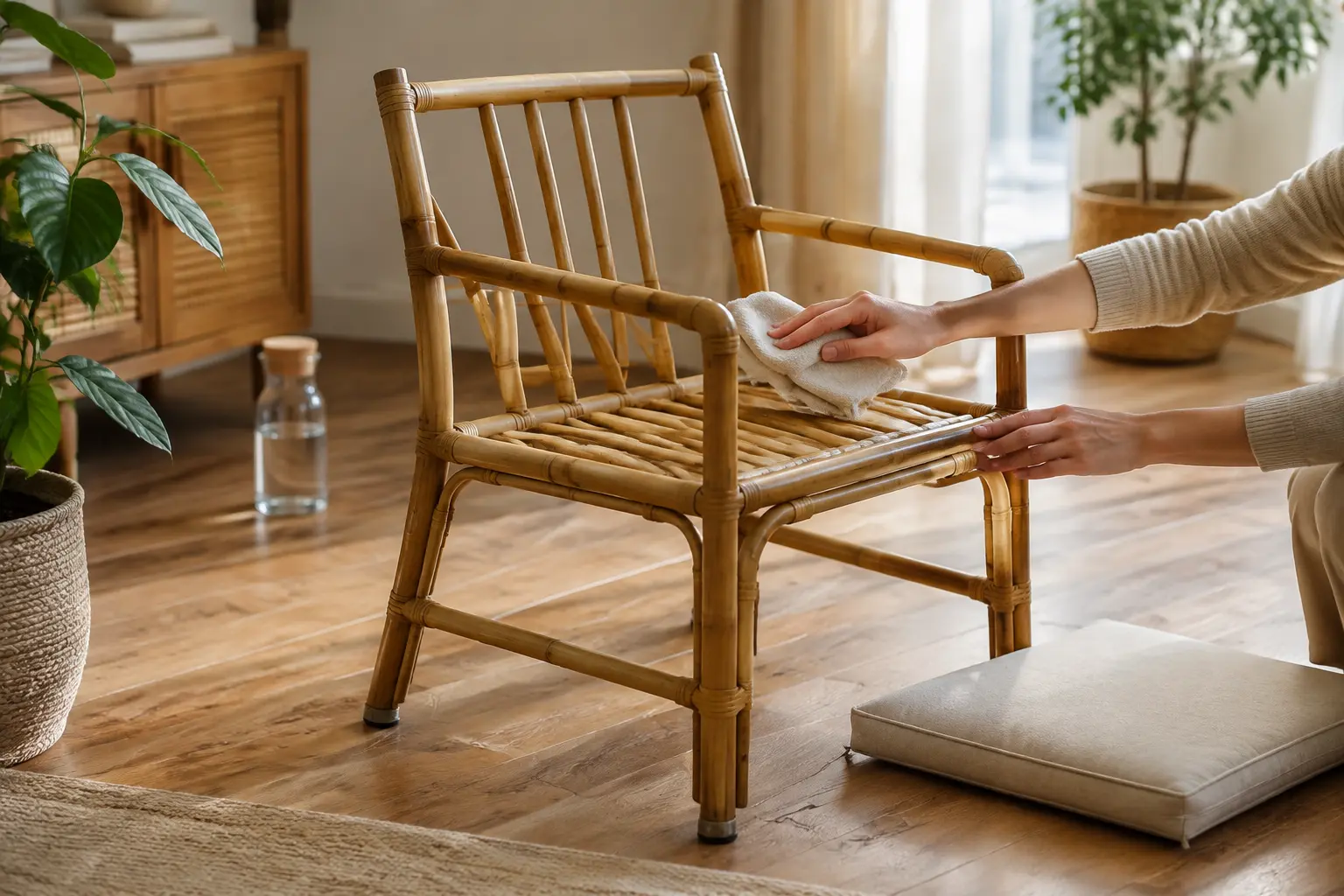
- Remove dust with a soft cloth or brush, including around joints and woven surfaces.
- For routine cleaning, follow the supplier's finish-specific instructions and dry the surface promptly.
- Do not soak a woven seat or leave a wet cushion against the frame.
- Use floor glides appropriate for timber, tile or stone and replace damaged glides.
- Check fasteners, bindings and joints periodically, especially on movable or frequently used chairs.
- Lift rather than drag the chair, and avoid using an ordinary chair as a step.
Planning a Custom Bamboo Chair Project
A useful development brief goes beyond a reference picture. State the intended market and setting, target user, overall dimensions, material composition, finish, cushion or weave requirements, assembly method, packaging format, testing needs and expected order volume. Identify which features are essential and which may change after engineering review.
A sketch can inspire a bamboo chair idea, but a production-ready design must account for component repeatability, joint access, tool paths, assembly sequence and safe packaging. Prototyping is the stage to test proportions and reveal conflicts between appearance, comfort and manufacturability.
Buyers with a custom chair idea or other bamboo furniture concept may contact Fujian Xianxu Bamboo & Wood Co., Ltd. with drawings, reference images and target requirements to ask whether the project fits its current product and process capabilities. Materials, specifications, testing and any production arrangement should be discussed only after a product-specific feasibility review.
Frequently Asked Questions
Are bamboo chairs made entirely from bamboo?
Not always. Some use bamboo for the full frame and seat, while others combine a bamboo frame with rattan cane, fabric, rope, leather, wood or metal. Ask for a component-level material list rather than relying only on the product title.
Is a bamboo-style chair the same as a bamboo chair?
No. “Bamboo style” can describe shape, color or printed grain. The underlying frame may be metal, plastic or wood. A genuine bamboo chair uses bamboo in an identified structural or surface component.
What is the difference between whole bamboo and laminated bamboo chairs?
Whole-culm construction preserves round sections and visible nodes, producing an organic character. Laminated bamboo is assembled from prepared strips into regular sections or boards that can support cleaner, more precise forms. Both require appropriate processing and joint design.
Can indoor bamboo chairs be placed outside?
Do not assume so. Outdoor exposure changes requirements for material preparation, adhesives, hardware, coatings, drainage and maintenance. Use a chair outdoors only when its supplier identifies and supports that application.
How can I tell whether a bamboo chair is comfortable?
Compare seat height, depth, width, back angle, front-edge shape and arm position with the intended activity. For a bulk order, evaluate a physical sample with representative users instead of relying on photographs.
Why do bamboo chair listings use different product names?
Search wording varies by market and seller, but a name alone does not establish the construction. Product results can include genuine bamboo, hybrid and bamboo-look furniture, so verify the frame, seat, back and decorative materials rather than relying on alternate wording.
Final Takeaway
The best bamboo chair is not defined by one shape or marketing phrase. It is a chair whose real material composition, frame, joints, seat, back and finish suit its intended setting. Begin by distinguishing whole culm, laminated bamboo, woven surfaces, hybrids and imitations; then compare comfort, construction evidence and care requirements. That process leads to a more informed choice than searching for appearance or price alone.