

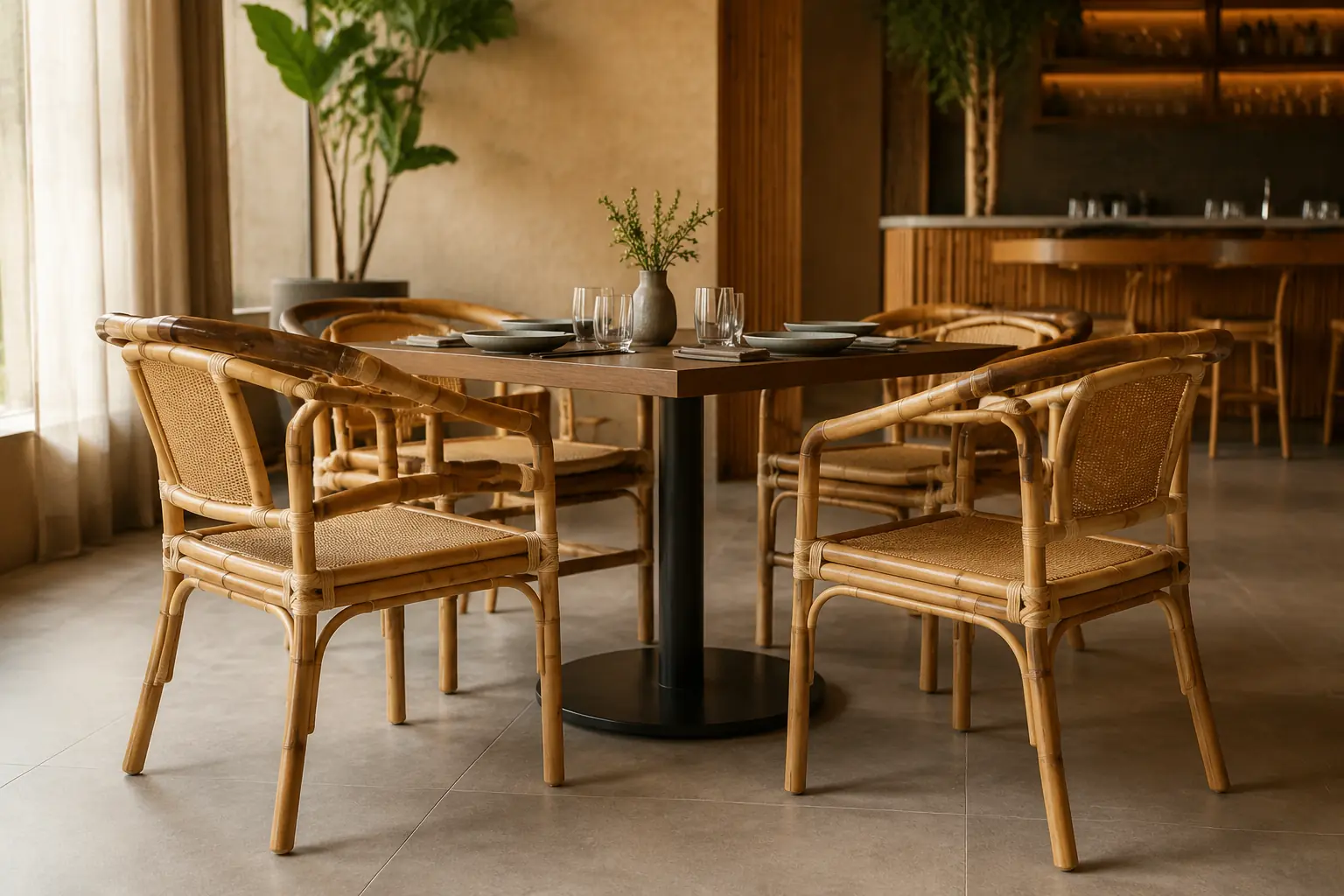
Bamboo dining chairs can bring natural texture and a lighter visual character to a dining room, cafe, bistro or hospitality project. Yet the phrase covers products with very different materials and performance. One chair may use visible bamboo culms, another may use laminated bamboo components, and a third may only have a bamboo-look finish over metal or wood. A woven back may be described as cane even when its frame is bamboo—or the materials may be reversed.
For B2B buyers, the question is not “Do you sell bamboo chairs?” It is: which construction, dimensions, finish, test plan, packing method and replacement strategy suit the intended venue? This guide specifies bamboo dining chairs for residential collections and commercial dining projects without relying on vague material or durability claims.
This article covers adult dining and hospitality seating. Children's high chairs, bathroom seats, meditation benches, wheelchairs and other specialized products require separate design and safety evaluations.

What Buyers Mean by “Bamboo Dining Chairs”
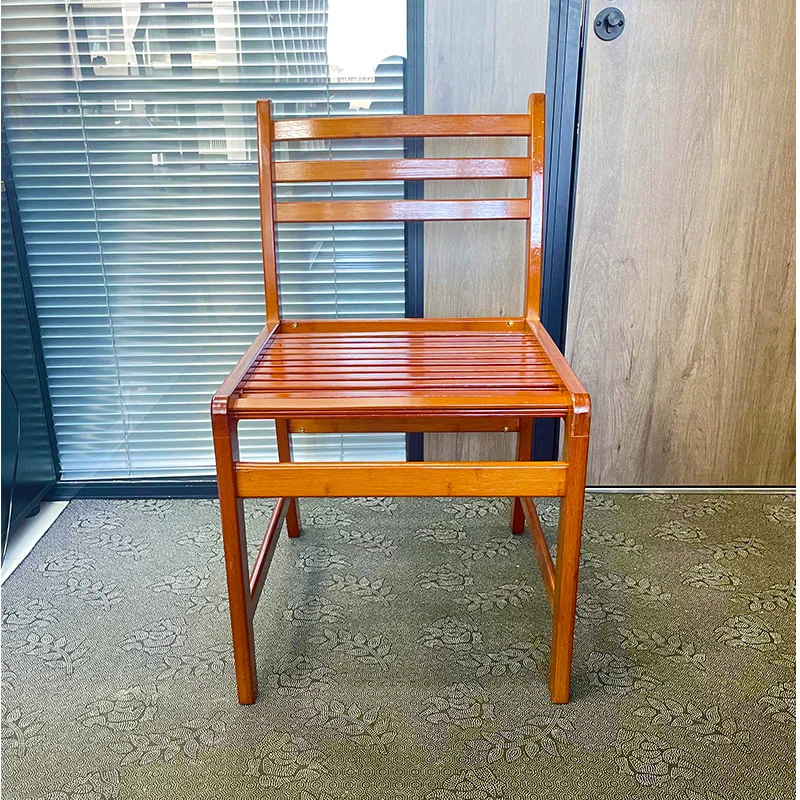
Search phrases such as dining chairs bamboo, bamboo chair dining and chair with bamboo often mix several product categories. Before comparing quotations, ask the supplier to identify every major component by material. A clear bill of materials is more useful than a broad product name.
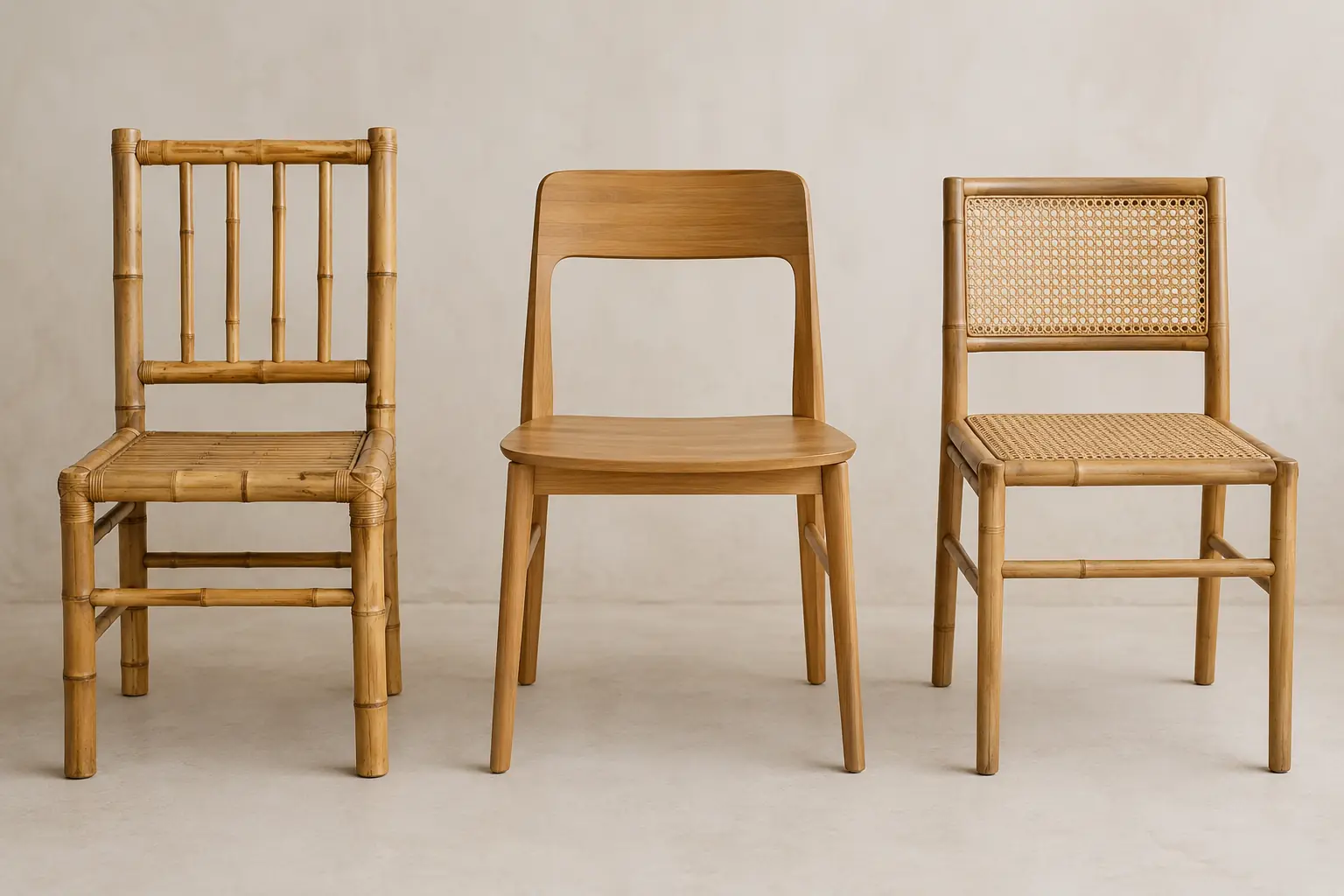
| Construction | Typical visual effect | Questions for the buyer |
|---|---|---|
| Whole or split bamboo frame | Visible nodes and natural culm character | How are the culms selected, treated, joined and protected from splitting? |
| Laminated or engineered bamboo frame | Clean lines, consistent sections and modern profiles | What is the lamination structure, adhesive system and finish schedule? |
| Bamboo frame with cane or woven insert | Open, breathable seat or back | Is the weave natural rattan cane, bamboo strip, paper cord or synthetic material? |
| Bamboo-look chair | Bamboo-inspired color or segmented form | Is the structural frame actually bamboo, timber, aluminum or steel? |
This distinction matters when sourcing bamboo cane dining chairs. “Cane” commonly describes a woven furniture component and is frequently made from rattan peel; it is not automatically bamboo. Likewise, a wicker appearance describes a weaving method rather than one guaranteed material. Accurate naming prevents misleading catalog copy and helps the importer select the right care instructions, labeling and compliance documents.
Match the Chair to Its Actual Use
A chair that performs well in a private kitchen is not automatically suitable for continuous restaurant service. Begin with the use environment, operating pattern and expected cleaning routine.
- Home dining and kitchen: a bamboo kitchen chair can prioritize warmth, comfort and coordination with bamboo kitchen table chairs. Sets must still be stable and easy to maintain, but use frequency is generally different from hospitality seating.
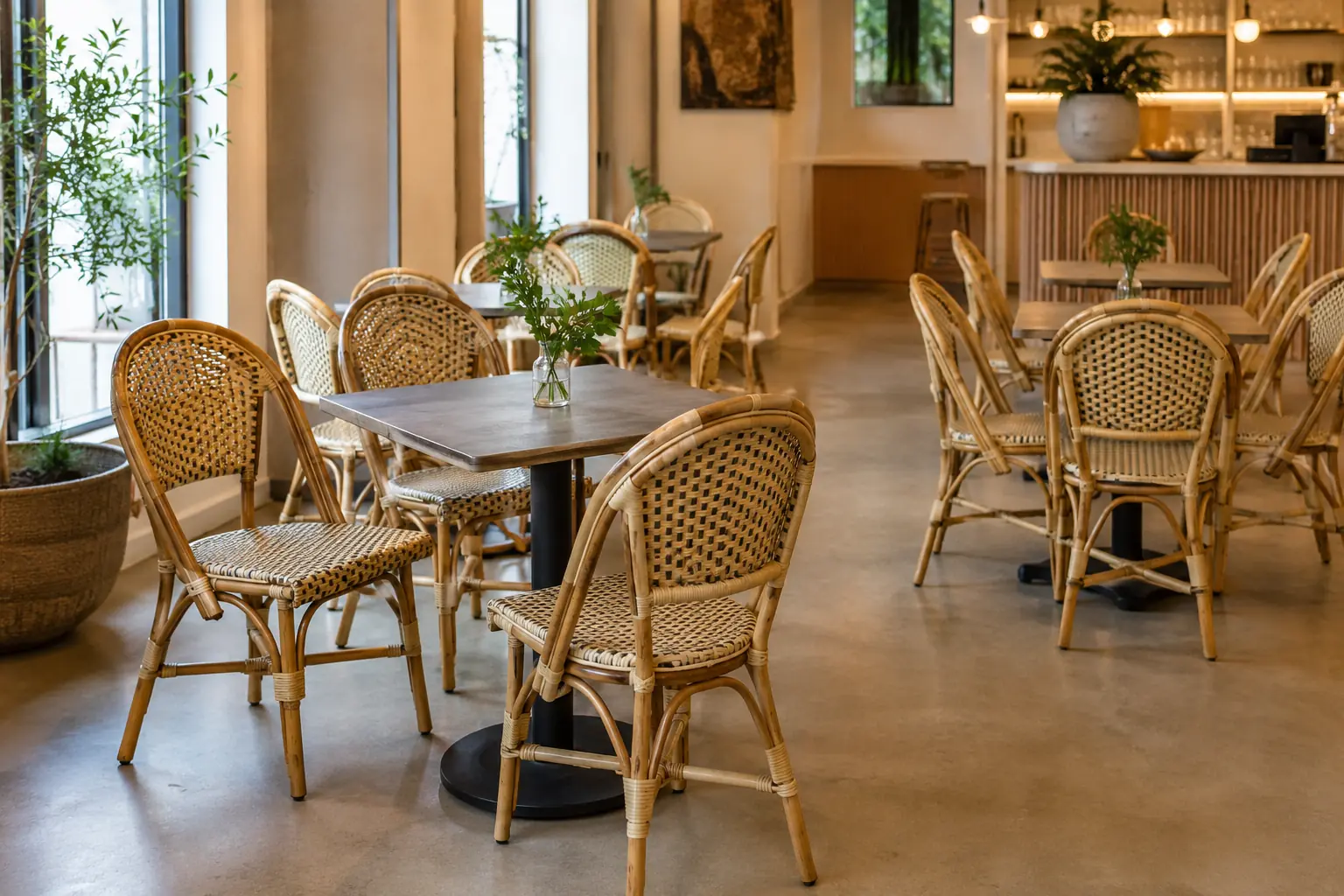
- Cafe and bistro: bamboo bistro chairs and bamboo cafe chairs benefit from a compact footprint, easy movement, wipe-clean surfaces and floor glides selected for the venue.
- Restaurant: bamboo restaurant chairs require documented construction, repeatable quality and a test plan that reflects intensive use. Replacement units and finish consistency are also important for multi-stage projects.
- Banquet and event: bamboo banquet chairs may need stacking, frequent handling and efficient transport. Never assume a decorative chair is stackable; confirm stack height, contact points and a physical stacking trial.
- Counter dining: bamboo counter chairs must be specified around the actual counter height, footrest position and tip resistance. A standard dining-chair drawing cannot simply be stretched vertically.
Indoor bamboo chairs should not be moved outdoors merely because they have a clear coating. Exterior exposure changes the requirements for adhesives, hardware, finish, drainage, ultraviolet resistance and dimensional stability. Unless a chair has been designed and validated for that exposure, specify it for indoor use.
Side Chairs, Armchairs and Dining Sets
Armless side chairs usually fit more easily around compact tables and can simplify movement through a busy dining room. Bamboo dining arm chairs, also searched as bamboo dining chairs with arms, create a more relaxed position and a stronger visual presence, but the arms must clear the table apron and leave enough room for guests and service staff.
Bamboo back dining chairs may use slats, a shaped laminated panel, open latticework or cane. Each option changes support, ventilation, cleaning access and appearance. A woven back can soften the look of a rigid frame, while a shaped bamboo panel supports a more contemporary collection. Cushions can add comfort, but they also introduce fabric performance, foam, seam, cleaning and fire-safety questions that vary by market and end use.
Retailers often merchandise a bamboo chair set as a set of 2 or set of 4. Commercial buyers may order by floor plan instead. Confirm whether “set” describes the consumer selling unit, the inner carton or the master carton. The same chair can require different packaging for e-commerce, retail shelves and hospitality project delivery.
Seven Construction Details Worth Inspecting
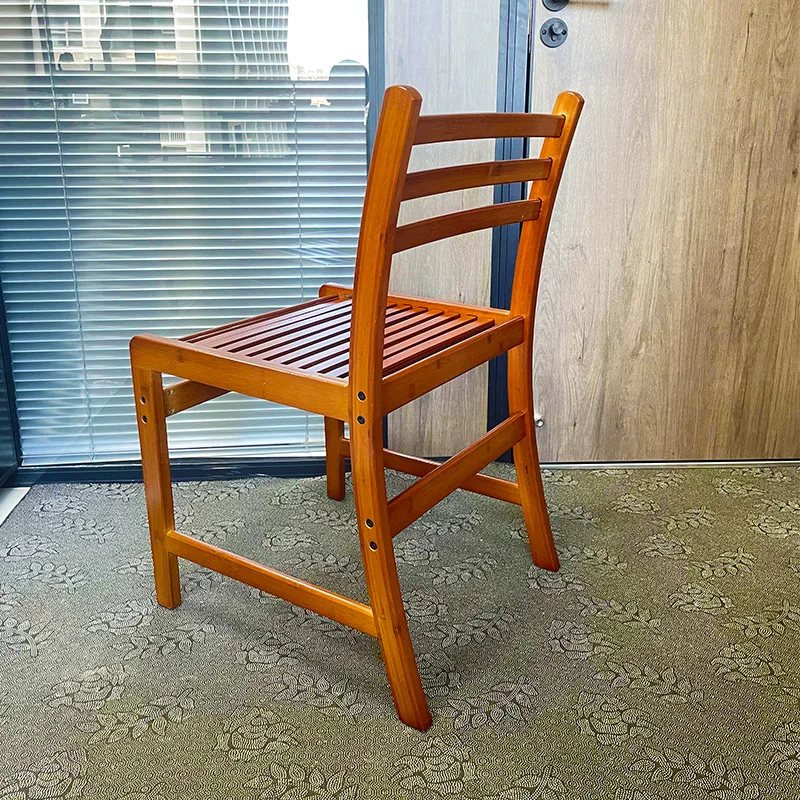
Bamboo is a useful furniture material, but the plant name alone does not guarantee chair performance. A reliable chair is the result of material preparation, section design, joinery, adhesive control, finishing and inspection working together.
- Material route: identify whether load-bearing members are culm bamboo, laminated bamboo, another wood species or metal. Record decorative and woven materials separately.
- Conditioning: ask how material moisture is managed before machining, assembly and finishing. The target should be defined for the product and destination climate rather than copied from an unrelated item.
- Wall and section consistency: for culm construction, natural variation affects machining and joints. For laminated parts, inspect lamination quality, section dimensions and exposed edges.
- Joint design: review the leg-to-seat, side-rail, back-post and arm connections. Ask how the design controls twisting, racking and repeated front-to-back loads.
- Adhesive and fasteners: specify the intended use and destination requirements. Request the applicable technical documentation instead of accepting “eco glue” as a complete specification.
- Surface preparation: sanding, edge rounding and coating coverage affect both touch quality and cleaning. Inspect less visible areas under the seat and around joints, not only the front face.
- Floor contact: glides should suit the project flooring, remain secure during chair movement and be replaceable where practical.
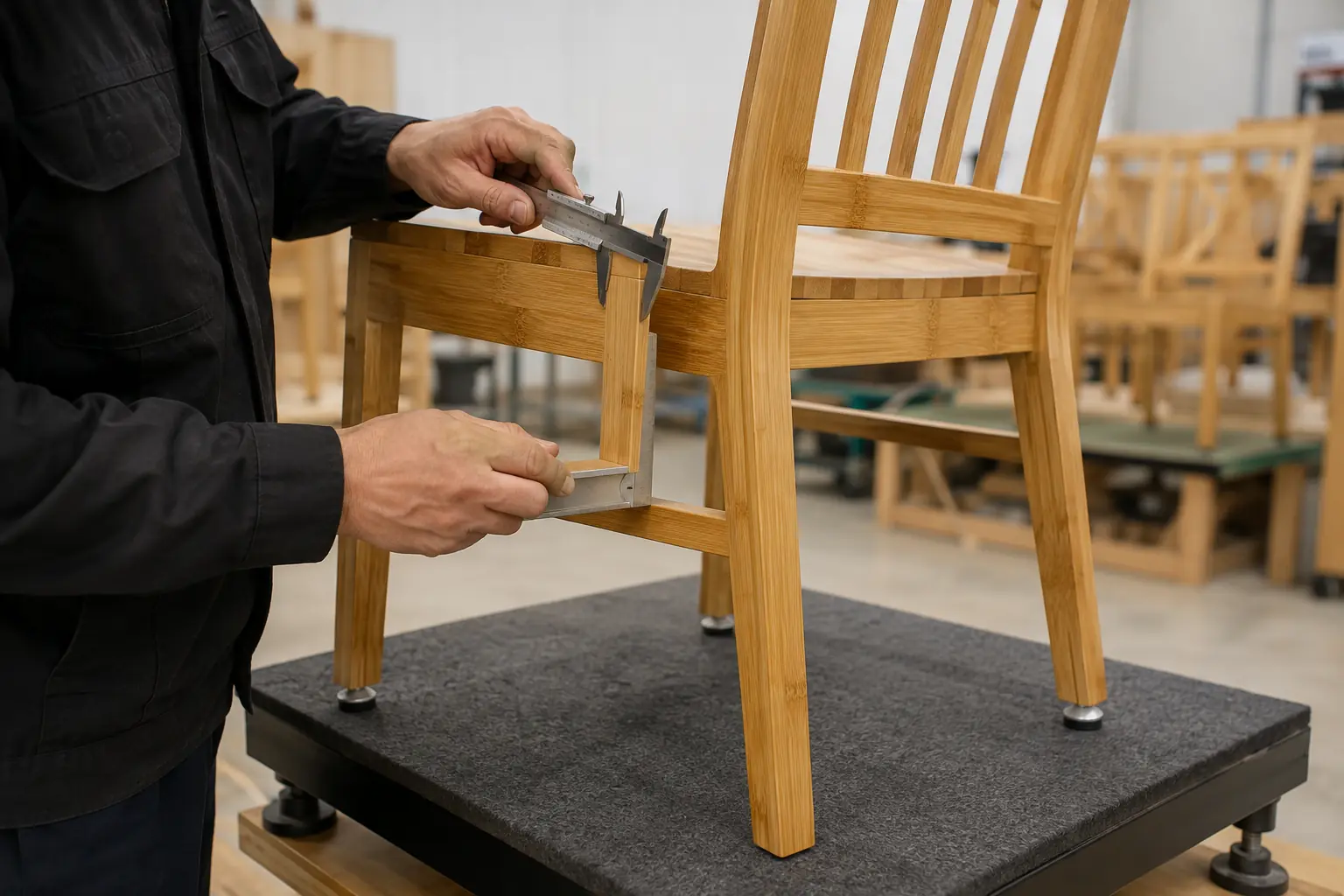
Comfort and Table Compatibility Must Be Verified Together
A chair drawing should be evaluated with the intended table, not in isolation. Check seat height against table height, thigh clearance below the apron, arm clearance, seat width and depth, back support, foot position and the space needed to pull the chair out. If the project includes several table models, test the most restrictive combination.
For modern bamboo dining chairs, a slim profile can look elegant but should not reduce the sections or joints below what testing supports. For a deeper restaurant seat, confirm that the footprint still works with aisle and service circulation. A physical sample or seating buck is the best way to assess comfort because drawings cannot fully communicate edge pressure, back flex or how a woven seat behaves under load.
Define “Commercial Grade” With Evidence
“Commercial grade” is not a substitute for a test report. The buyer should define the destination market, intended use and required protocol before production. For example, ISO 7173:2023 specifies structural strength and durability test methods for chairs and stools, but it does not by itself cover every issue such as ageing, degradation or ergonomics. Other regional, contractual or venue requirements may apply.
Agree on the exact sample, test version, laboratory, acceptance criteria and report holder. Upholstered products may also bring market-specific flammability and labeling obligations. Do not claim that a product “passes all standards.” Instead, connect each verifiable report to the construction, materials and production version being purchased.
Video Guide: How to Specify Bamboo Dining Chairs
A useful companion video can compare whole-culm, laminated-bamboo and mixed-material chair constructions; identify the frame, back, seat and woven elements; and demonstrate how to check table clearance, joints, glides and packing. Film only actual samples and processes available for review, and do not state a load rating, commercial grade or test result unless it is documented for the exact chair shown.
Finishes, Woven Elements and Upholstery
Natural, carbonized and colored finishes can position the same frame for different interiors. Eco-friendly bamboo dining chairs should still have a finish specification that describes appearance, touch, performance and relevant chemical requirements. A green color does not make “green bamboo chairs” environmentally preferable, and an environmental claim should never be based on color or the word bamboo alone.
For woven seats and backs, approve the weave material, pattern, color, tension and edge treatment. For upholstered seats, specify cover composition, color reference, foam construction, seam details, removability and cleaning method. If replacement cushions or woven panels are part of the service plan, settle their fixing method during development rather than after the first shipment.
A Practical Customization Brief
A useful inquiry for bamboo tables and chairs includes more than reference photos. The search phrase bamboo table chair usually signals a coordinated table-and-chair collection, so specify whether the quotation should cover the chair alone or a matching set. Provide the target market, use setting, table dimensions, required chair quantity, desired construction, finish, upholstery or weave, packaging channel and testing expectations. Identify which measurements are fixed and which may change after structural review.
- Dimensioned chair drawings and information about the matching bamboo table
- Material and finish reference samples
- Armchair and side-chair mix
- Set-of-2, set-of-4 or project-pack requirements
- Logo, label, instruction and carton artwork
- Destination-market compliance checklist
- Target inspection level and approved-sample controls

From Inquiry to Repeat Order: A Safer B2B Workflow
- Clarify the use case. Separate residential, café, restaurant, banquet and counter-height requirements.
- Approve the material map. Identify bamboo, wood, cane, fabric, foam, metal and plastic parts accurately.
- Review drawings. Check critical dimensions, joints, floor glides, assembly and stackability where applicable.
- Evaluate a physical sample. Inspect appearance, stability, comfort, table fit and cleaning access.
- Complete agreed testing. Test the approved construction to the protocol selected for the destination and application.
- Lock the golden sample. Record finish, weave, hardware, labels and packaging alongside the drawing and bill of materials.
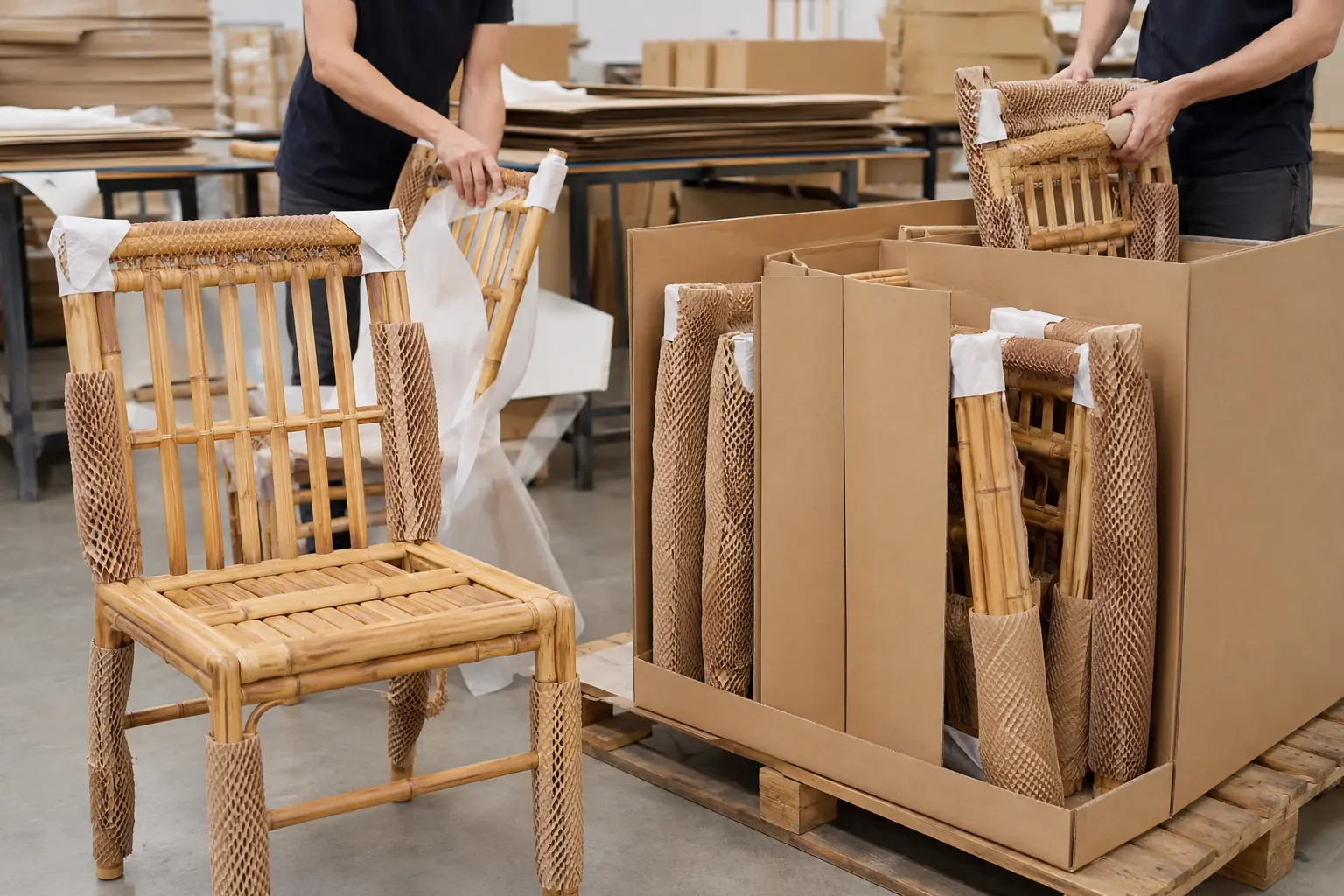
- Inspect production and packing. Use checkpoints that can reveal material substitution, loose joints, rocking, finish variation or carton weakness.
- Retain records for reorders. Keep approved references and change history so a later batch is compared with the correct version.
How to Evaluate Sustainability Claims
Bamboo can be renewed on a shorter cycle than many timber species, but a finished chair also contains adhesives, coatings, hardware, packaging and sometimes other plant fibers or textiles. Evaluate the complete product and its supply chain. If FSC-certified material is requested, verify that the supplier’s certificate is valid, the relevant product is within scope and the transaction documents support the claim. FSC has advised purchasers of manufactured bamboo products to perform due diligence rather than relying on a certificate image alone.
What Determines Bamboo Chair Price?
The price of bamboo dining chairs depends on construction complexity, material yield, machining, joint count, woven or upholstered components, finish layers, testing, order configuration and packaging. Bent or shaped components may need dedicated tooling and process development. A set of 4 prepared for parcel delivery may require more protective packaging than chairs shipped for a project installation.
Where to Find Eco-Friendly Bamboo Dining Chairs
Consumers asking where to find eco-friendly bamboo dining chairs can compare furniture retailers and specialty natural-material stores. B2B buyers need a different route. A retailer may suit a small set of 2, while a hospitality distributor can support stocked restaurant quantities. A custom bamboo products manufacturer is more appropriate when the project needs exclusive dimensions, finishes, branding, packaging or coordinated bamboo tables and chairs.
Whichever channel you choose, request the same fundamentals: accurate material identity, intended-use statement, drawings, care guidance, traceability for certified claims, relevant test evidence and a defined after-sales process. Search visibility and attractive lifestyle photography are useful discovery tools, but neither proves structural performance.
Care for Bamboo Dining and Commercial Chairs
- Remove dust and spills promptly with a soft cloth and the cleaner approved for the finish.
- Avoid prolonged wetting, aggressive abrasives and unapproved solvents.
- Do not drag chairs; lift them to reduce stress on joints and floor glides.
- Inspect joints, woven panels, glides and upholstery on a planned schedule in commercial venues.
- Remove a chair from service if it rocks, cracks, loosens or shows structural damage.
- Use only approved replacement parts and repair methods.
Bamboo Dining Chair RFQ Checklist
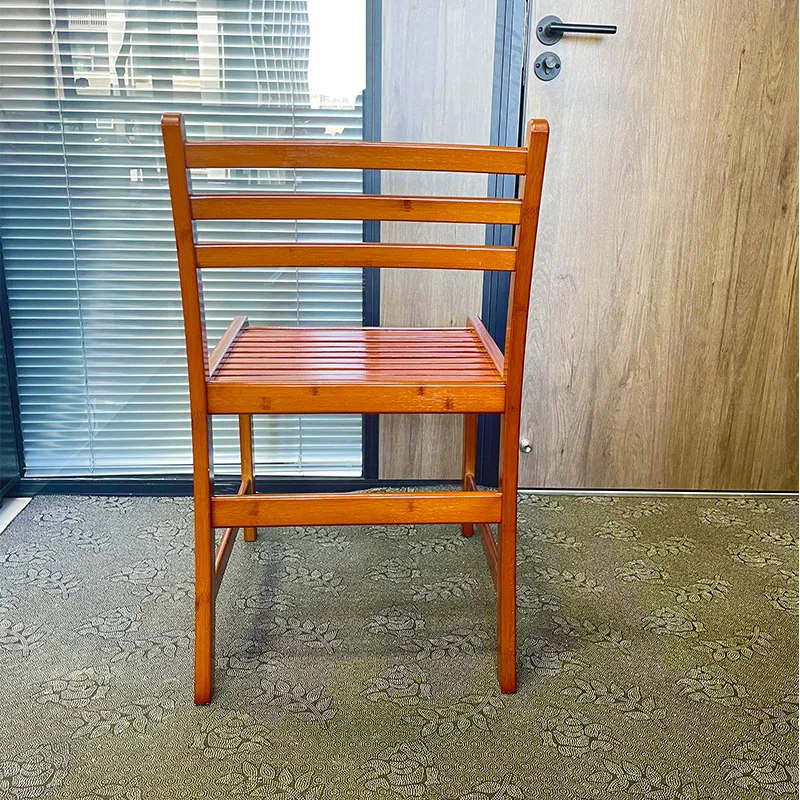
- Residential or commercial use, with venue type
- Indoor location and expected cleaning routine
- Side chair, armchair, bistro chair, banquet chair or counter chair
- Actual material for frame, seat, back, weave, hardware and upholstery
- Chair and table compatibility dimensions
- Finish, color and reference sample
- Required testing and destination regulations
- Stacking, assembly and floor-glide requirements
- Selling unit and packaging channel
- Artwork, labels, spare parts and reorder controls
Frequently Asked Questions
Are bamboo dining chairs suitable for restaurants?
They can be, provided the chair is engineered, finished and tested for the defined commercial use. Material name alone is not evidence of restaurant durability. Review joints, stability, cleaning, glides, test reports and replacement planning.
Are bamboo cane dining chairs made entirely from bamboo?
Not necessarily. The frame may be bamboo while the woven cane is rattan, paper cord or synthetic fiber. Ask for a component-by-component material declaration.
Should I order bamboo dining chairs with arms or without arms?
Armless chairs are often easier to place around compact tables. Armchairs offer a different comfort and design experience but require verified table-apron clearance and more planning space. Many projects use both.
Can a bamboo bistro chair or bamboo bistro chairs be used outdoors?
Only if the complete chair has been designed and validated for the intended outdoor exposure. An indoor clear coat does not automatically make bamboo, joints, adhesives, hardware or woven materials outdoor suitable.
Is a bamboo chair set of 2 or a bamboo chair set of 4 better for wholesale?
It depends on the sales channel, carton limits and customer order pattern. Confirm whether the set is the consumer selling unit or only a shipping configuration, then validate packaging with the intended distribution method.
What should a bamboo dining-chair sample approval include?
Approve dimensions, comfort, frame and joint construction, finish, weave or upholstery, glides, labels and packaging. Connect the approved sample to the final drawing, bill of materials and test version.
Develop a Clearer Bamboo Seating Specification
Fujian Xianxu Bamboo & Wood Co., Ltd. handles custom bamboo and wooden product enquiries from international buyers. For a chair concept, share your drawings, use environment, target market, finish references, testing expectations and packaging channel for an initial feasibility review. Available construction routes, sampling, testing, commercial terms and production capability must be confirmed for the proposed design before an order is considered.