

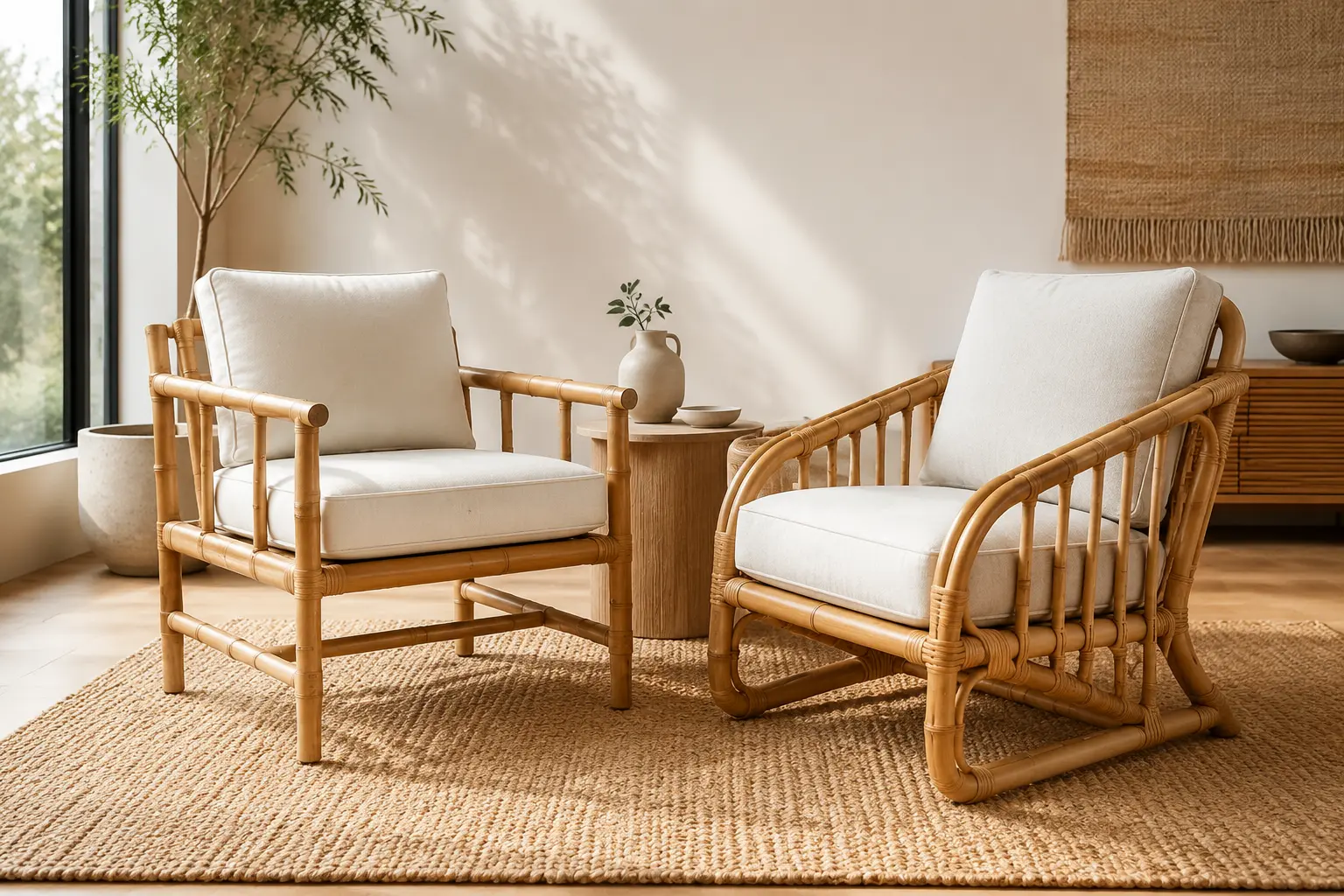
A well-designed bamboo armchair can bring warmth, visible craftsmanship and a lighter visual profile to a living room, bedroom, reading corner or hospitality interior. Yet the phrase covers many different products. A bamboo barrel chair is not built like a reclining lounge chair; a bamboo and cane chair uses different components from a fully upholstered club chair; and a woven bamboo chair may use bamboo only for the frame while the seat is rattan, rope or synthetic cord.
This guide explains the main bamboo armchair formats, how their materials work together, what affects comfort, and which details buyers should verify. It also clarifies why an ordinary lounge chair should not automatically be marketed as bathroom or outdoor furniture.

What Does “Bamboo Armchair” Actually Mean?
In the clearest specification, a bamboo armchair has bamboo in its load-bearing frame and supports for the user’s arms. The frame may use selected round culms, laminated components, engineered bamboo or a mixed-material structure. Titles such as armchair bamboo, bamboo arm chairs and bamboo easy chair overlap, so a reliable listing should identify the actual construction.
Bamboo, rattan, cane and wicker are frequently confused. Most bamboo used as round furniture members has jointed culms with hollow internodes, while processed bamboo can be formed into laminated or engineered components. Rattan is a generally solid, flexible climbing palm. Cane usually means the peeled outer rattan layer used in panels, while wicker is a weaving technique. A bamboo wicker chair may therefore combine a bamboo frame with rattan cane, paper cord or synthetic weave. Buyers should request a component-level material list.
| Search term or style | Typical form | Key point to verify |
|---|---|---|
| Bamboo barrel chair | Curved or wraparound back with integrated arms | Back-frame joints, seat width and cushion fit |
| Bamboo club chair | Deeper lounge profile, often padded | Frame beneath upholstery and removable-cover details |
| Bamboo basket or bowl chair | Rounded, enveloping shell or open weave | Actual frame and weaving material |
| Bamboo fan chair | Decorative high back that spreads outward | Overall dimensions, tipping stability and intended use |
| Bamboo woven chair | Open-weave seat, back or side panels | Strand material, tension and repair method |
| Bamboo reclining chair | Adjustable back or foot support | Hardware, locking positions and pinch-point testing |
Popular Bamboo Armchair and Lounge-Chair Shapes
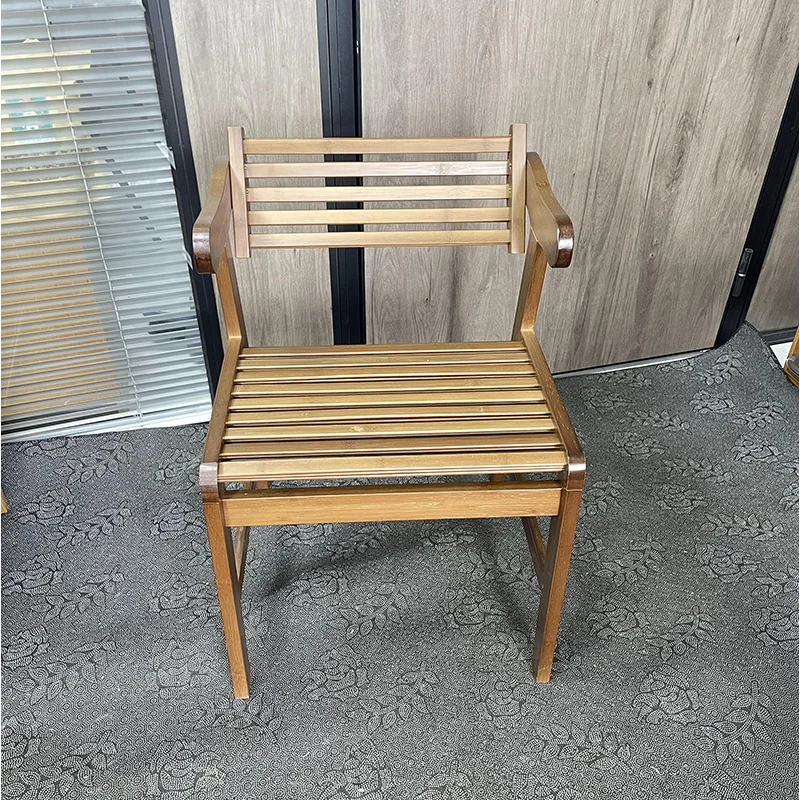
Barrel, club, basket and bowl chairs
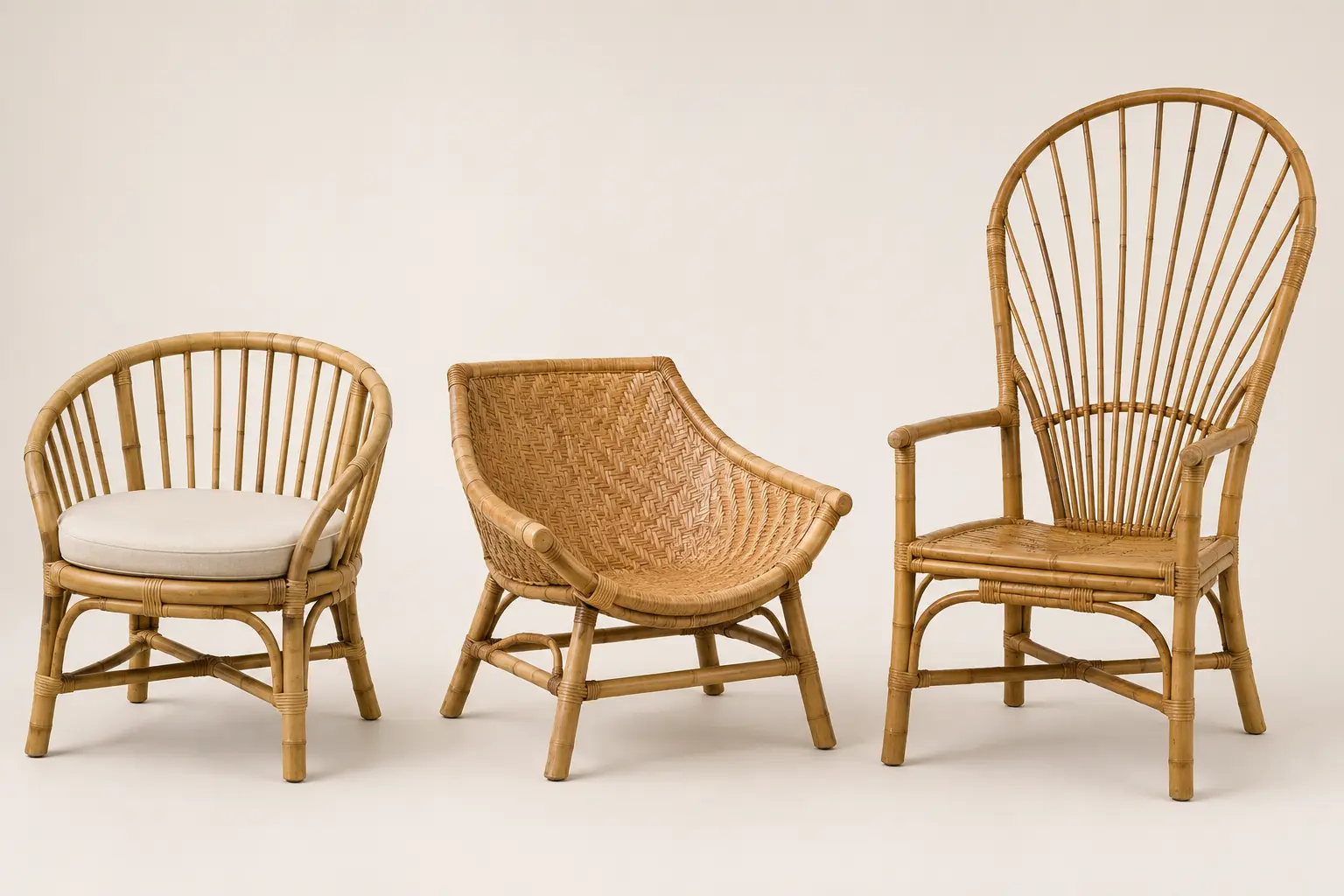
A bamboo barrel chair uses a rounded back flowing into the arms. A bamboo club chair is usually deeper and more upholstered, while a bamboo basket chair or bamboo bowl chair creates an enveloping shape through curved members or weaving. Compare usable seat width—not only the widest outside dimension—because a thick curved back can reduce sitting space.
Fan-back and statement seating
The bamboo fan chair has an expanding decorative back and can become a focal point in a lobby, dressing area or living room. Its height can increase package volume and may change the chair’s stability behavior. Drawings should show the rear footprint, joint layout and stability requirement; the chair must still be evaluated as functional seating.
Easy chairs, reading chairs and occasional chairs
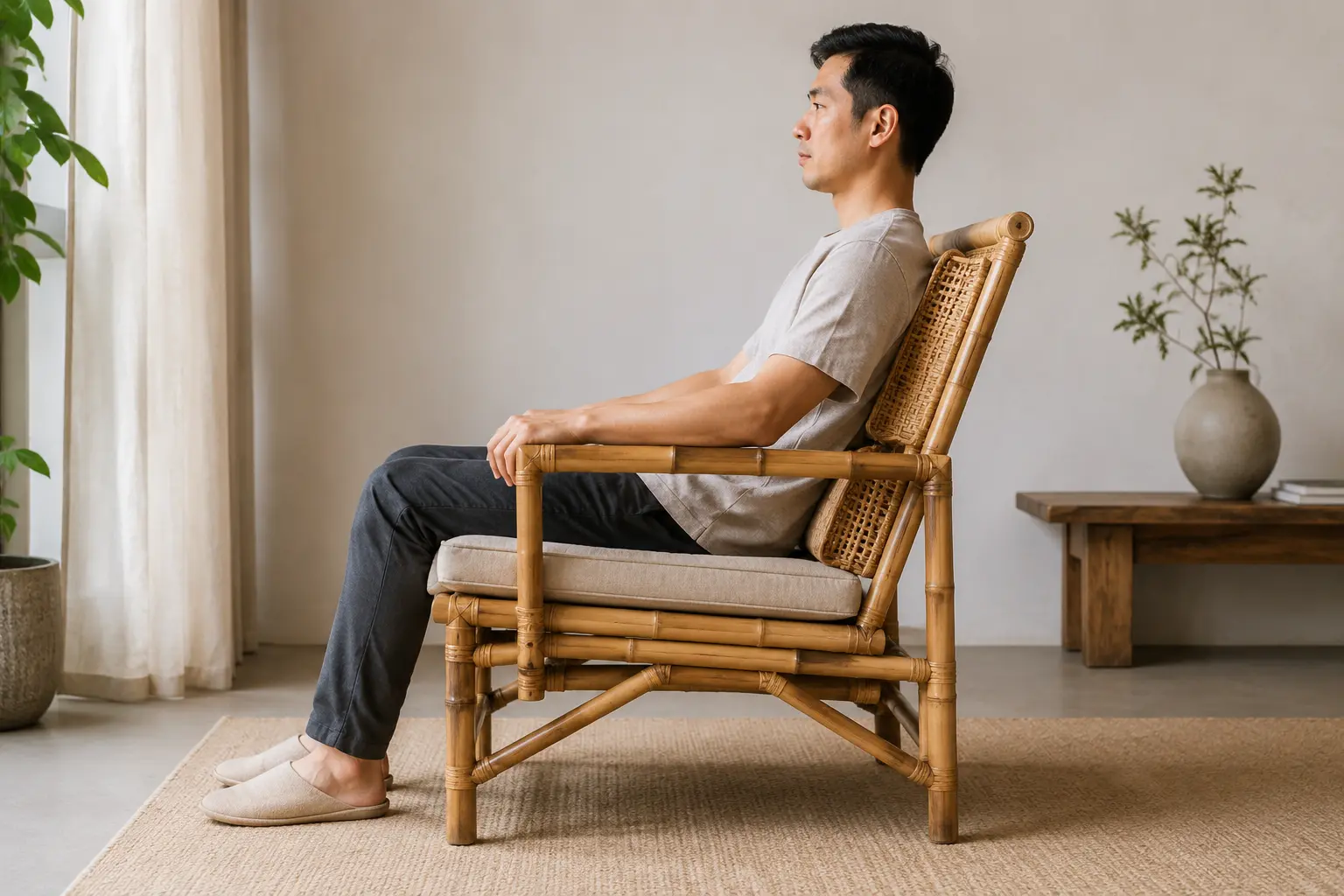
A bamboo easy chair usually has a relaxed angle and supportive back. A bamboo reading chair benefits from moderate recline, lumbar support and stable forearm support. A bamboo occasional chair favors compact proportions beside a sofa or in a guest room. One model is not ideal for every task: reading, conversation and reclining require different geometry.
Meditation, floor and reclining formats
A bamboo meditation chair may mean a low chair with back support; a meditation bench is normally a compact kneeling seat. They require different dimensions and instructions. A bamboo reclining chair adds moving joints, so hardware, finger clearances and locking action need review. Avoid health or therapeutic claims without evidence for the exact product.
Single armchairs and coordinated sofa sets
A bamboo sofa chair can stand alone or form a bamboo couch and chairs group. Searches for bamboo sofa and chairs often indicate a matched collection. Because natural bamboo color varies, an approved color range and physical sample are more useful than one digital value.
Frame, Weave and Upholstery: How the Materials Work Together
The phrase “chair made of bamboo” does not reveal where bamboo is used. Round culms vary in diameter, wall thickness, nodes and color. Laminated or engineered bamboo can provide more repeatable parts, but adhesive, finish and emissions documentation should match the intended market and use.
Connections matter more than a generic strength claim. Repeated loads move through the legs, seat rails, back and arms, so joint geometry, fasteners, adhesive, reinforcement and tolerances affect performance. Approve a structural sample and define strength, durability and stability tests before mass production.
Bamboo with cane, wicker or woven panels
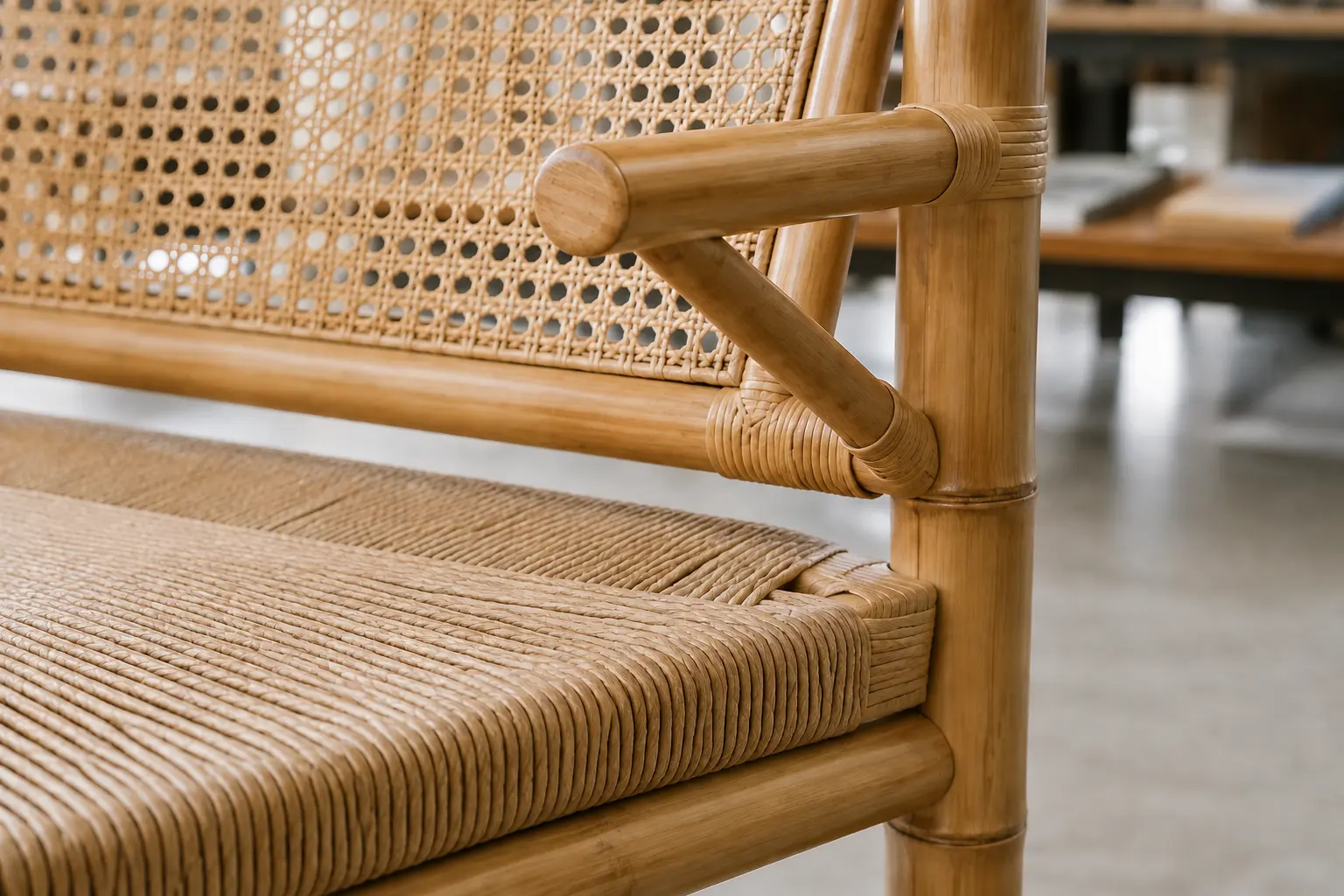
A bamboo and cane chair commonly combines a bamboo frame with a ventilated cane seat or back. A bamboo cane chair set can feel lighter than an upholstered group. Bamboo wicker chairs and wicker and bamboo chairs need precise labeling because “wicker” does not identify the fiber. For bamboo woven chairs or a bamboo weave chair, state whether the weave is rattan cane, bamboo strip, rope, paper cord or synthetic material and confirm its intended environment.
Leather, rope and cushions
A bamboo and leather chair contrasts a warm frame with upholstery. Specify full-grain, corrected-grain or bonded leather, or identify the exact synthetic alternative; “leather look” is not a material. For a bamboo and rope chair, rope composition, diameter, tension, stretch and abrasion influence comfort.
A bamboo armchair with cushion separates support from softness. Removable cushions are easier to clean or replace; fixed upholstery is harder to service. Approve fill, thickness, cover, zipper, ties, seams, care label and applicable flammability requirements. Take cushion dimensions from the production chair, not an image.
Comfort Depends on Geometry, Not the Material Name
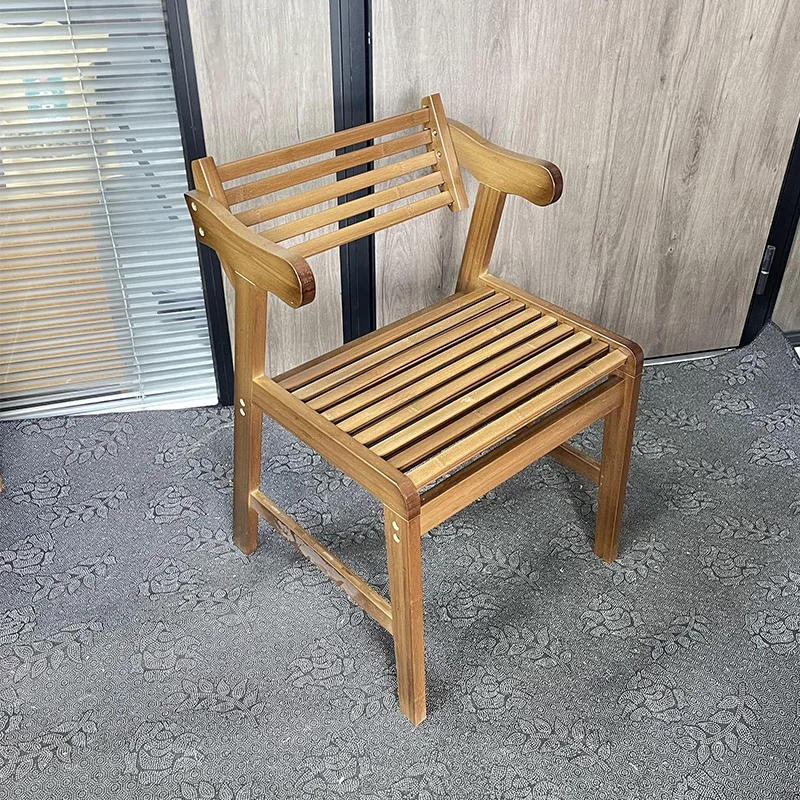
Comfort reflects seat height, depth and angle, back shape, arm position, surface deflection and sitting duration. Research on one traditional Chinese bamboo lounge chair shows the value of human-centered geometry, but its findings are not universal specifications. A dining armchair, reading chair and recliner need different proportions.
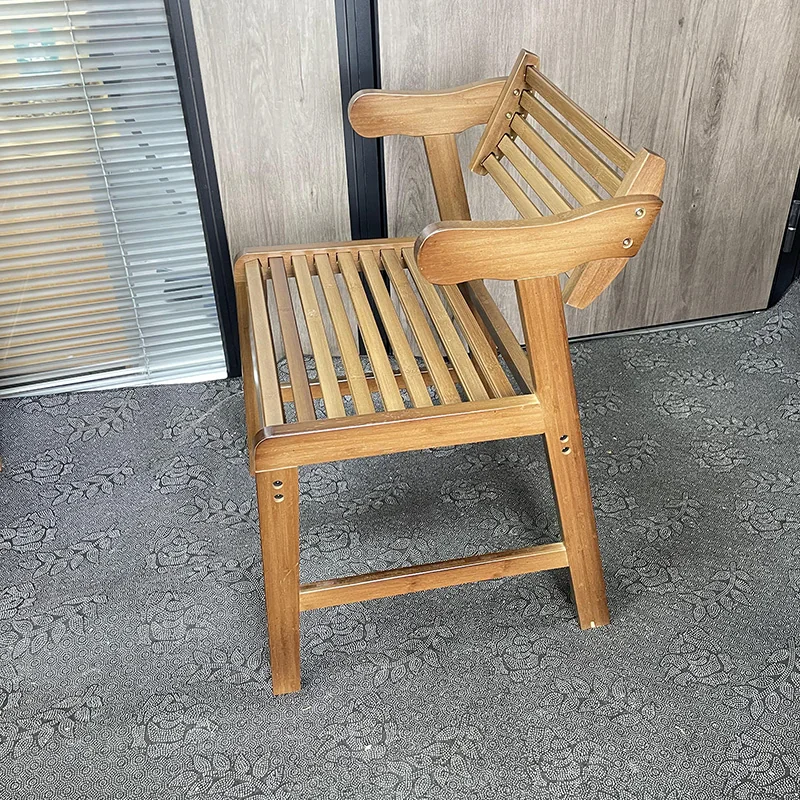
The bamboo arm rest should support the forearm without forcing the shoulder upward. Searches for bamboo armrest or bamboo arm rest may also mean a replacement part. Record arm height, clear width, edge shape and load-test method; hand-contact edges should be smooth and rounded.
- For conversation: choose a moderate seat depth and back angle that make standing up straightforward.
- For reading: look for stable arm support, an appropriate back angle and optional lumbar cushioning.
- For lounging: a deeper seat and more reclined back can work when the user also receives lower-back and head support.
- For dining: confirm that the arms fit beneath the intended tabletop and do not restrict place settings.
- For compact rooms: compare the usable seat area with the full footprint and circulation clearance.
Choosing a Bamboo Chair for Each Room
Living rooms and reading corners
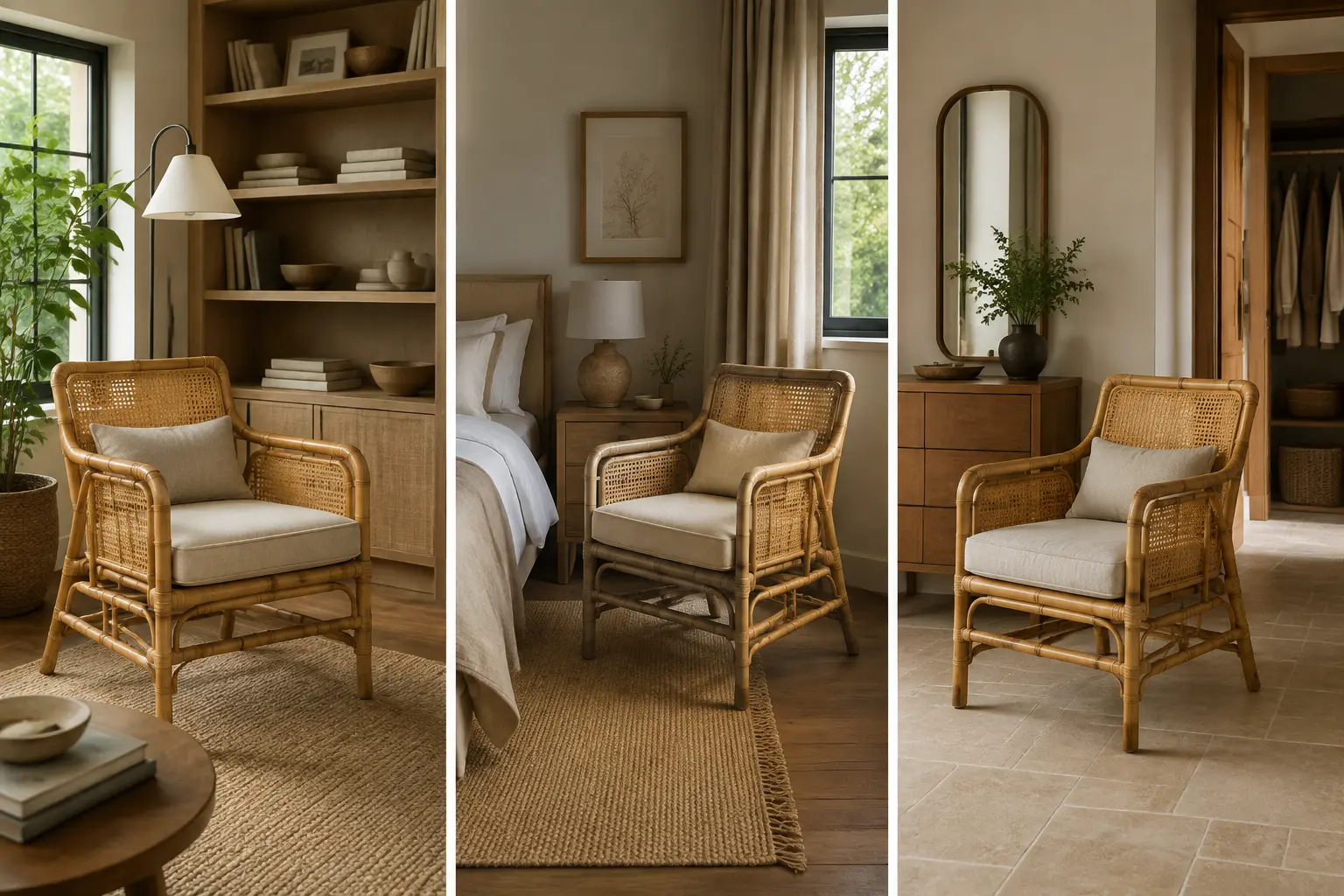
A living room bamboo chair design can be quiet and architectural rather than overtly tropical. Straight laminated rails feel modern; round bamboo, cane and rope look more relaxed. Map the footprint, door width and walking path because fan backs and barrel shapes can occupy more space than their seat size suggests.
Bedrooms and hospitality interiors
A bamboo bedroom chair can serve as a reading or dressing seat. Hospitality buyers should consider cleaning access, fabric performance, floor pads and replacement parts. Natural, smoked, caramel or colored finishes can suit different palettes, but every finish should be tied to a physical sample because bamboo grain and tone vary.
Bathrooms and other humid spaces
An ordinary indoor bamboo armchair should not be placed in a shower or persistent splash zone. If a customer searches for a bamboo bathroom chair, determine whether they need a dry-area vanity chair, a water-resistant bathroom stool or a regulated bath seat. These products are not interchangeable. A suitable dry-area chair still needs ventilation, prompt drying and a finish compatible with the expected humidity. A wet-area stool may require drainage gaps, corrosion-resistant hardware, slip-resistant feet and specific stability testing. It must not be described as a medical or accessibility aid without the necessary design and compliance evidence.
A Practical Quality Checklist for Buyers
Photographs show style, not structural performance. For adult seating, ISO 7173:2023 describes strength and durability test methods, but it does not cover every end use, ageing condition, ergonomic question or upholstery property. Confirm the exact destination-market requirements. Children’s highchairs, bath seats and specialized products belong to different categories.
- Material schedule: identify bamboo, rattan, cane, rope, upholstery, foam, hardware and finish by component.
- Dimensioned drawing: include total and usable dimensions, arm height, seat angle, clearances and tolerances.
- Structural sample: review joint fit, rocking, deflection, sharp edges, exposed fasteners and floor contact.
- Performance plan: define strength, durability, stability, finish and upholstery checks for the intended market.
- Appearance standard: approve acceptable grain, node, color and handmade-weave variation.
- Packaging test: protect projecting arms and backs and verify the carton for the actual distribution channel.
- Instructions and labels: state assembly, intended use, warnings, care and traceability information accurately.
How to Clean and Maintain Bamboo Armchairs
Dust the frame and open weave with a soft cloth, soft brush or low-suction brush attachment. For routine cleaning, use a well-wrung cloth with water and a small amount of mild soap, then remove residue and dry the chair promptly. Do not soak joints or woven panels, use aggressive abrasive cleaners, or leave wet cushions against the frame. Always follow the confirmed finish and upholstery care instructions for the specific model.
Keep indoor bamboo seating away from persistent water, strong heat sources and long periods of intense direct sunlight. Provide airflow around a bamboo woven chair, especially after cleaning. Inspect joints, bindings, rope tension, cane panels, feet and hardware periodically; stop using the chair if a structural part is cracked, loose or damaged. Outdoor use should be claimed only when the entire product—including finish, adhesive, metal parts, weave and cushions—has been specified and tested for that environment.
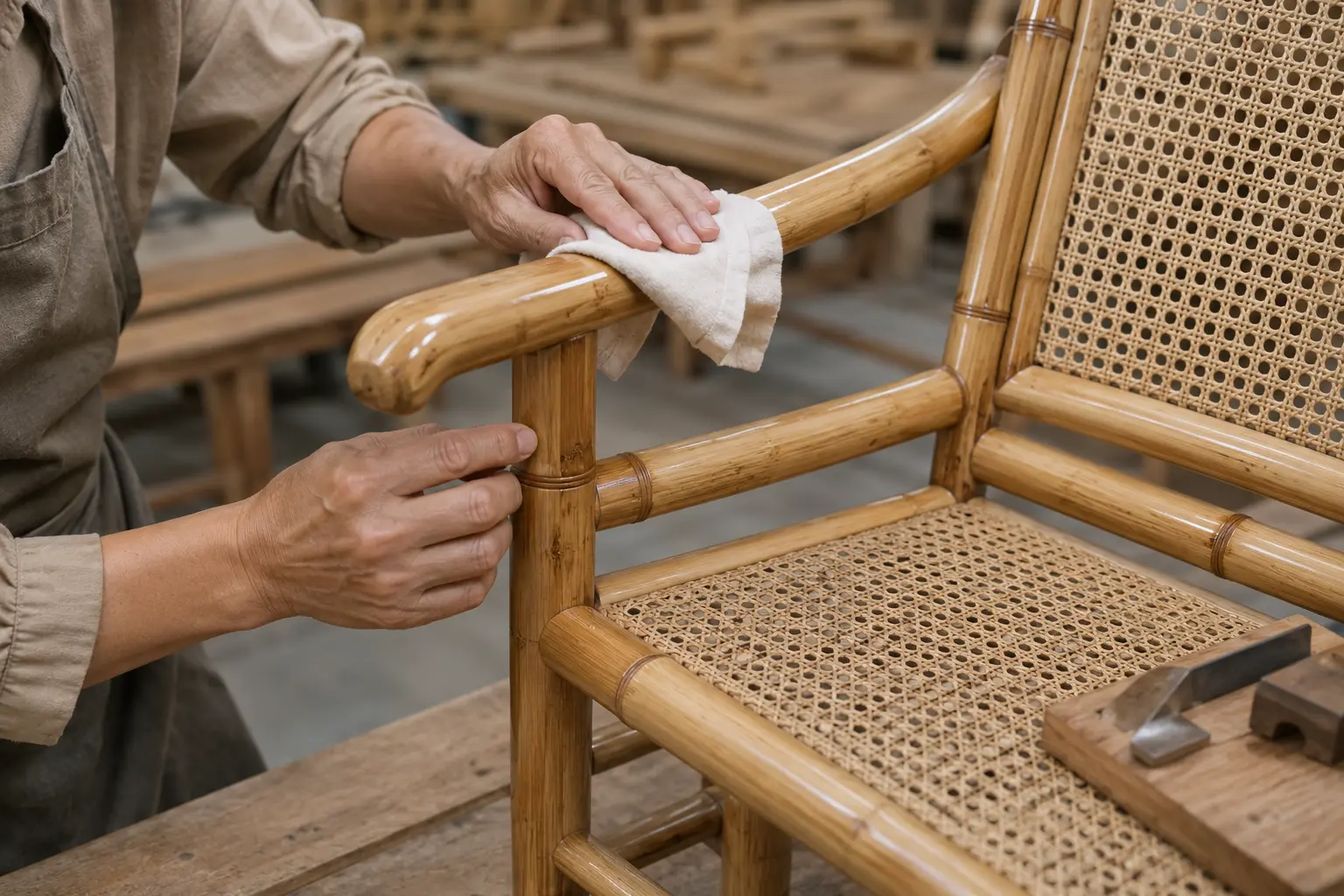
Video Guide: From Bamboo Frame to Finished Armchair
A short companion video can show details that photographs cannot: the difference between bamboo, cane and wicker; how the frame, weave and cushion work together; the comfort dimensions to measure; and the quality points checked before packing. Film the actual sample and process available rather than using unrelated stock footage, and identify every material accurately on screen.
Frequently Asked Questions
Are bamboo armchairs the same as rattan chairs?
No. Bamboo and rattan are different plants with different structures. A chair may combine a bamboo frame with rattan cane weaving, so the material list should identify both.
Is wicker a type of bamboo?
Wicker describes a weaving method. A wicker panel can be made from rattan, bamboo strips, willow, paper cord or synthetic fiber.
What makes a bamboo reading chair comfortable?
Appropriate seat height and depth, back angle, lumbar support, arm position and cushion firmness all matter. Comfort should be assessed on the actual sample for the intended user group.
Can a bamboo armchair be used in a bathroom?
Only if its materials, finish and construction suit the intended location. Keep a standard indoor armchair in a dry, ventilated area and outside the splash zone. Use purpose-designed products where regular water exposure is expected.
Is a bamboo barrel chair suitable for small rooms?
It can be, but compare the full outside footprint with the usable seat width. A wraparound back may occupy more floor space than a visually open armchair.
How should buyers specify a bamboo and rope chair?
Define the frame material, rope composition, diameter, color, weave pattern, attachment, tension, abrasion requirement, intended environment and approved sample.
Can cushions be customized for a bamboo armchair?
Depending on manufacturing feasibility, buyers can evaluate cushion size, fill, firmness, cover fabric, color, zipper, ties, care label, branding and packaging. All details should be approved on the sample.
What should be tested before a bulk order?
Testing should match the chair type, intended use and destination market. A plan may cover strength, durability, stability, joint performance, finish adhesion, upholstery performance and packaging, but the applicable requirements must be confirmed for the exact product.
Develop a Clear Bamboo Seating Specification
The best bamboo armchairs are not defined by a fashionable label alone. They combine an accurately described material system, comfortable geometry, appropriate joints, a finish suited to the environment and a test plan aligned with actual use. Whether the concept is a bamboo barrel chair, a cane-backed reading chair, a rope lounge chair or a coordinated sofa set, begin with a drawing and a component-level specification.
Fujian Xianxu Bamboo & Wood Co., Ltd. handles custom bamboo and wooden product enquiries from international buyers. For a chair concept, send your reference design, target dimensions, estimated quantity, material preferences, destination market and packaging needs for an initial feasibility review. Available construction routes, sampling, testing, commercial terms and production capability must be confirmed for the proposed design before an order is considered.