

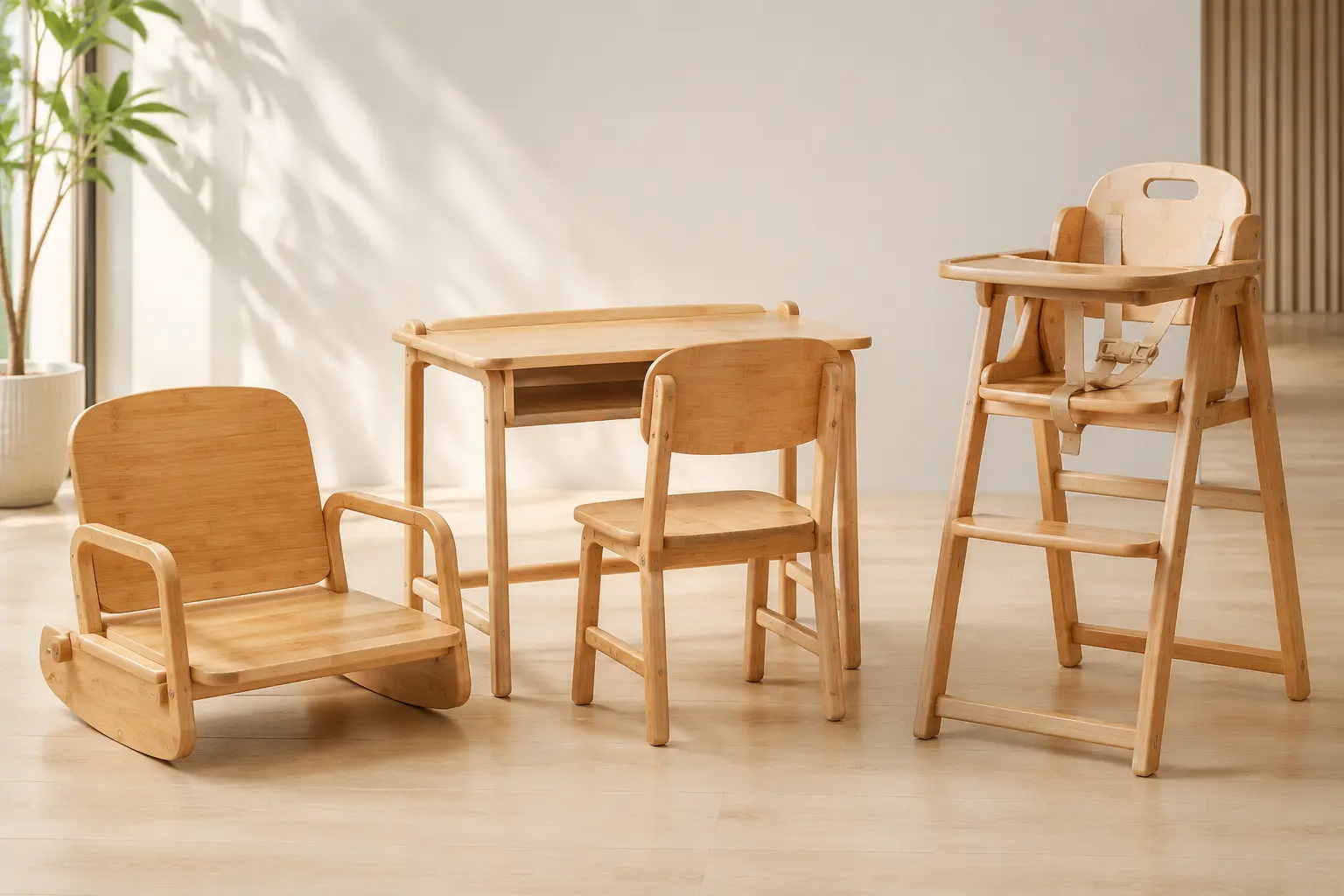
A bamboo kids chair can be a low reading seat, a small chair for drawing, part of a children’s desk set, or a raised feeding chair. Those products may look related, but they are not interchangeable. Their users, fall heights, restraints, stability tests and legal requirements can be very different. For a retailer, importer or private-label brand, the first sourcing decision is therefore not the color or silhouette. It is the product classification and intended use.
This guide explains how to prepare a responsible specification for a child’s bamboo chair, compare bamboo constructions and review a sample without treating the material itself as proof of safety. It also separates an ordinary floor-level children’s seat from a bamboo high chair used for feeding. Regulations and standards change, so buyers should confirm the latest requirements with their test laboratory, compliance adviser and destination-market authorities before placing an order.

Start by defining which bamboo chair you are buying
Search phrases such as “bamboo chair baby,” “bamboo small chair” and “bamboo feeding chair” often mix products from different categories. A useful request for quotation should state one intended function and one user group instead of asking a supplier to quote a generic mini bamboo chair.
| Product concept | Typical setting | Key specification questions |
|---|---|---|
| Low bamboo kids chair | Reading corner, bedroom or playroom | Can the intended child sit independently? Are seat height, stability and openings suitable for that user? |
| Bamboo desk and chair | Drawing, homework and crafts | Do desk and seat heights match? Can adjustments be locked without accessible pinch points? |
| Bamboo floor chair | Floor-level reading for an independently sitting child | Is it stable on the floor and explicitly not intended for infant sleep, restraint or placement on furniture? |
| Bamboo high chair | Raised feeding at table height | Which high-chair regulation applies? What restraint, stability, tray, opening and labeling tests are required? |
| Folding child chair | Portable or space-saving use | Which locking, folding, shear and pinch-point requirements apply in the destination market? |
A “childs bamboo chair” is a common search variation, but in product documents the correct phrase is child's bamboo chair for one child or children’s bamboo chair for the category. Clear naming helps laboratories, factories and buyers evaluate the same product rather than assuming that small bamboo chairs are high chairs or that a decorative prop is functional seating.
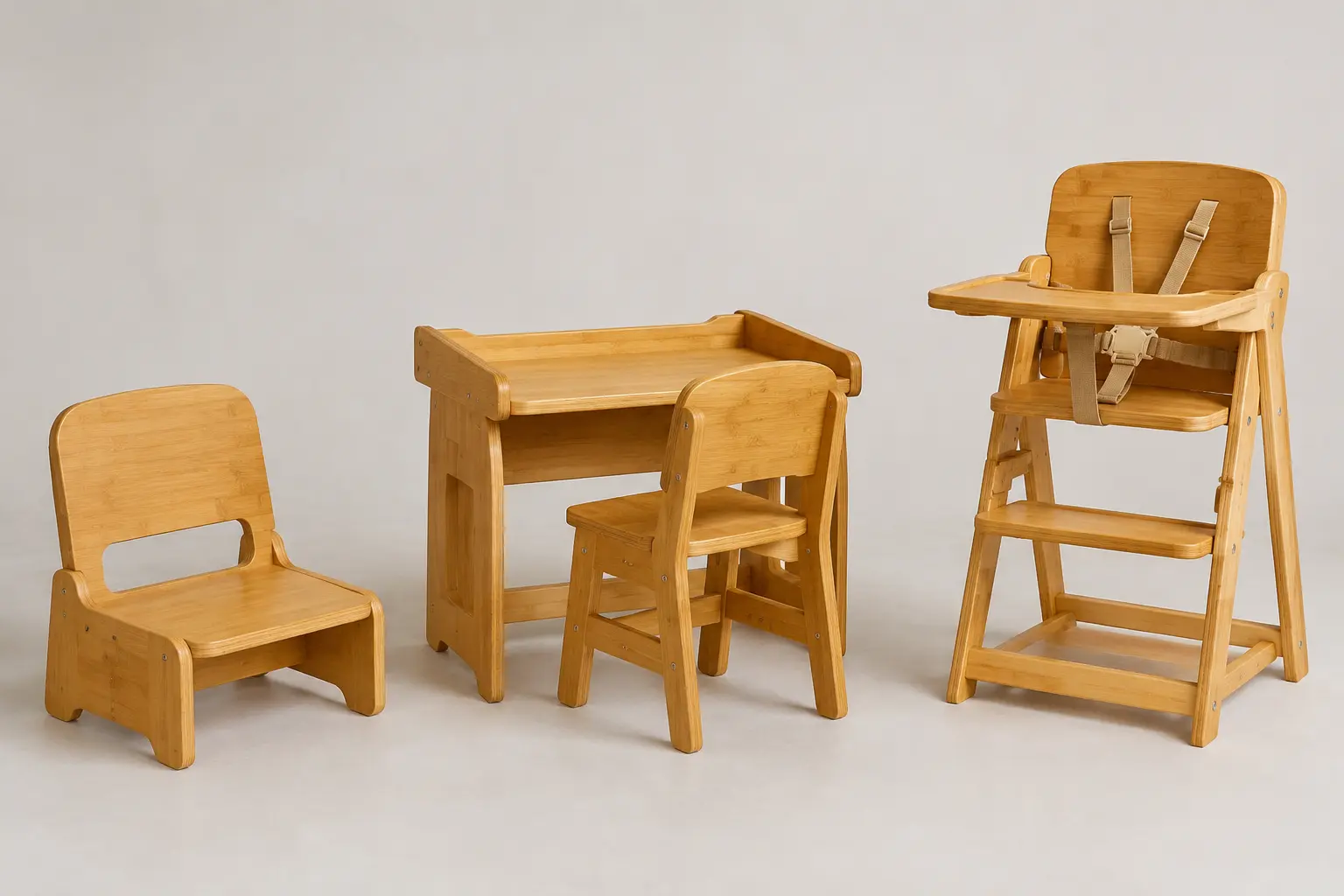
Bamboo high chairs require a separate compliance path
A high chair raises a young child to approximately dining-table height, so a fall or tip-over can have more serious consequences than a fall from a small floor chair. In the United States, high chairs are covered by 16 CFR Part 1231. The U.S. Consumer Product Safety Commission lists requirements concerning stability, structural integrity, restraint systems, trays, openings, protrusions, sharp points and edges, latching mechanisms, warnings and other features. Covered children’s products require third-party testing and a Children’s Product Certificate based on applicable rules.
For European and UK projects, the applicable version must be confirmed for the sales market. As of this writing, BSI lists EN 14988:2017+A2:2024 as the current high-chair standard. Its scope covers freestanding high chairs that elevate a child, generally for feeding or eating. EU sales also require a broader product-safety review under the General Product Safety Regulation and any other applicable chemical, labeling, traceability and market-specific obligations.
Do not approve a bamboo high chair from photos or a supplier’s generic material report. Define the complete configuration to be tested: frame, tray, restraint, hardware, finish, cushion, footrest, adjustment parts and any conversion kit. A change in geometry, hardware or material can affect the tested construction. The buyer should also establish document ownership, laboratory selection, sample sealing, change control, product registration requirements where applicable, and a procedure for production verification.
What makes a low children’s chair different?
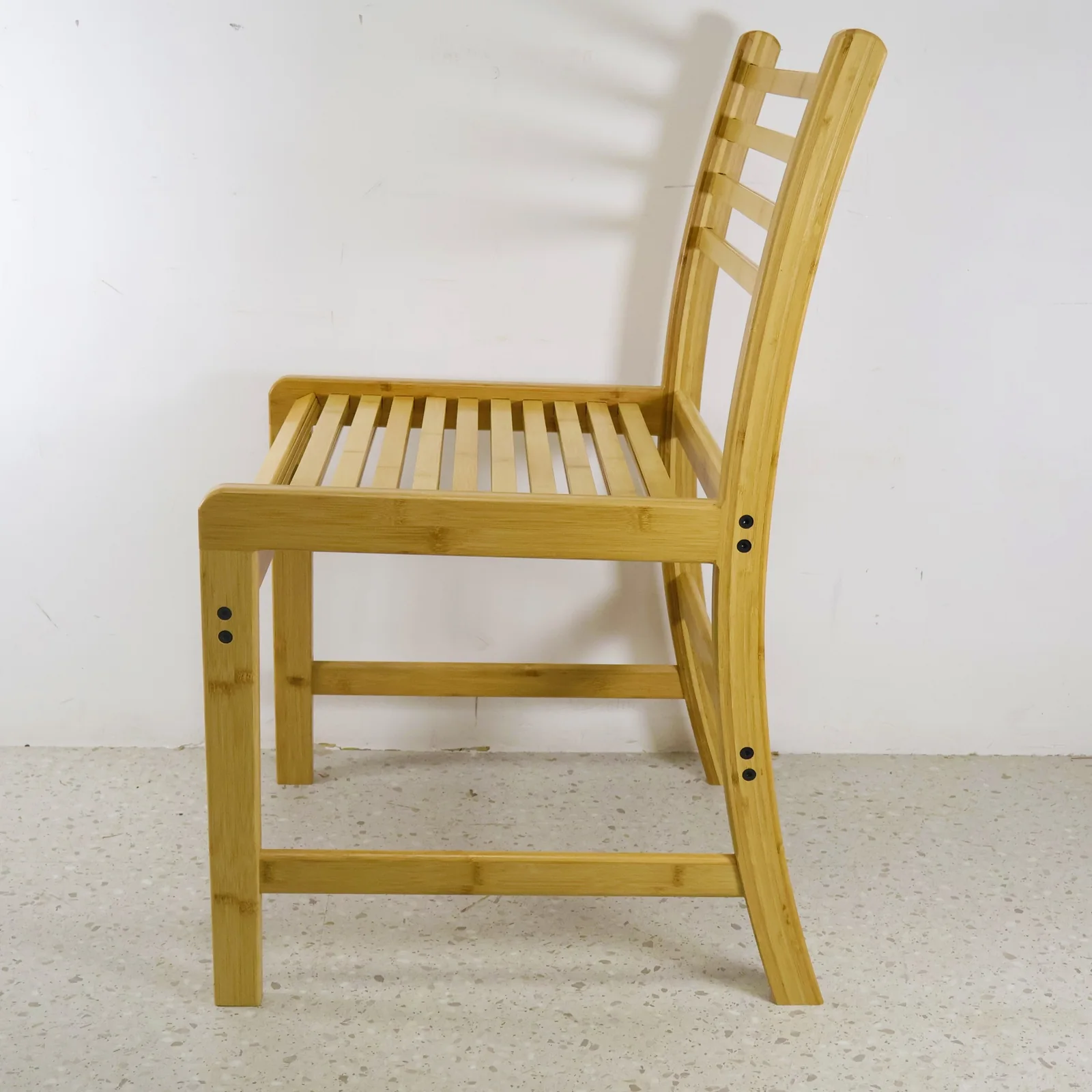
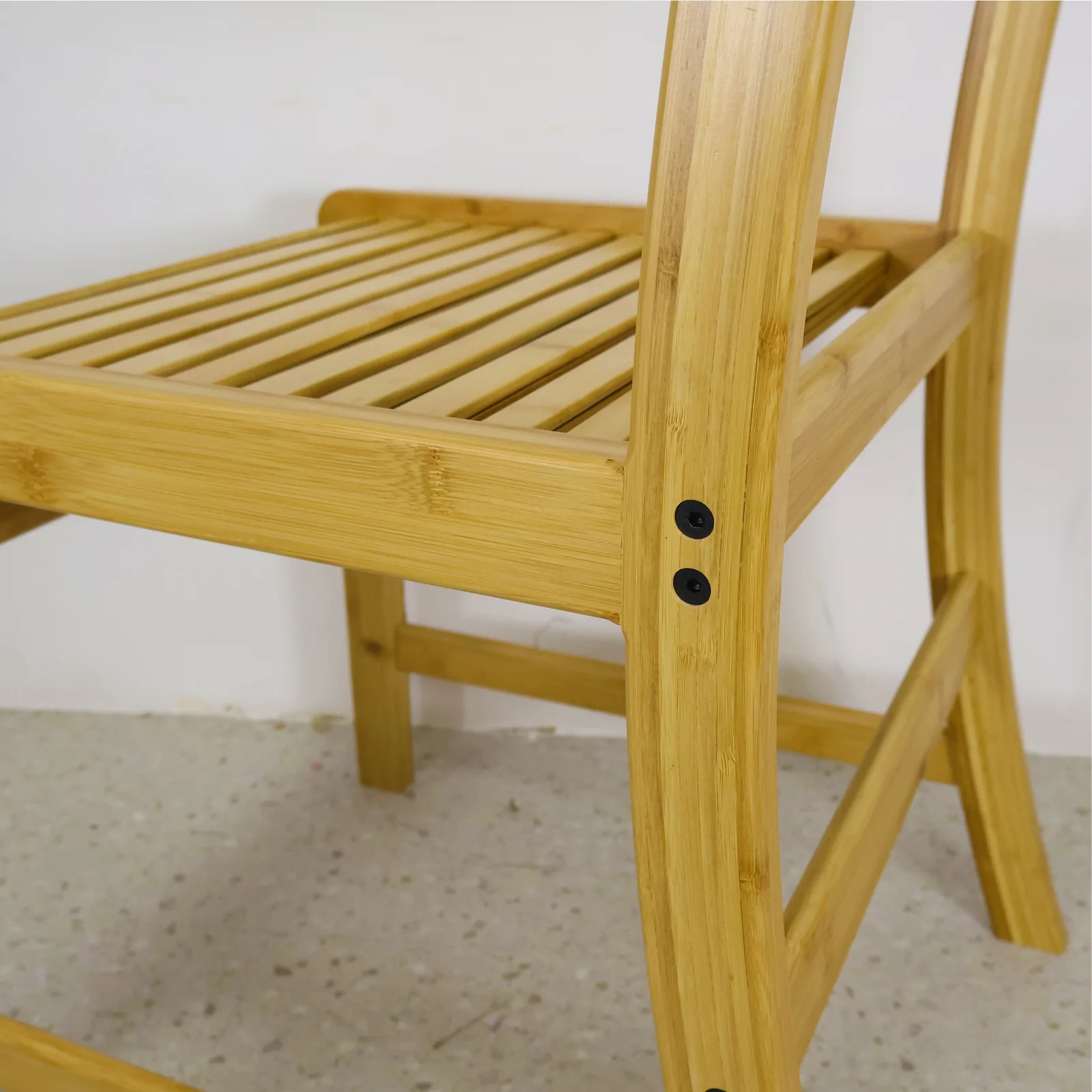
The following photographs show an adult-size bamboo dining chair. They are included only to illustrate proportion and construction checks; they do not depict a kids chair or high chair.
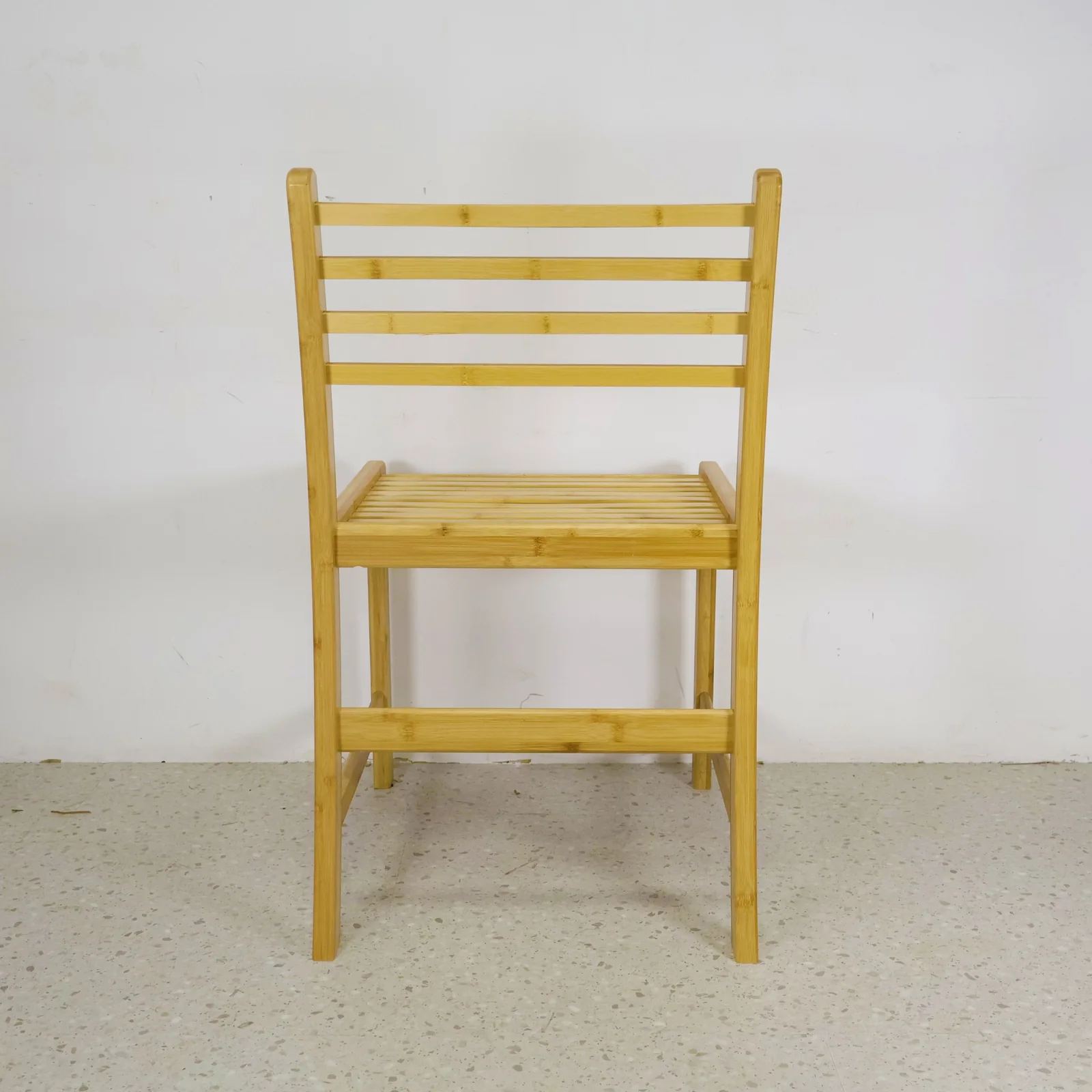
A low bamboo kids chair is normally intended for a child who can already walk and sit without assistance. In Europe, EN 17191:2021 addresses floor-placed children’s seating for domestic and non-domestic use, but excludes children’s high chairs and several specialist categories. In the United States, children’s folding chairs and stools are specifically addressed by 16 CFR Part 1232. Other configurations still need a product-specific regulatory review, including applicable children’s-product requirements.
This distinction matters when developing a bamboo chair small enough for a bedroom or play area. A low seat does not need to imitate a feeding chair. Conversely, removing the long legs or restraint from a high-chair drawing does not automatically create a suitable small bamboo chair. Seat proportions, back support, floor contact, tip resistance, entry and exit, openings and user behavior all need to be considered for the intended age and setting.
Choose a bamboo construction that can be controlled
“Made of bamboo” can describe several very different structures. Laminated bamboo panels and shaped components offer flat, repeatable surfaces and can work well for a modern bamboo desk and chair. Round bamboo culms or cane create a lighter visual language, but their wall thickness, taper and curvature vary. Woven material may be used on a seat or back, while metal fasteners, wood dowels, engineered panels or textiles may complete the assembly.
- Moisture control: the material specification should define a test method and an acceptable range appropriate to the product and destination climate.
- Defect control: checking should cover splitting, insect damage, delamination, sharp fibers, crushed culm walls and other defects relevant to the selected construction.
- Joint engineering: screws placed too close to an edge can split a component; fasteners in hollow culms need a designed load path rather than an improvised connection.
- Surface finishing: coatings should be specified by chemistry, color, performance and applicable restricted-substance requirements—not only as “non-toxic.”
- Production consistency: approved drawings should control material section, joint type, hardware, adhesive, coating and critical dimensions.
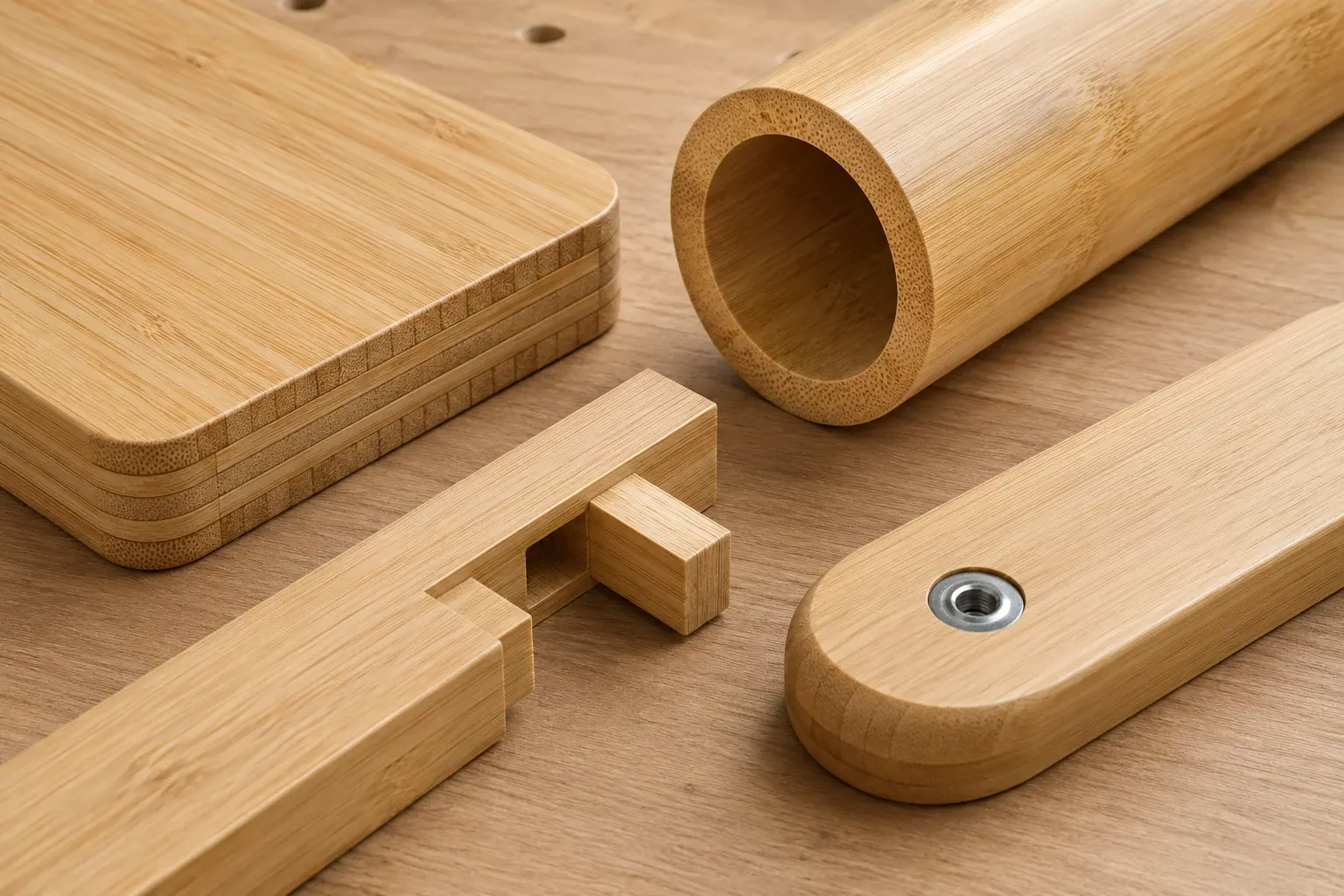
Bamboo can support an attractive, warm design, but no species, sustainability claim or finish makes a chair automatically compliant. Safety depends on the complete product, its intended user and verified performance. Buyers should also avoid calling cane, rattan, bamboo-look plastic or wood with a bamboo-colored finish “solid bamboo” unless the bill of materials supports that description.
Build safety into the design brief
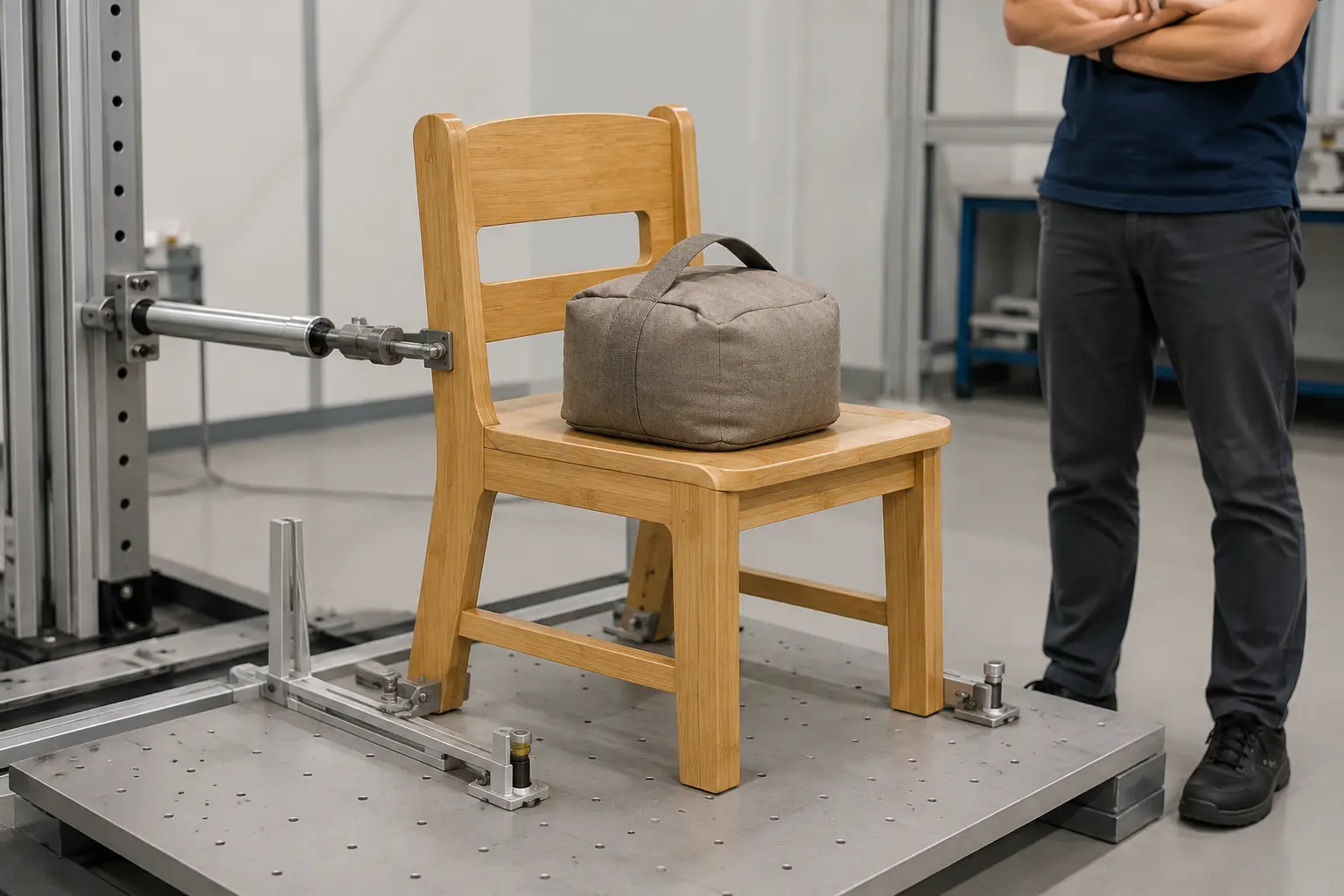
Before CAD work begins, give the developer a risk-based brief. It should address foreseeable use, not just ideal sitting. Children may lean sideways, push against a table, drag the chair, reach for an object or place their fingers near a moving part. The evaluation plan should therefore cover the following areas as applicable:
- Stability: assess forward, rearward and sideways tipping in the complete use configuration.
- Strength and durability: validate the seat, back, arm areas, joints and hardware under the relevant static, impact and cyclic loads.
- Edges and surfaces: remove sharp edges, splinters and burrs; check again after durability and abuse testing.
- Openings and entrapment: review gaps around the back, sides, tray, arm areas and moving components against the applicable standard.
- Small or detachable parts: prevent accessible hardware, caps or decorative pieces from loosening, especially for products intended for children under three.
- Pinch and shear points: control hinges, adjustable parts, folding mechanisms and removable trays with effective locking where required.
- Instructions and warnings: provide age/use limits, assembly steps, maintenance, restraint instructions and clear conditions for stopping use.
Fit, sizing and everyday use
For a floor-level chair used by an independently sitting child, the seat should match the intended body-size range and activity. A very deep seat can make it difficult to use the backrest; a seat that is too high may leave the feet unsupported. Rather than copying one competitor’s dimensions, build and observe prototypes with appropriately selected user-size data, then validate the final design through the required tests.
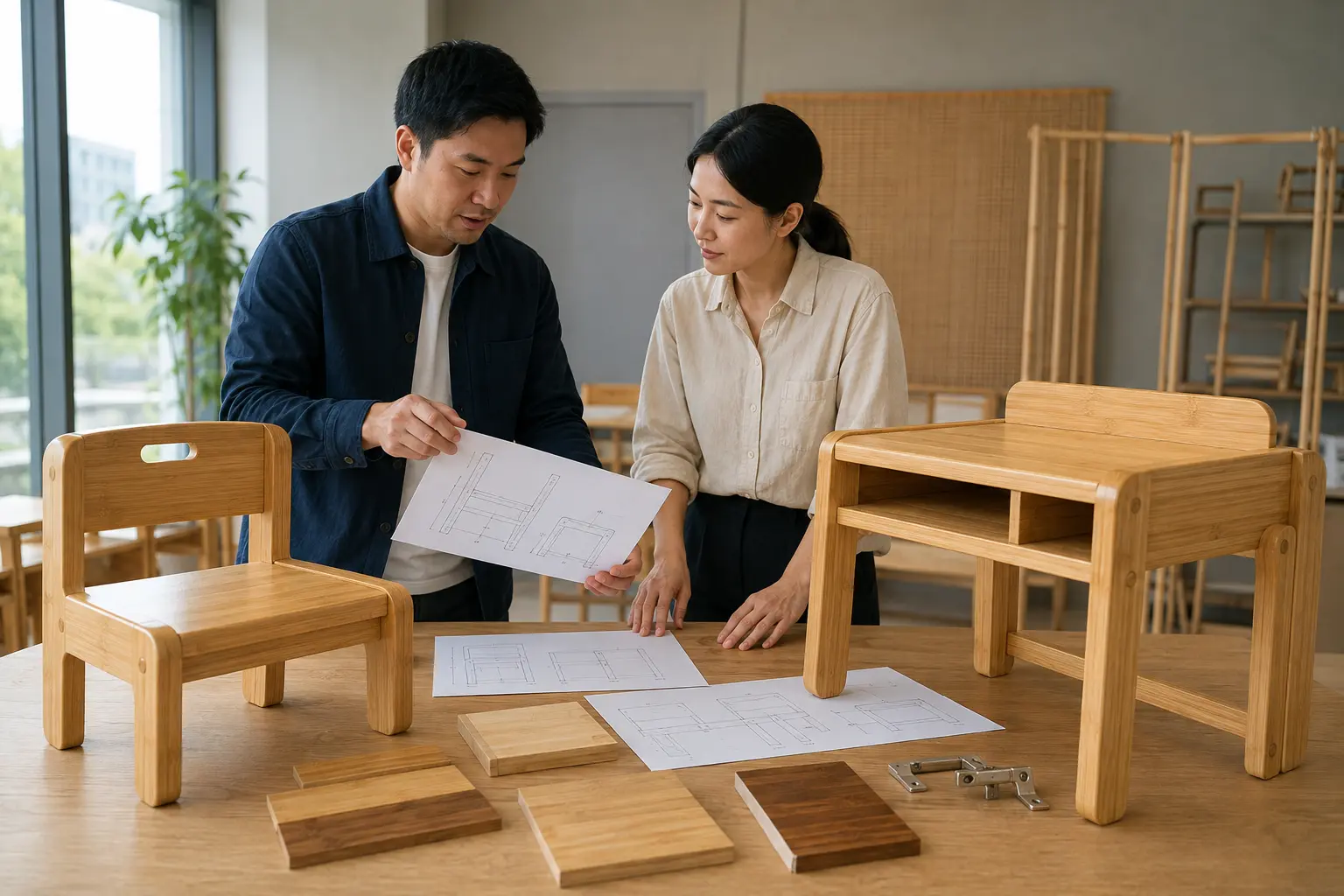
A bamboo desk and chair should be specified as a system. Match desktop height, knee clearance and chair dimensions, and make any height adjustment understandable and securely lockable. Storage lids or lift-up desktops introduce additional pinch, closing and entrapment considerations. A removable cushion or other accessory supplied with a children’s chair also needs secure attachment, seam and small-part review, care instructions and material testing appropriate to the market.
A bamboo floor chair should remain on the floor. It is not a high chair, booster seat, infant restraint or sleep product, and it should never be placed on a table, counter or other raised surface. The intended child must meet the product’s stated developmental criteria. Adult supervision and the manufacturer’s instructions remain necessary during use.
Sample review checklist for importers
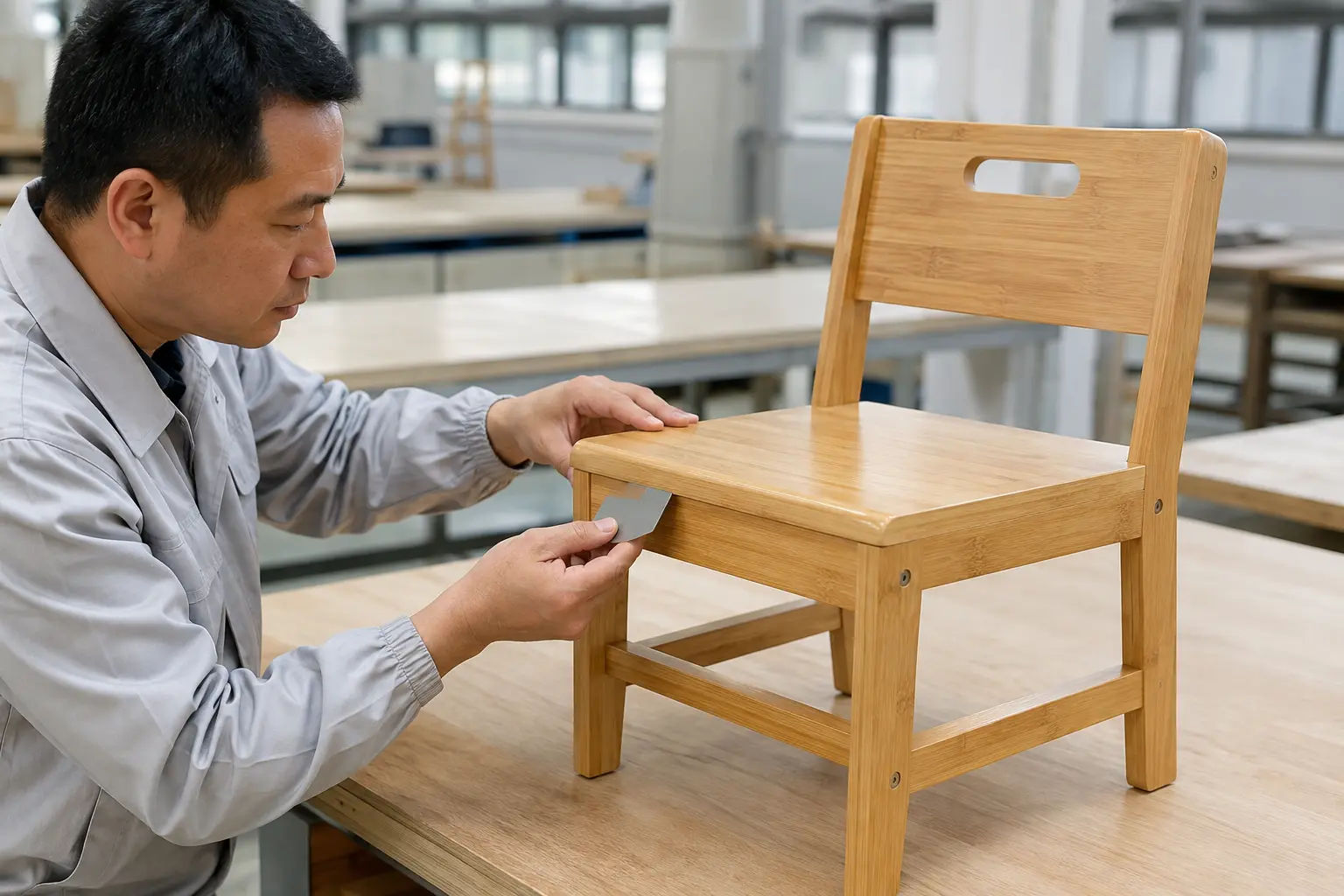
A golden sample should represent the materials and construction planned for production. Review it systematically rather than approving it because the chair looks attractive in a showroom.
- Confirm the product classification, intended age/developmental stage, use environment and destination market.
- Compare the sample with controlled drawings, bill of materials, color standard and hardware list.
- Inspect all bamboo surfaces by sight and touch for splits, sharp fibers, rough ends and coating defects.
- Check fasteners, adhesive joints, locking parts and restraint attachment points where applicable.
- Evaluate rocking, uneven floor contact and foreseeable tipping directions before formal testing.
- Measure critical gaps and dimensions with the laboratory’s test plan—not informal household tools alone.
- Verify labels, traceability marks, warnings, registration information where required, and assembly/care instructions.
- Approve packaging only after checking that transport vibration and compression do not damage joints or finishes.
For the U.S. market, the CPSC states that children’s products generally require third-party testing and a written Children’s Product Certificate for applicable rules. Surface coatings and accessible components may be subject to lead limits, while product type, age grading and included materials determine other requirements. Treat a passing report as configuration-specific evidence, not a permanent approval for every future version.
How to prepare a useful OEM inquiry
Whether the project is a bamboo kids chair, a bamboo feeding chair or a small bamboo chair set, a precise inquiry receives a more meaningful feasibility response. Include:
- target country or region and requested test standard;
- product category and intended user, including developmental criteria rather than age alone where relevant;
- domestic, daycare, restaurant or other commercial use;
- reference dimensions, required adjustment range and maximum intended load;
- preferred bamboo construction, finish, upholstery and hardware;
- restraint, tray, footrest, folding or conversion requirements;
- packaging format, labeling languages and traceability needs;
- forecast quantity, order pattern, target date and sample budget.
Fujian Xianxu Bamboo & Wood Co., Ltd. can review a custom bamboo product brief and discuss whether its materials, construction and compliance plan are suitable for development within current capabilities. Product feasibility, testing scope, order quantity, tooling and lead time should be confirmed for the specific project before quotation or any performance claim is made.
Frequently asked questions
Is a bamboo kids chair the same as a bamboo high chair?
No. A low children’s chair is placed on the floor for a child able to use that type of seat, while a high chair raises a young child for feeding or eating. Their hazards, restraints, tests and regulatory classifications differ.
Can a small bamboo chair be used for a baby?
Only when the product is specifically designed, classified, tested and instructed for that user and function. A decorative mini chair or ordinary low chair should not be treated as an infant seat, feeding chair or sleep product.
What should buyers check on a bamboo chair frame?
Check the material specification, moisture control, splits, sharp fibers, edge finish, joint design, fastener retention, floor contact and consistency with the tested sample. The complete chair must pass the applicable product tests.
Are rounded corners enough to make a child chair safe?
No. Rounded edges are one design detail. Stability, strength, durability, openings, small parts, pinch points, surface chemistry, labeling and foreseeable use may also need assessment.
Should a high-chair tray be used as the restraint?
Follow the tested product instructions and applicable standard. A tray should not be assumed to replace the required restraint system. The Australian government’s high-chair safety guide advises using a stable chair, securing the harness and supervising the child.
What information is needed before requesting a bamboo chair price?
Provide the chair category, market, standards, size, construction, finish, accessories, packaging and quantity. A price without those inputs may compare products with very different materials, testing and risk controls.
Plan the classification before the styling
The best starting point for a bamboo kids chair program is a precise use case. Decide whether the product is a low reading chair, an independently used study seat, a folding chair or a regulated high chair. Then select a controllable bamboo construction, engineer the joints, review hazards, test the complete configuration and keep production aligned with the approved sample. That sequence gives designers room to create a warm, modern children’s product without allowing appearance or broad sustainability language to replace documented safety work.