

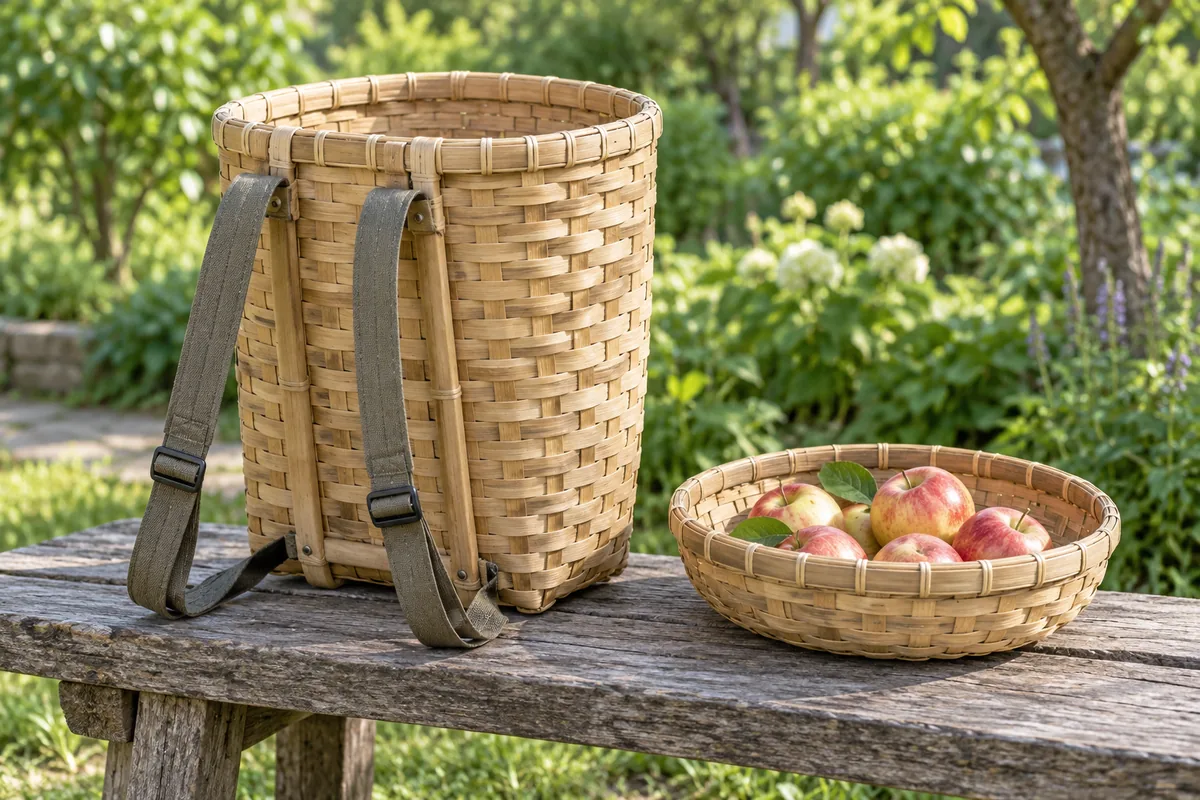
A bamboo basket backpack offers a rigid woven container with a carrying system attached. A harvest basket may have an open shape for easy access, while a utility basket may be designed for hand carrying, temporary storage or a specific task. Similar photographs can conceal major differences in straps, reinforcement and intended use.
Start by deciding what you will carry, how far you will carry it and whether the contents will be dry, dirty or damp. Then compare the complete basket and carrying system against that job.
Match the design to the task
A broad, shallow bamboo vegetable basket can make contents easier to see and retrieve. A deeper carrying basket provides more vertical space but can make items at the bottom harder to reach. A bamboo shopping basket may need a comfortable handhold and a stable base for setting it down repeatedly.
For a bamboo basket backpack, ask whether the straps are supplied as working carrying equipment or decorative accessories. A basket styled as a backpack for a display or photograph may not be intended for repeated loaded use. Request a written description of the intended application.
Assess fit before capacity
Large size does not guarantee a comfortable fit. Check the basket’s height against your back, its width against your arm movement, and whether the lower rim contacts your body when walking. Ask about strap length, adjustment range, padding and any surface that rests against the back.
REI’s backpack selection guide emphasizes torso fit when choosing modern backpacks. A woven carrying basket has different construction, so do not assume it provides the same support as a fitted hiking pack. Use a fitting trial to assess the actual product rather than transferring another pack’s specifications.
If possible, try the basket with a modest, representative load within the maker’s stated limits. Walk, turn and set it down. Check whether the straps slip, the basket swings or an edge presses against you. A brief trial cannot establish long-term durability, but it can reveal an immediate mismatch.
Inspect the load path and usable space
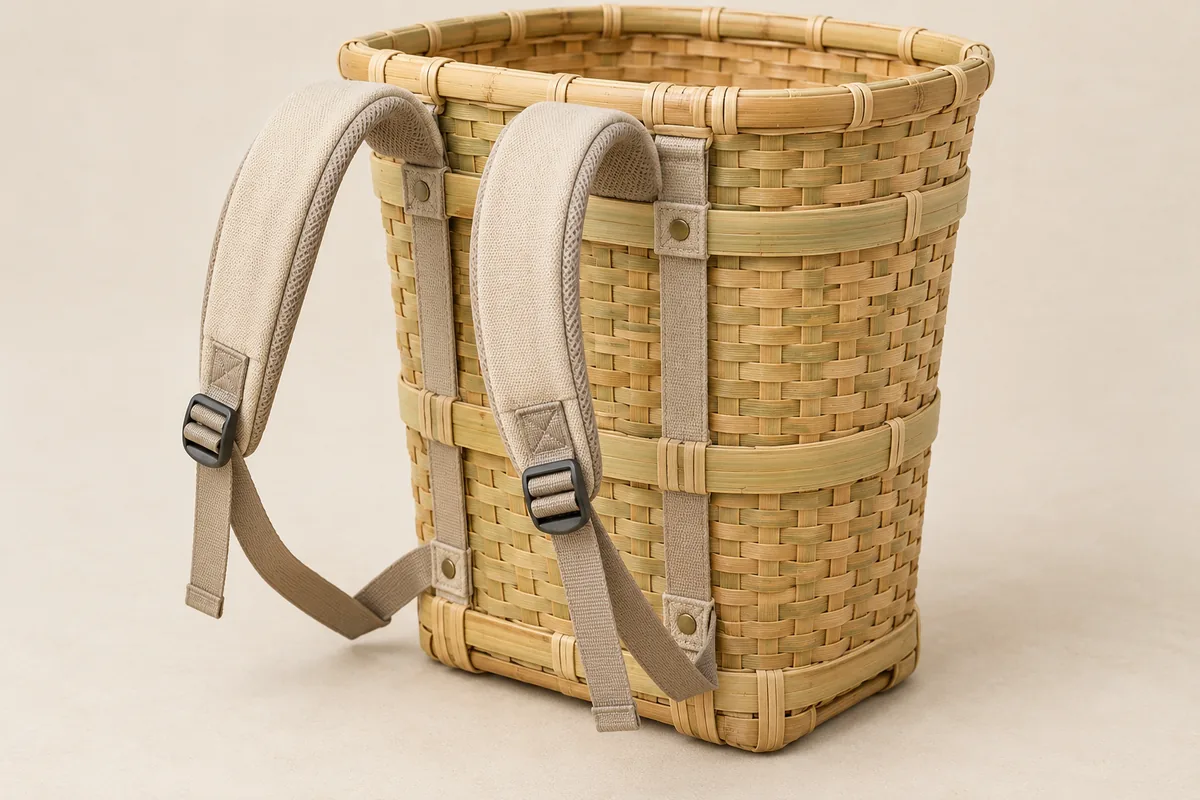
Follow each strap or handle to its attachment. Ask how the connection transfers weight into the basket body or frame, and request close photographs of the base, rim and rear. Surface decoration should not be mistaken for reinforcement.
- Capacity: request the manufacturer’s stated limit and the conditions attached to it.
- Dimensions: compare internal space with external size, including any taper.
- Base: check stability, wear points and whether small objects can pass through.
- Straps: confirm their material, attachment method and replacement options.
- Edges: inspect for protruding strips and contact points that could snag contents.
Separate four pieces of information: usable volume, empty basket weight, harness weight and the maker’s rated carrying load. Ask whether a stated limit refers to contents alone or total loaded weight. A large bamboo basket may fit bulky leaves yet be unsuitable for dense tools. Empty weight also counts toward what you actually carry.
A seating rating is a separate specification for a purpose-built basket-and-seat product. It does not establish a backpack carrying limit, and a carrying rating does not authorize sitting on the basket. If the intended function or rating is unclear, ask before choosing it for that job.
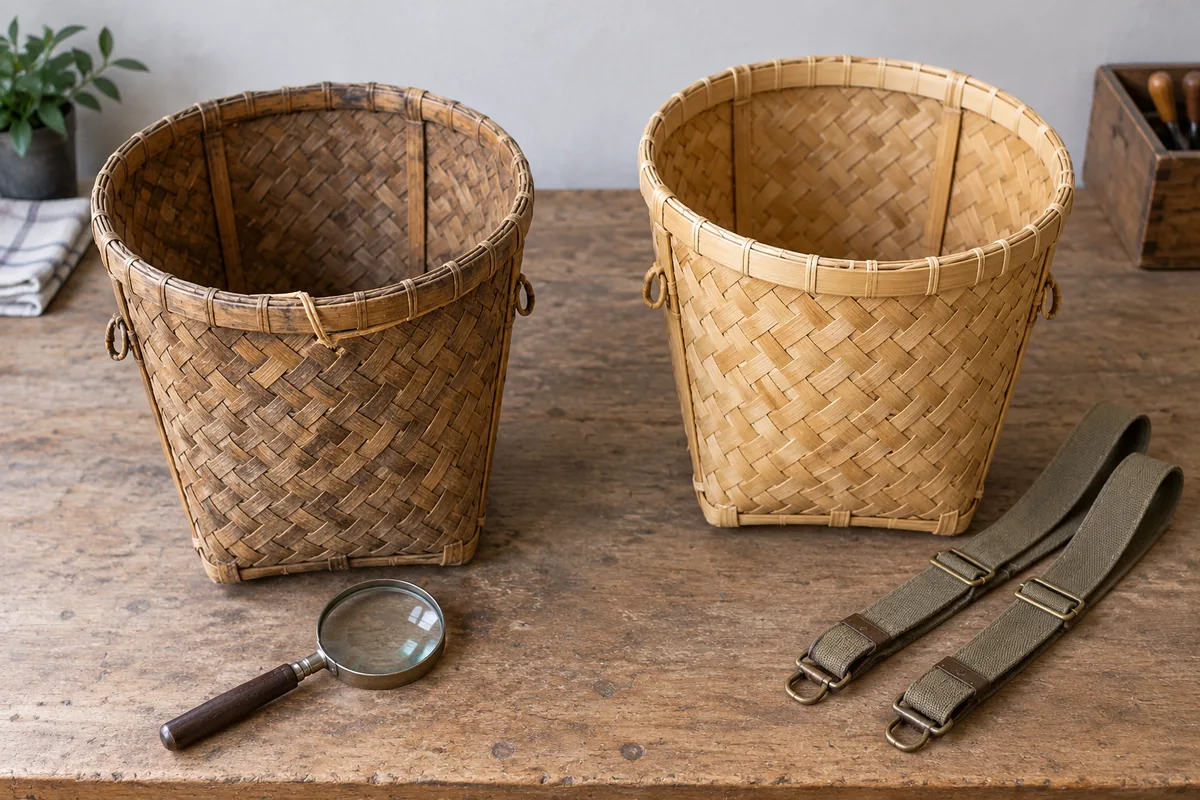
For a vintage basket, request current close photographs of the base, bindings and attachment points, and ask about repairs. Confirm whether a complete working harness is included or whether the listing shows former strap loops only. Past carrying use does not establish present condition. A new basket also needs a clear description of supplied hardware and intended use.
Plan for harvest residue and wet contents
Harvesting can introduce soil, plant debris and moisture. Ask whether the basket is intended for that exposure and how it should be cleaned and dried. A removable, suitable insert may make loose debris easier to manage, but it can also change usable space and how contents move.
Bamboo fishing baskets require especially clear descriptions. Determine whether the listing refers to a tackle carrier, a creel, a decorative object or a fishing device. Do not assume a woven basket is suitable for holding live fish, immersion or repeated contact with wet catches. Those functions need specific product instructions and, where relevant, checks against local fishing requirements.
Read regional descriptions with care
Searches such as Chinese bamboo basket, Thai bamboo basket, Asian bamboo basket and Naga bamboo basket can point to different products and sellers. These terms should not be treated as interchangeable guarantees of materials, construction or provenance. A regional label alone does not identify who made a particular item.
If origin or a named craft tradition matters to your purchase, ask for the maker, place of production, material specification and supporting information. Use the maker’s own documented terminology when describing the item. For ordinary functional shopping, compare observable details first and avoid drawing cultural conclusions from a silhouette or weave photograph.
Frequently asked questions
How much can a bamboo basket backpack carry?
There is no universal limit. Use the specific manufacturer’s rating for the complete basket and carrying system, including any restrictions on use.
Is bamboo the same material as rattan?
No. Request a component list for the body, rim, bindings and straps. The Smithsonian material guidance includes several materials, so “wicker” alone does not establish an all-bamboo construction.
Can a harvest basket also be used for storage?
It may suit dry storage if its base, opening and finish fit the contents. Clean and dry it according to the maker’s directions before changing uses.
Should I choose the biggest basket available?
Choose usable capacity and carrying fit together. Extra width or depth can interfere with movement or make everyday access less convenient.