
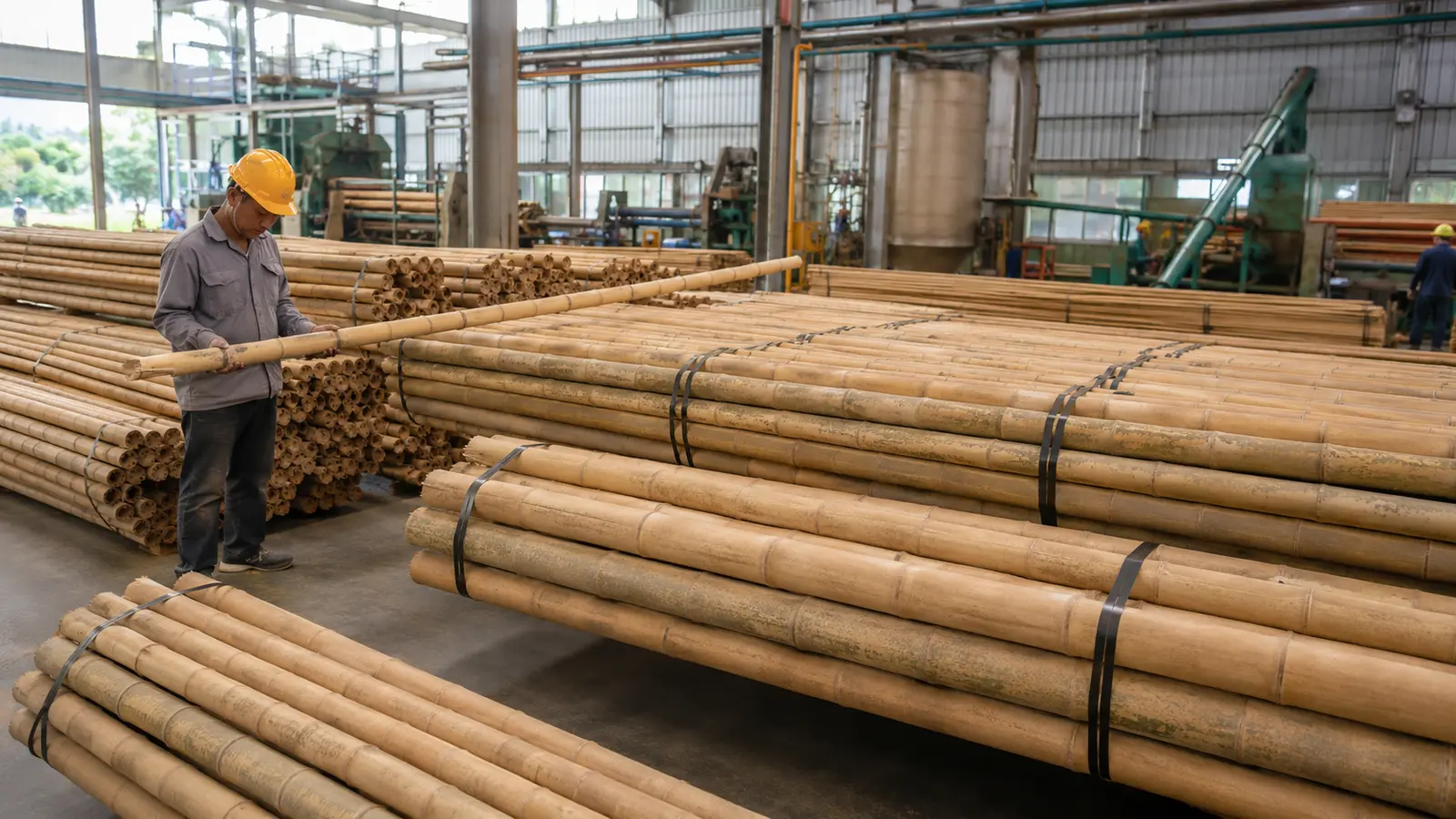
Wholesale bamboo poles are purchased by importers, distributors, garden suppliers, contractors, retailers, and product manufacturers for a wide range of commercial applications. However, comparing suppliers is not as simple as checking a price per pole. Diameter, length, species, straightness, drying, treatment, finish, tolerance, packaging, and destination requirements can all affect the final quotation.
This practical guide explains how to source bulk bamboo poles, prepare a clear specification, evaluate quality, and request a quote that suppliers can price accurately.
What Are Wholesale Bamboo Poles?
Wholesale bamboo poles are natural bamboo culms supplied in commercial quantities for agriculture, landscaping, decoration, construction-related projects, retail programs, and further manufacturing. Depending on the application, they may be sold as whole round poles, stakes, canes, split sections, cut components, or finished decorative poles.
Because bamboo is a natural material, every pole can show some variation in color, node spacing, taper, diameter, and surface character. Professional buyers therefore define acceptable tolerances instead of expecting every piece to look identical. A reliable supplier should explain what can be standardized and what remains a natural variation.
Common Commercial Uses for Bulk Bamboo Poles
Agriculture, Nurseries and Garden Supply
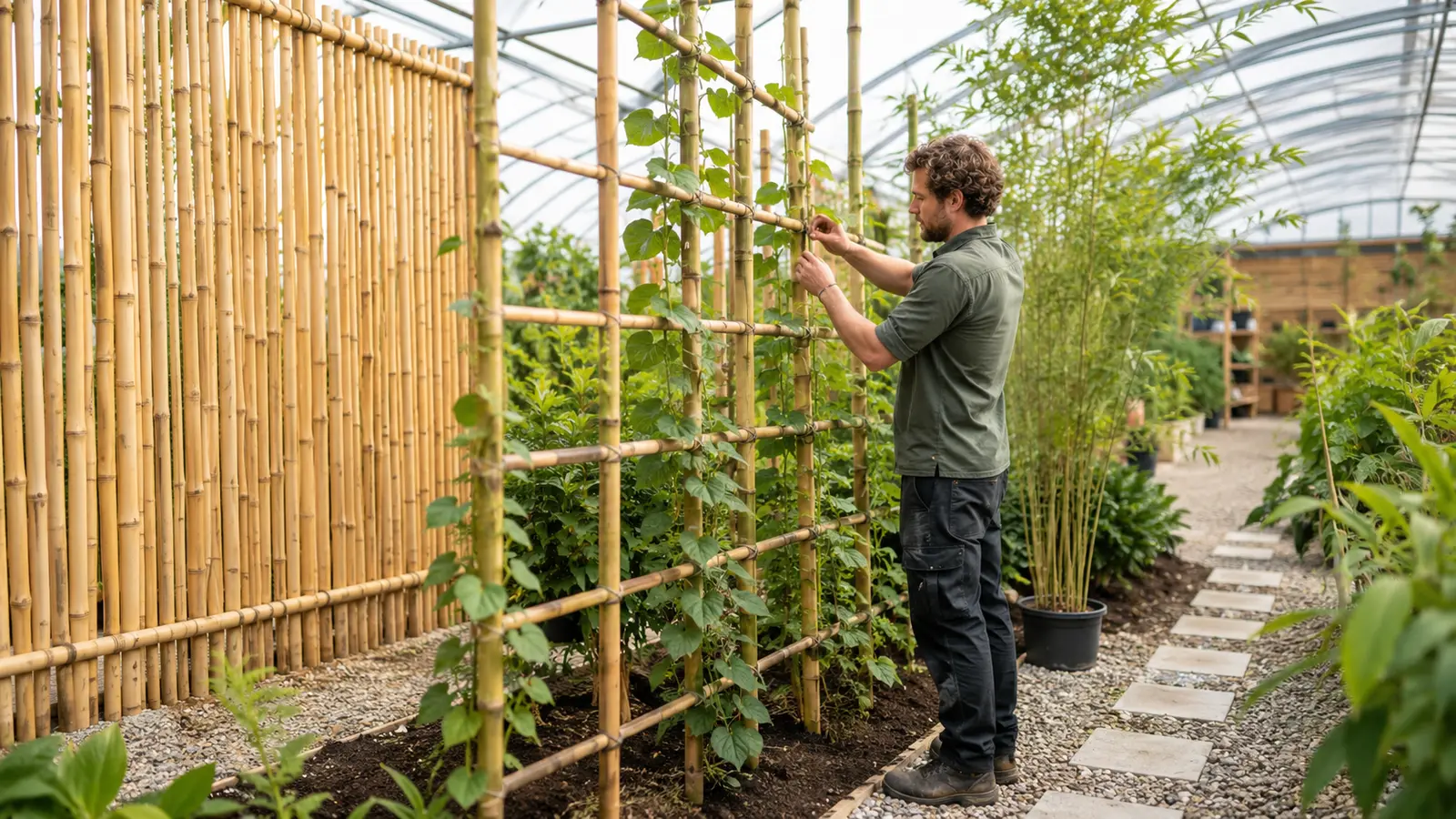
Thin bamboo poles and stakes are commonly used for plant support, tree training, nursery production, vineyard applications, climbing plants, and garden retail packs. Buyers in this category usually pay close attention to straightness, consistent length, diameter ranges, bundle quantities, labeling, and moisture-resistant packaging.
Landscaping, Fencing and Outdoor Projects
Medium and large poles can be used in screens, fences, trellises, pergola-style decoration, landscape features, and hospitality projects. Outdoor performance depends on the bamboo species, drying method, treatment, coating, local climate, installation method, and exposure to soil or standing water. Buyers should state the environment clearly before choosing a finish.
Interior Design, Events and Retail Displays
Natural, stained, carbonized-color, painted, or coated bamboo poles can support store displays, hotel interiors, restaurant decoration, exhibition booths, themed events, and visual merchandising. Appearance-grade projects often require tighter color matching, straighter poles, cleaner nodes, and protective packing.
Furniture and Product Manufacturing
Bamboo poles may also be processed into handles, frames, racks, screens, decorative components, craft materials, and custom OEM products. When the poles will be drilled, joined, split, or machined, the supplier needs to understand the next production step so that wall thickness, cracking tolerance, and processing can be evaluated correctly.
How to Specify Wholesale Bamboo Poles Before Requesting a Quote
A vague request such as “Please quote 5,000 bamboo poles” usually leads to delays or prices that cannot be compared fairly. Use the following specification checklist when contacting a factory or exporter.
| Specification | Information to Provide | Why It Matters |
|---|---|---|
| Application | Garden stake, fence, decoration, component, display or other use | Determines the suitable grade and processing |
| Length | Required length and acceptable tolerance | Affects raw-material selection, cutting and freight |
| Diameter | Minimum, maximum or graded diameter range | Natural poles taper, so the measuring point must be clear |
| Appearance | Natural color, matched color, node condition and surface standard | Separates utility grade from appearance grade |
| Processing | Dried, cleaned, polished, drilled, split, treated, coated or painted | Changes cost, lead time and end-use performance |
| Quality tolerance | Limits for curvature, cracks, insect damage, mold and defects | Creates an objective inspection standard |
| Packaging | Bulk bundles, retail packs, labels, cartons or pallet requirements | Affects protection, handling and retail readiness |
| Order quantity | Total pieces, size breakdown and repeat-order forecast | Helps confirm MOQ and production planning |
| Destination | Country, port, postcode and preferred Incoterm | Needed to estimate freight and documentation |
For projects with several sizes, prepare a simple SKU table. Include one row for each diameter, length, finish, quantity, and packing format. This reduces quotation errors and makes later quality inspection much easier.
Available Processing and Finish Options
Natural Dried Bamboo Poles
Natural poles retain the material's original grain, nodes, and warm color variation. They are often selected for garden, rustic, decorative, and general-purpose applications. The drying method and target moisture condition should be discussed, particularly when the goods will travel between different climates.
Cleaned, Polished or Sanded Poles
Surface cleaning, light sanding, node finishing, and polishing can improve handling and appearance. The required level should be confirmed with reference samples because “smooth” can mean different things for an agricultural stake and a retail display product.
Treated or Coated Bamboo Poles
Treatment and coating options may be used to address insects, moisture exposure, color, or surface durability. The correct process depends on the destination market and intended use. Buyers should request the treatment description, relevant material information, and any documents required by their importer or local authorities. Do not assume that every treatment is approved for every market or application.
Custom Cut and Fabricated Components
For OEM projects, poles can potentially be cut, drilled, split, shaped, painted, labeled, or packed as components. Feasibility depends on diameter, wall thickness, species, design, order volume, and tolerance. A drawing or approved sample is the best way to confirm custom requirements.
What Determines the Price of Bulk Bamboo Poles?
The lowest advertised unit price rarely represents the complete landed cost. The price of bulk bamboo poles is normally influenced by:
- Bamboo species and raw-material availability
- Length, diameter, wall thickness, and grade
- Straightness and appearance tolerances
- Drying, cleaning, treatment, coating, and fabrication
- Sorting requirements and size combinations
- MOQ and total order quantity
- Bundle, carton, pallet, label, and retail-pack requirements
- Container utilization, freight, destination, and Incoterm
Ask suppliers to separate product, packing, tooling or setup, inspection, and freight costs where applicable. An itemized quote makes it easier to compare offers and identify where specifications can be adjusted without reducing essential quality.
Quality Checklist for Wholesale Bamboo Poles
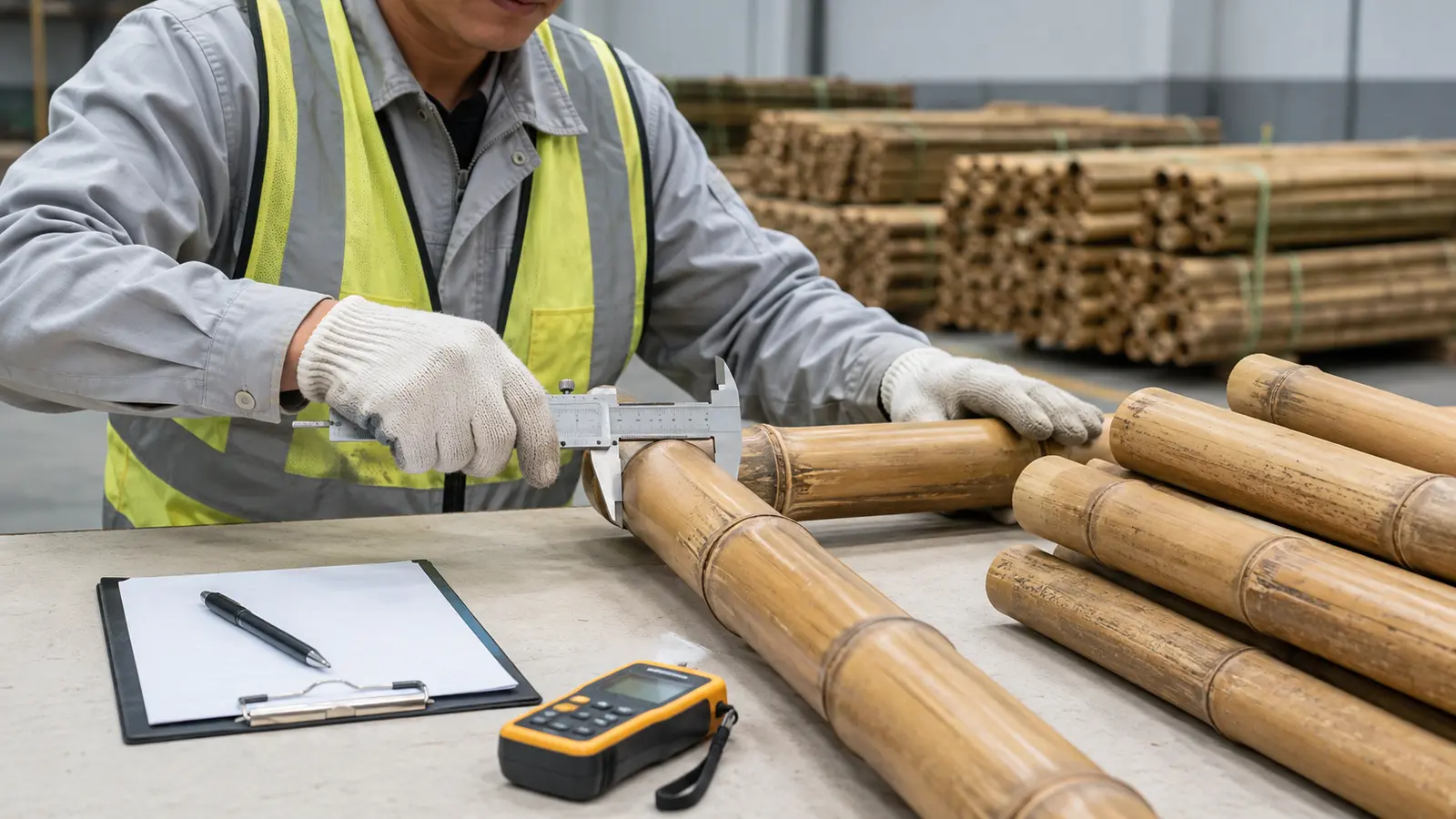
Before approving production, create a written quality standard based on the end use. Important checkpoints may include:
- Dimensions: length, diameter range, measuring point, taper, and tolerance
- Straightness: acceptable curvature over the full pole length
- Surface: color range, cleanliness, sanding, nodes, scratches, and stains
- Cracking: acceptable surface checking versus unacceptable splits
- Biological condition: limits for mold, insect holes, decay, or contamination
- Drying and treatment: agreed process and records when required
- Quantity and sorting: piece count, bundle count, and grade breakdown
- Packaging: protection, ventilation, labels, barcodes, and shipping marks
Approve a representative pre-production sample or a clearly documented reference standard. For large orders, request in-process and pre-shipment inspection records with photos and measurements. Decorative-grade poles should not automatically be treated as structural material. Any load-bearing use must follow local engineering requirements and building codes.
Packaging and International Shipping Considerations
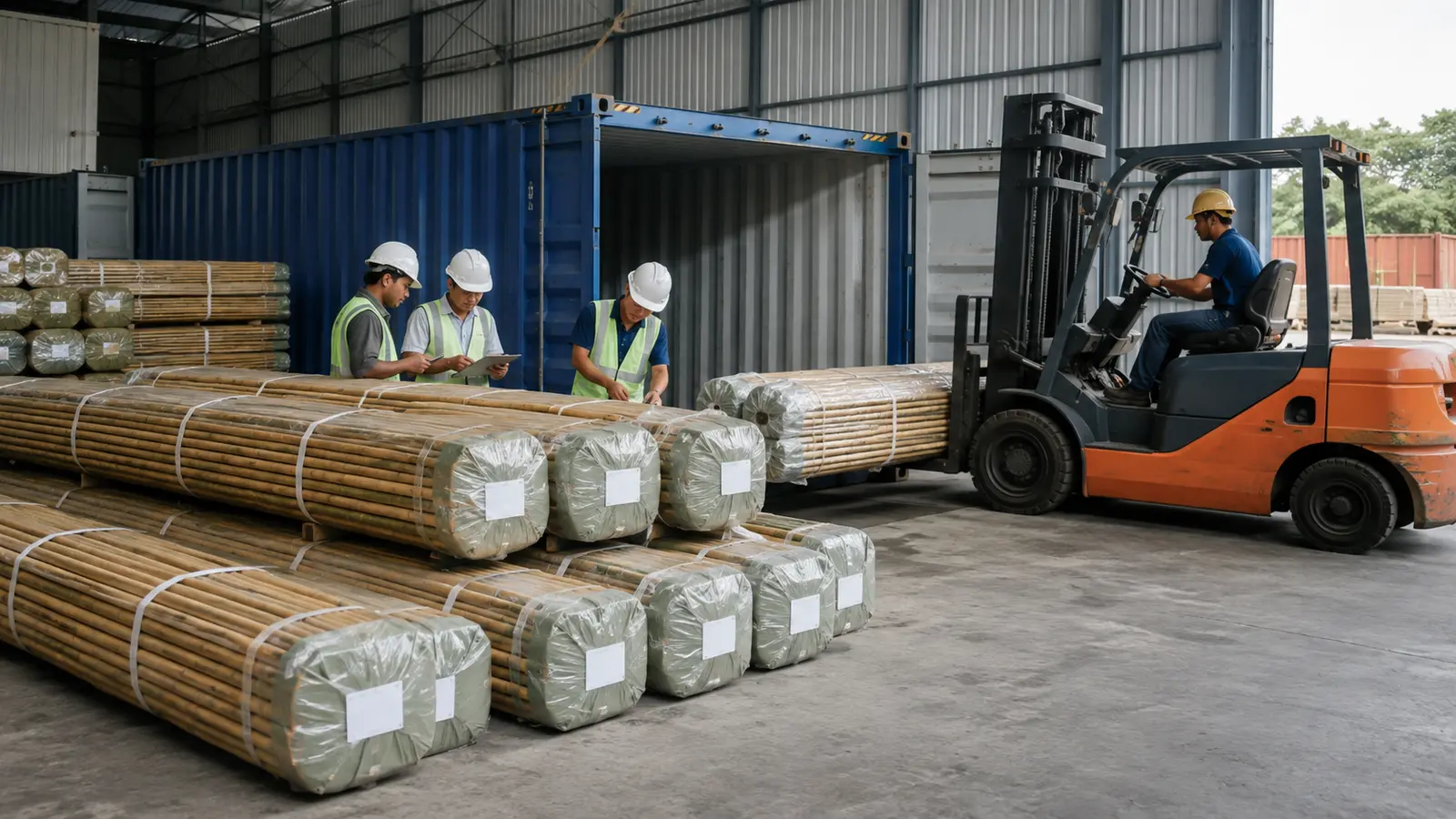
Bamboo poles are long and relatively bulky, so logistics can have a major effect on landed cost. Efficient size combinations and bundle dimensions can improve container utilization, but packing density should not create avoidable bending, abrasion, or moisture problems.
Discuss the following points with your supplier:
- Number of poles per bundle and bundles per shipment
- Protective wrapping, ventilation, end protection, and moisture control
- Forklift, pallet, manual-unloading, or warehouse handling requirements
- Shipping marks, SKU labels, barcodes, and retail labels
- Container loading plan and estimated quantity per container
- Commercial invoice, packing list, certificate of origin, treatment records, phytosanitary documentation, or other documents when applicable
Import requirements vary by country and product condition. Confirm documentation with your customs broker before production rather than after the goods are ready to ship.
How to Evaluate a Bulk Bamboo Pole Supplier
A dependable supplier should do more than send a price. Look for a team that can translate your application into measurable specifications and communicate limitations before production.
- Specification review: Does the supplier ask about use, size, tolerance, finish, packing, and destination?
- Sample control: Can the supplier provide representative samples and record the approved standard?
- Quality management: Are incoming material, processing, sorting, and final inspection documented?
- Customization: Can the team support cutting, drilling, coating, labeling, packaging, or OEM development when required?
- Traceability and certification: Can requested claims and documents be verified for the specific material and order?
- Export experience: Does the supplier understand packing, loading, documentation, and delivery coordination?
- Communication: Are specifications, changes, lead times, and risks confirmed in writing?
You can learn more about Fujian XianXu's manufacturing capabilities, China and Vietnam production network, quality control, and OEM/ODM services.
A Simple Wholesale Ordering Process
- Define the application: Explain where and how the bamboo poles will be used.
- Send the specification: Provide sizes, tolerances, finish, quantity, packing, and destination.
- Review quotation and MOQ: Compare the same specification, Incoterm, and quality level.
- Approve samples: Confirm appearance, dimensions, processing, and packaging.
- Confirm production details: Freeze the specification and inspection criteria before mass production.
- Inspect and document: Review production records, measurements, photos, and pre-shipment results.
- Arrange shipment: Confirm loading, documents, delivery schedule, and receiving plan.
This process helps importers reduce misunderstandings, control quality, and obtain more accurate pricing for repeat orders.
Frequently Asked Questions About Wholesale Bamboo Poles
Can bamboo pole length and diameter be customized?
Many size combinations can be sorted or processed, but feasibility depends on the natural bamboo supply, species, diameter range, length, tolerance, and order quantity. Send a specification sheet or drawing for confirmation.
What is the MOQ for bulk bamboo poles?
MOQ varies by size, grade, processing, packaging, and whether the order uses standard or custom specifications. Larger poles, special finishes, mixed sizes, and retail packaging can have different minimums. Request an MOQ for each SKU rather than one general figure.
Will all natural bamboo poles look identical?
No. Natural variation in color, taper, nodes, and surface character is expected. Buyers can request sorting and appearance ranges, but the acceptable standard should be confirmed through samples and written tolerances.
Are bamboo poles suitable for outdoor use?
Suitability depends on species, drying, treatment, coating, climate, installation, maintenance, and ground contact. Tell the supplier about the actual outdoor environment and confirm the recommended process. Structural uses require local professional assessment.
Can suppliers provide FSC or other documents?
Document availability depends on the material source, supplier scope, processing chain, product, and order. If a certification or claim is required, state it before quotation and verify that it applies to the specific goods. Do not rely only on a logo or a general company statement.
What information is needed for an accurate quote?
Provide the application, length, diameter and measuring point, tolerances, finish or treatment, quantity per size, packaging, destination port or postcode, and preferred Incoterm. Photos, drawings, and reference samples are helpful for custom projects.
Request a Quote for Wholesale Bamboo Poles
The best wholesale bamboo poles program starts with a clear end-use specification, realistic natural-material tolerances, and an agreed inspection standard. By defining these details before production, importers can compare quotations more accurately, reduce quality disputes, and plan packaging and freight efficiently.
Fujian XianXu Bamboo Wood Co., Ltd. supports global importers, wholesalers, retailers, and brand owners with bamboo material sourcing, product development, OEM/ODM coordination, quality control, and export services. Contact our team for a bulk bamboo pole quotation and include your sizes, quantities, application, packaging, and destination.