

Teak Cutting Board Set | Wholesale OEM & ODM
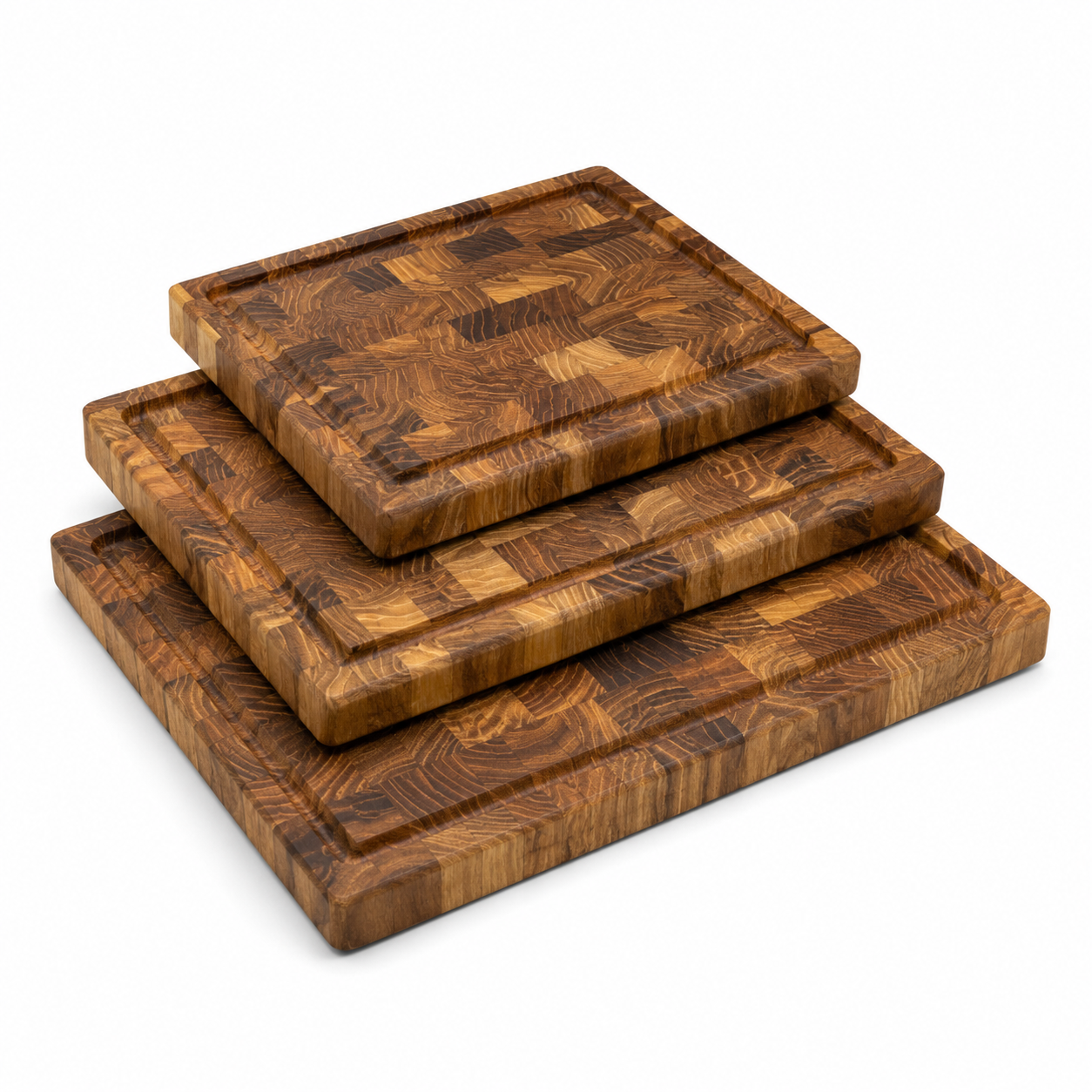
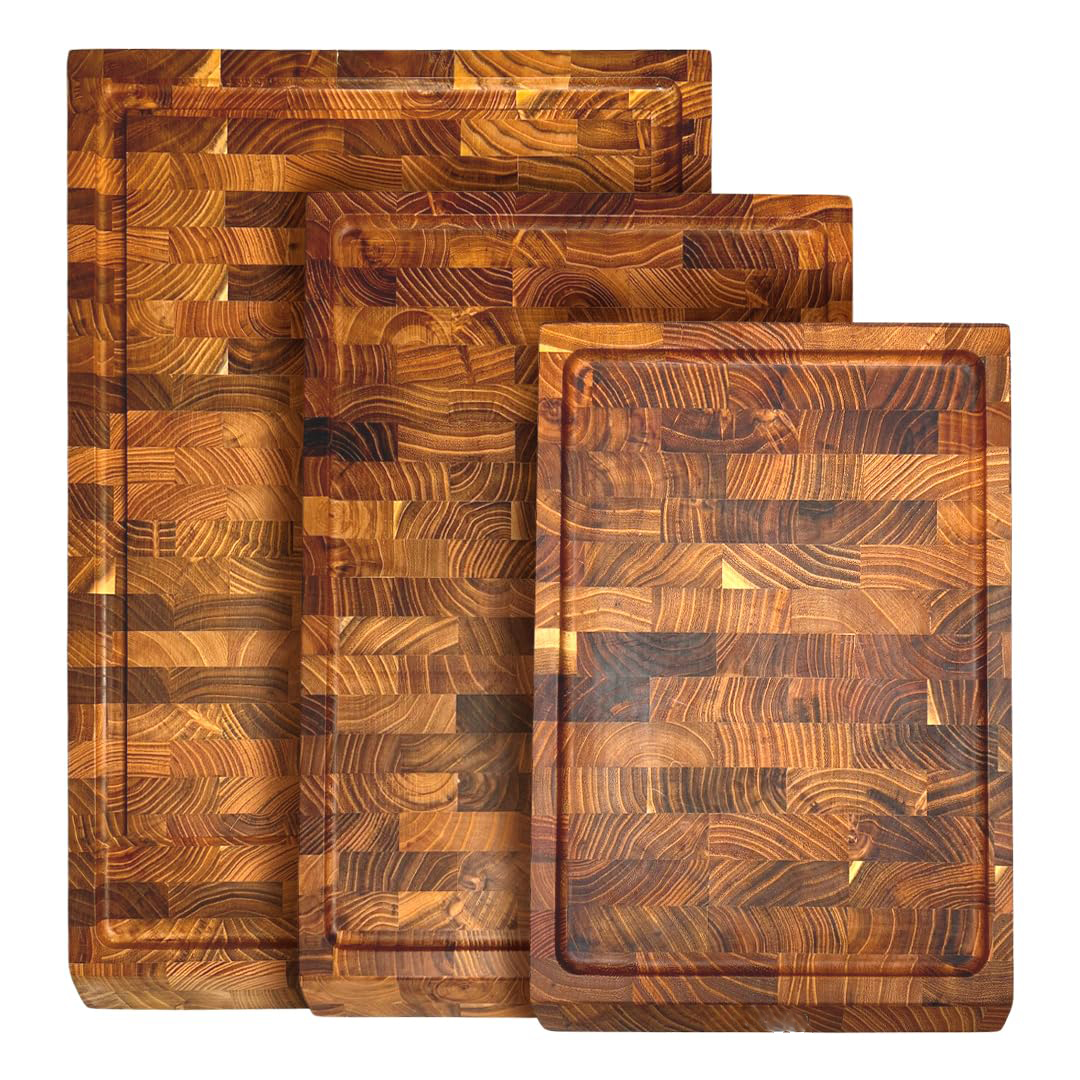
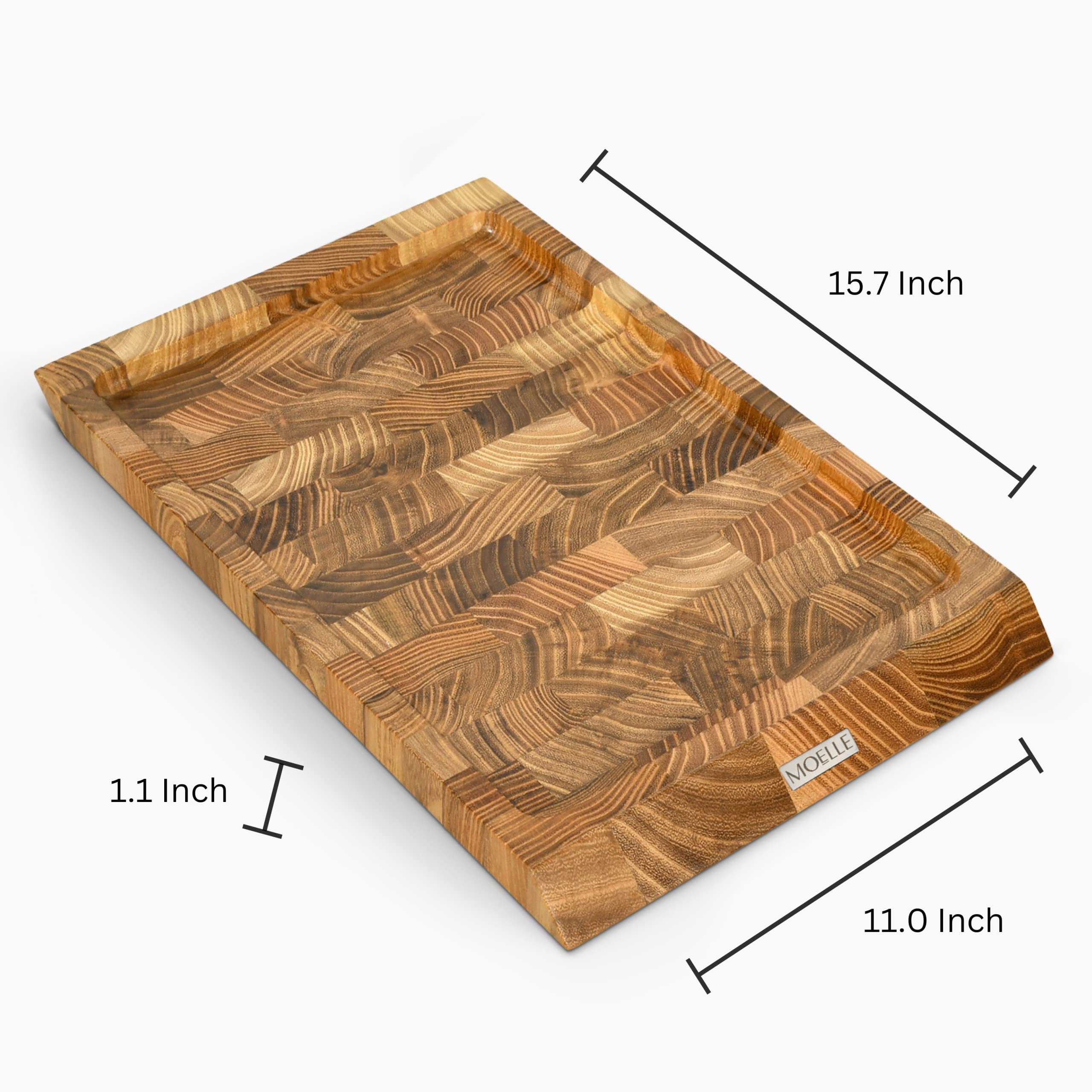
This teak cutting board set is shown as graduated rectangular boards with varied block-grain surfaces, perimeter juice grooves and beveled sides for wholesale and private-label ranges. One gallery reference size is 15.7 × 11.0 × 1.1 in. Final teak species, set quantity, construction, finish, food-contact documents and packaging follow the approved specification and quotation.
Açıklama
Teak Cutting Board Set for Wholesale Buyers
Designed for wholesale, retail and private-label presentation, this teak cutting board set pairs a substantial rectangular silhouette with the visual depth of a small-block grain pattern. The working face shown in the gallery includes a perimeter juice groove, while the sides appear angled or beveled to create a more accessible handhold. Together, these details give the collection a considered, premium look without relying on decorative excess.
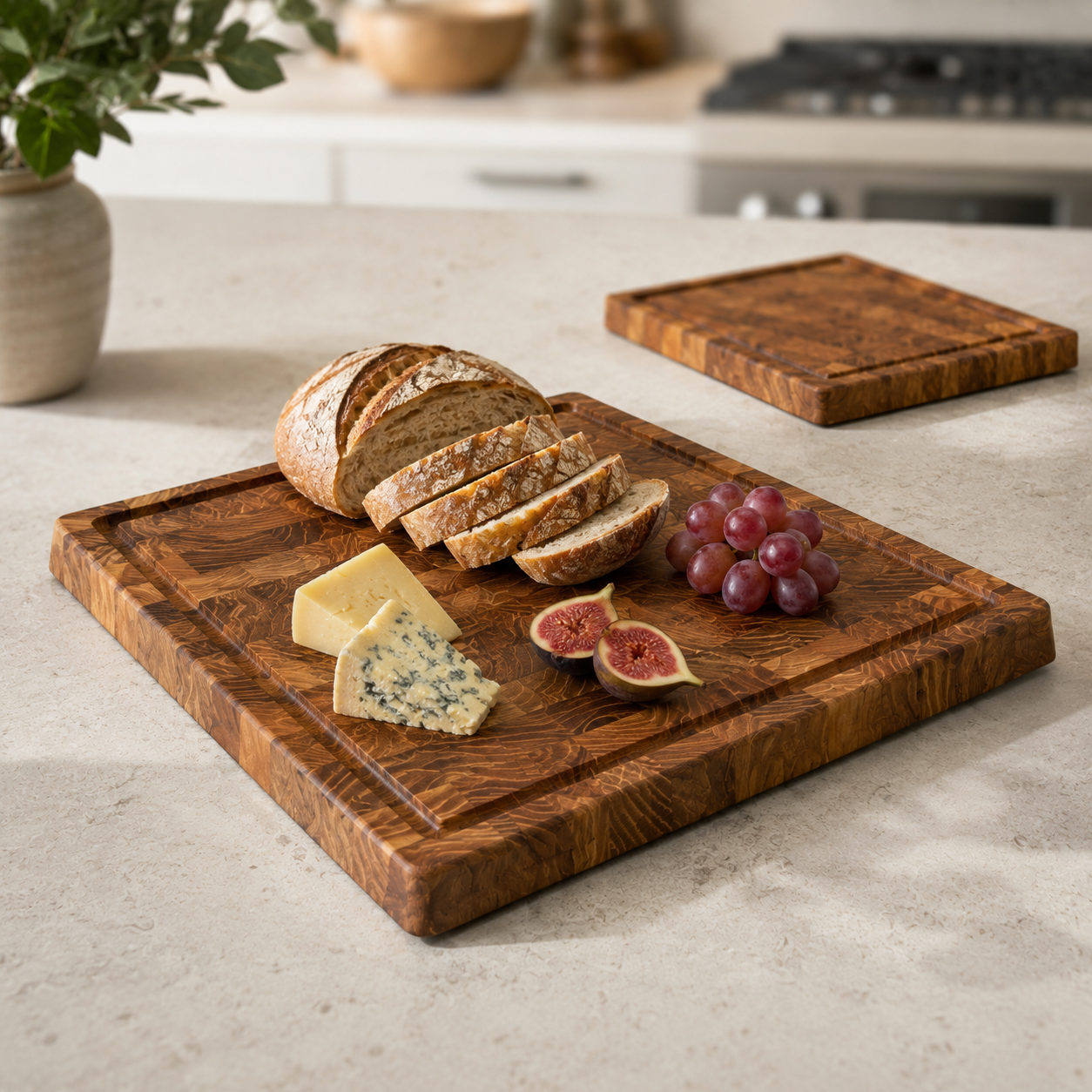
The teak cutting board set gallery presents three graduated formats as a coordinated family. This can support tiered assortments and giftable merchandising, but the final number of boards in each SKU is unconfirmed. Buyers should specify one board, a multi-size pack or separate SKUs. Approved production documents establish the orderable configuration.
This sourcing brief is for wholesalers, importers, retailers and hospitality distributors. Every order should be aligned with the approved bill of materials (BOM), technical drawing, sample and supplier quotation. Where these differ from imagery or copy, the final BOM, drawing, sample and quotation govern.

Visible Design Features
The photographed boards have a warm, dark-brown color story and a varied, mosaic-like pattern of compact grain areas. This gives the face an end-grain-style visual distinct from a conventional long-strip board. Imagery does not confirm block orientation or construction, so an end grain teak cutting board specification requires written supplier confirmation and sample approval.
- Rectangular working area: a familiar shape for preparation, counter displays and serving presentations.
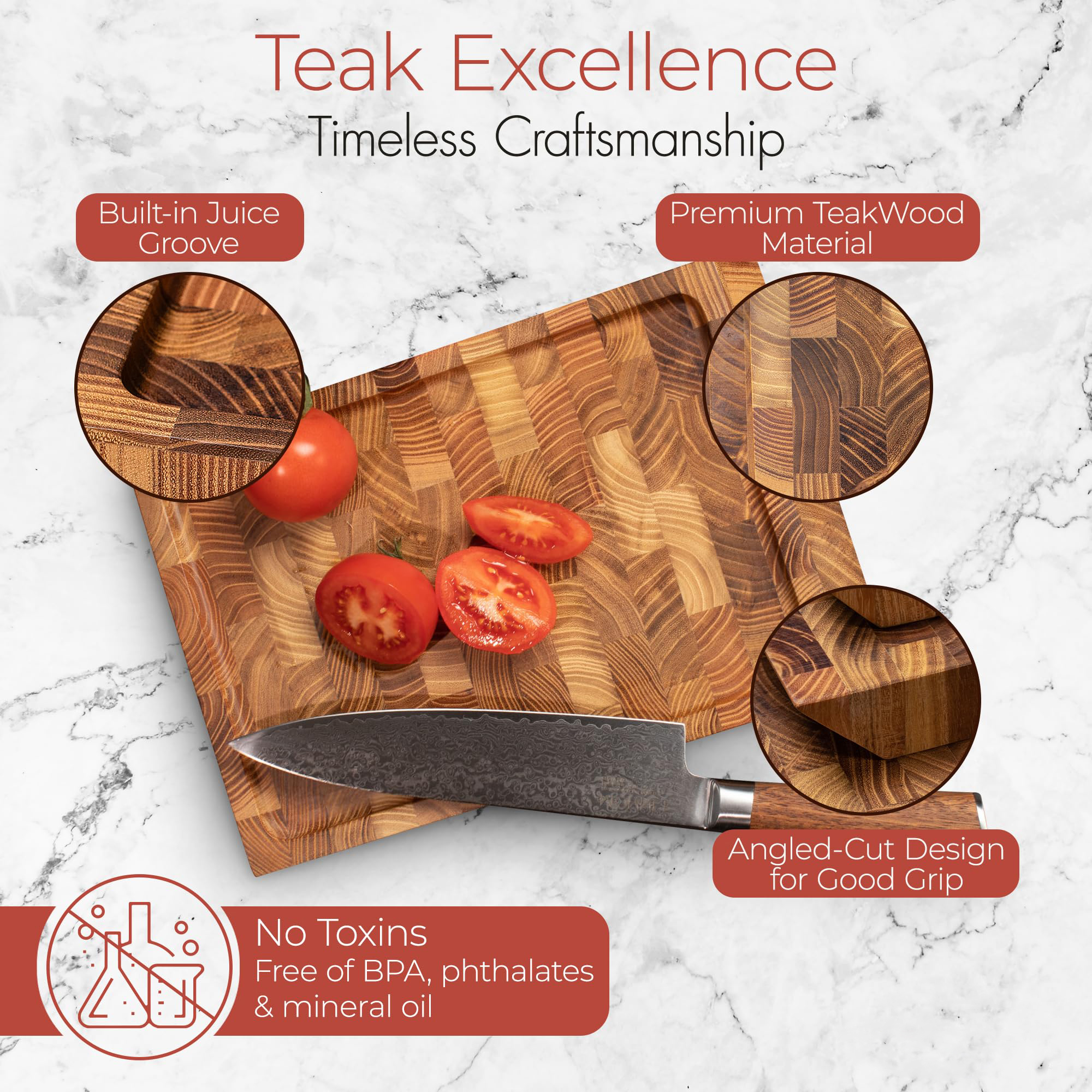
- Perimeter channel: the visible groove frames the face and can help contain food juices or crumbs during normal use; capacity and effectiveness are not quantified.
- Angled side profile: the beveled-looking edge is intended to assist grip when lifting or moving the board. Final edge geometry and tolerances require a drawing.
- Graduated visual range: the gallery shows three sizes, creating an opportunity for good-better-best merchandising or coordinated shelf displays.
- Expressive natural appearance: color and grain visibly vary. Approved samples should define the acceptable commercial range.
Before production, translate these features into measurable specifications: dimensions, groove profile, edge radius, bevel angle, flatness, moisture target and permitted appearance variation.
Reference Specifications for Quotation
For this teak cutting board set, the table separates visible gallery details from approval points. The dimension below applies to one pictured board only; it is not the size of every board or proof of a three-piece pack.
| Attribute | Current reference | Order requirement |
|---|---|---|
| Product format | Rectangular boards; gallery shows three graduated sizes | Confirm SKU structure and exact pieces per pack |
| One pictured size | 15.7 × 11.0 × 1.1 inches, gallery reference only | Confirm tolerances and metric conversion on drawing |
| Face detail | Perimeter juice groove | Approve groove profile, location and dimensions |
| Side detail | Angled or beveled profile intended to assist grip | Approve edge geometry and handling sample |
| Appearance | Warm/dark brown, varied small-block grain pattern | Set color, grain and defect acceptance limits |
| Material and construction | Gallery positions the item as teak | Confirm species, grade, construction and adhesive |
| Finish and documentation | Not confirmed | Specify finish system, market and required evidence |
| Packaging and accessories | Cardboard gift-box concept appears in gallery | Confirm structure, print, inserts, labels and inclusions |
For a clean product-data handoff, assign each proposed size its own SKU, revision code and dimensioned drawing. Record whether measurements are nominal or guaranteed, how tolerances are checked and which surface is treated as the working face. This avoids accidentally applying the single gallery dimension to the entire visual family.
From Food Preparation to Table Presentation
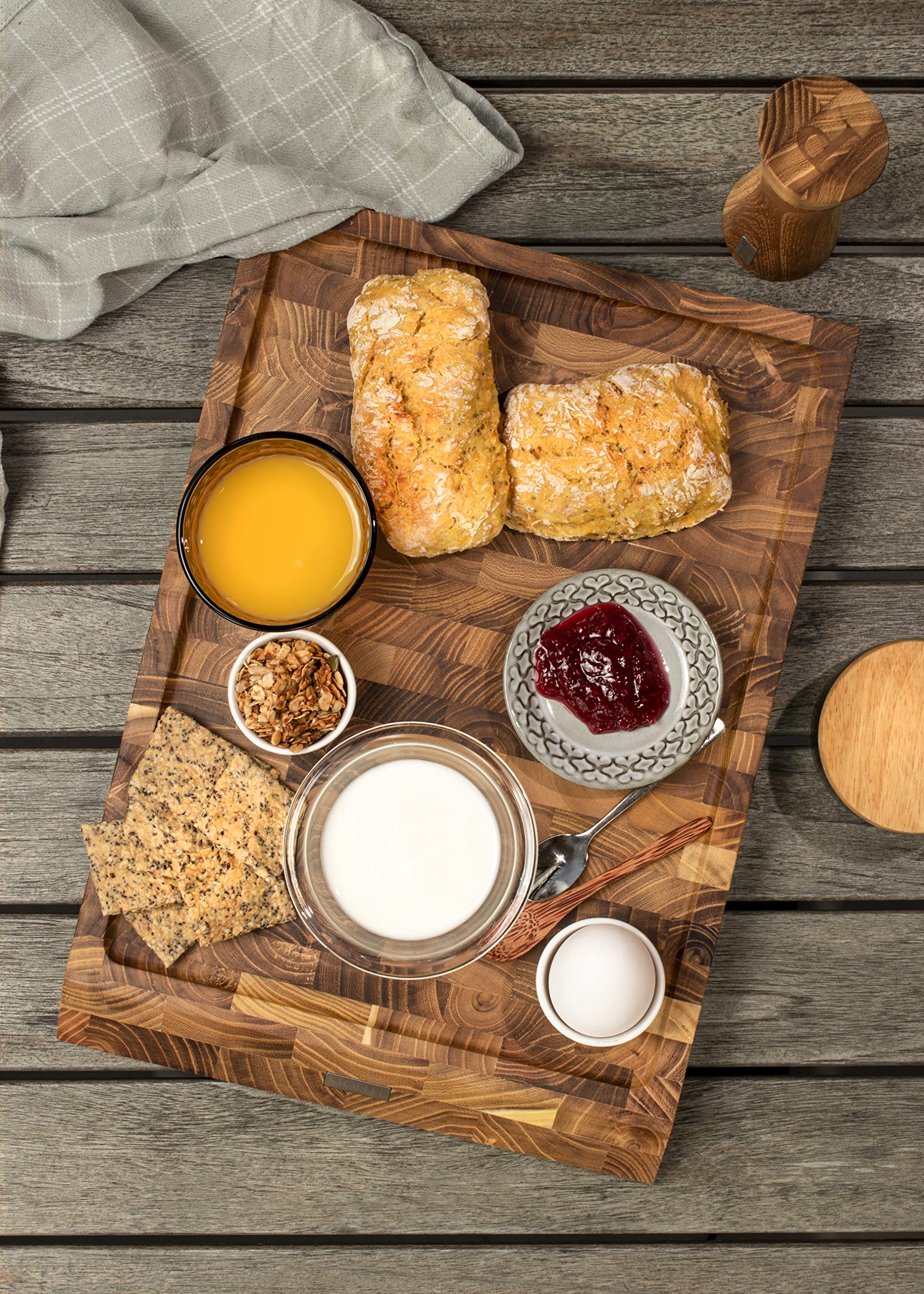
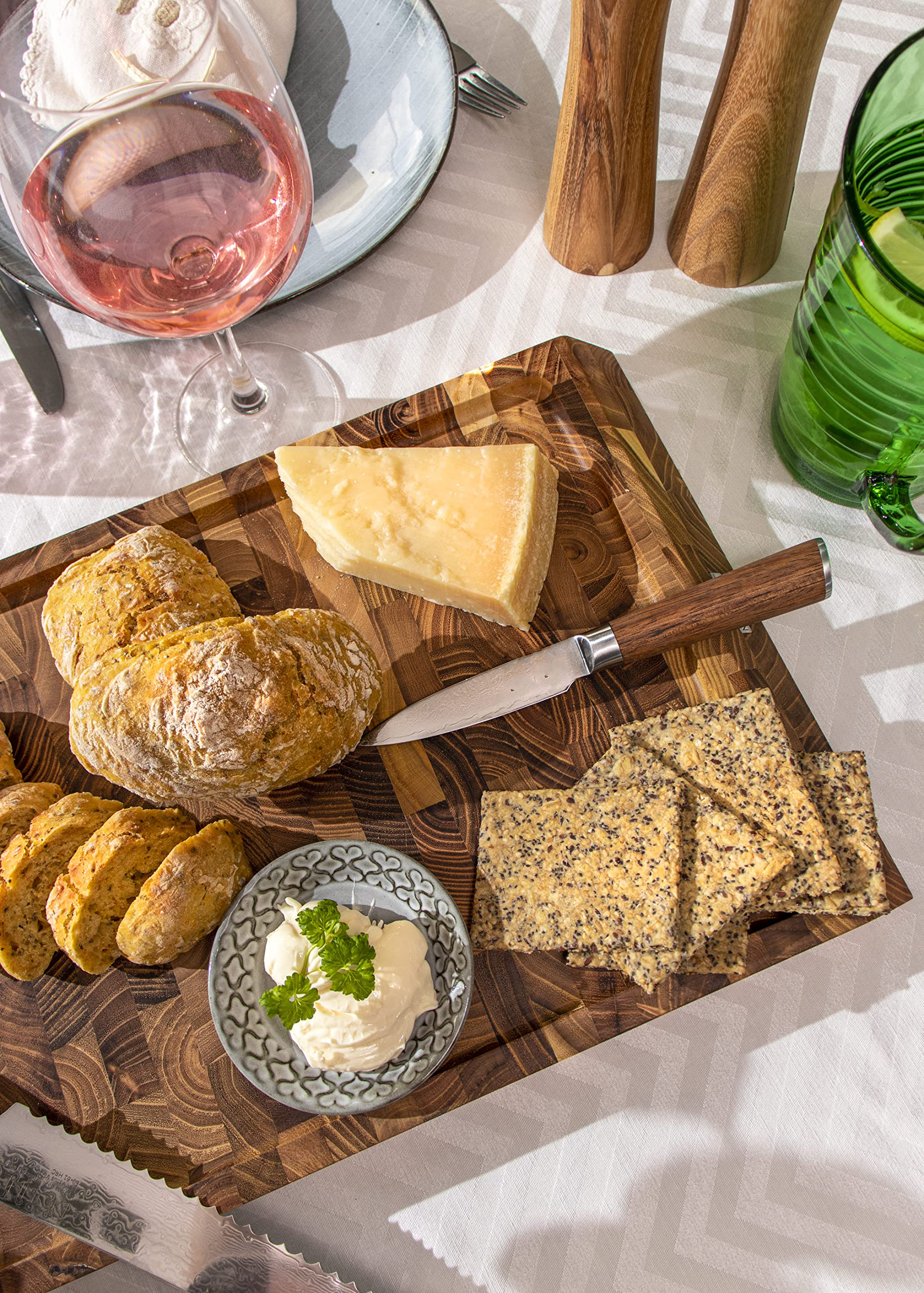
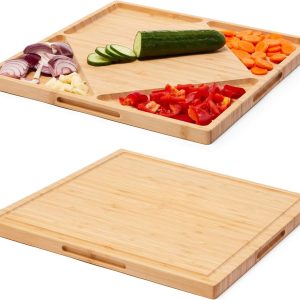
Gallery scenes show vegetable preparation and bread-and-cheese service, spanning kitchen and entertaining stories. A retailer might merchandise an approved teak wood cutting board beside pantry tools, then style a related teak serving board concept with bakery and cheese categories. Check every use instruction against the confirmed material, finish and food-contact documentation for the sales market.
A smaller format may suit quick preparation; a larger one offers a broader presentation surface; and a coordinated wood cutting board set may occupy a gifting position. These are merchandising possibilities, not confirmed pack definitions. Buyers can review complementary kitchenware sourcing options when planning a collection.

OEM, ODM and Private-Label Development
For a teak cutting board set program, brand owners can begin with a target channel and price architecture. OEM work can follow an approved size and construction; ODM discussion may explore coordinated proportions, groove layouts and edge profiles. Customization, minimum order quantities, tooling, sampling fees and lead times require project-specific confirmation.
Brief logo method and placement, retail palette, barcode, labels, inserts, carton marks and regional languages. Engineer custom dimensions or bundles before finalizing packaging. Evaluate branding position, color and durability on a production-representative sample, because natural variation may affect contrast.
A staged approval process can keep custom work controlled: review a drawing and material proposal first, then an undecorated sample, branded sample and packaging mock-up as the project requires. Record every accepted change by revision. Mass production should not begin until authorized parties have signed off the agreed checkpoints.
Importers comparing wholesale cutting boards should separate unit price, decoration, packaging, testing, tooling and freight assumptions. Review the broader sourcing approach on the about page; project-specific capability remains subject to written confirmation.
Material, Finish and Food-Contact Documentation
Material approval for a teak cutting board set must go beyond gallery appearance. The gallery describes the product as teak, but imagery cannot establish species, origin, grade or chain of custody. Request the scientific name where relevant, material breakdown and construction drawing. The approval package should state block orientation, joining method, adhesive and permitted repairs or fillers. Do not infer end-grain construction from the face pattern.
Finish chemistry is unconfirmed. Define the required appearance, application and maintenance instructions, then obtain formulation-specific technical and safety documentation. Do not assume mineral oil, vegetable oil, a coating type or an unfinished surface from photographs.
Food-contact suitability must be supported for the destination market and use. Ask which reports are available, what regulations and test conditions they address, and whether the tested specification matches the production BOM. Review report scope, date, sample identity and validity. BPA, phthalate, sustainability, certification, knife-performance or other claims require substantiation and express approval.
Packaging Development and Quality Control
Packaging for a teak cutting board set should follow the approved pack count and dimensions. A cardboard gift-box concept appears in the gallery but is not a confirmed inclusion. Quotation should identify pack format, board quantity, box grade, dimensions, printing, internal protection, labels and master carton. For e-commerce, request packaging designed around the agreed weight and configuration, followed by appropriate transit validation.
Convert visual expectations into inspectable criteria: dimensions, groove position, bevel profile, flatness, surface preparation, color range, grain variation, glue lines, branding and packaging accuracy. Agree sampling level, defect classes and inspection timing before the purchase order. A signed reference sample can align buyer, factory and inspector.
Testing should reflect the materials, claims, destination, shipment and retailer requirements. QC records and reports should reference the purchase order’s SKU and revision level.
Conservative Care Guidance Pending Final Specification
Until material and finish are confirmed, treat care copy as a provisional label draft for supplier approval. It may recommend hand washing with mild detergent and a soft sponge, avoiding soaking, rinsing promptly and drying with airflow around the board. Do not print dishwasher, heat, standing-water, reconditioning or oil guidance until it has been approved for the production finish.
Validate storage and cleaning language on the final product, including any use limitations from compliance review. The care card must match the delivered SKU rather than repeat generic claims across different constructions.
RFQ Checklist for an Accurate Quote
To receive a comparable proposal for a teak cutting board set, include the following information in the RFQ:
- Target sales market, channel, customer profile and estimated annual volume.
- Individual board dimensions, tolerances and desired number of pieces per retail pack.
- Required species, grade, construction, adhesive and finish—or a request for documented options.
- Groove geometry, edge profile and any other dimensional changes.
- Logo method, artwork files, placement, label copy, barcode and language requirements.
- Retail box, internal protection, master carton and e-commerce or pallet requirements.
- Required food-contact evidence, retailer protocols, testing standards and inspection level.
- Target quantity, destination, Incoterm, target date and sample approval process.
Ask the quotation to list assumptions and exclusions. Before deposit or production, reconcile it with the current drawing, BOM, packaging artwork and approved sample.
Frequently Asked Questions
1. Is this teak cutting board set a confirmed three-piece pack?
No. The gallery shows three graduated boards, but pack quantity is unconfirmed. State the required count in your RFQ and verify it in the quotation, BOM and packaging specification.
2. Are all three board sizes available?
The imagery suggests multiple sizes, but only one board shows 15.7 × 11.0 × 1.1 inches. Request the dimension schedule, tolerances and SKU availability.
3. Is the board definitely made from teak?
The gallery positions it as teak. Confirm final species, scientific name where applicable, grade and construction through the approved BOM, sample and quotation.
4. Is the construction true end grain?
The small-block face has an end-grain-style appearance, but photography does not prove fibre orientation. Request a section drawing, construction description and sample before making the claim.
5. Does the juice groove have a stated capacity?
No capacity is confirmed. Define the visible groove’s width, depth and expected performance against an approved production sample.
6. Can the boards be private labelled?
Private-label, OEM and ODM options can be discussed. Send dimensions, artwork, packaging, quantity and market requirements for confirmation of feasibility, MOQ, cost, lead time and sampling.
7. Is a gift box included?
A cardboard gift-box concept appears in the gallery, but is unconfirmed. Specify the retail pack and request dielines, materials, print details and a packaging sample.
8. Is the product dishwasher safe or certified for food contact?
Neither is confirmed. Use conservative hand-care guidance and request destination-market documentation tied to the exact production specification before making claims.
Build a board range around your market, not around assumptions. Send your sizes, pack count, branding, packaging, compliance needs, quantity and destination through the contact page. A production decision should follow review of the final BOM, drawing, sample and quotation, which govern the supplied product.
Değerlendirmeler
Henüz değerlendirme yapılmadı.