

Portable Travel Cutlery Set with Pouch and Carabiner
Portable travel cutlery set with bamboo-look spoon, fork, knife, chopsticks, green pouch and metal clip. Confirm materials, branding, packaging and MOQ.
Description
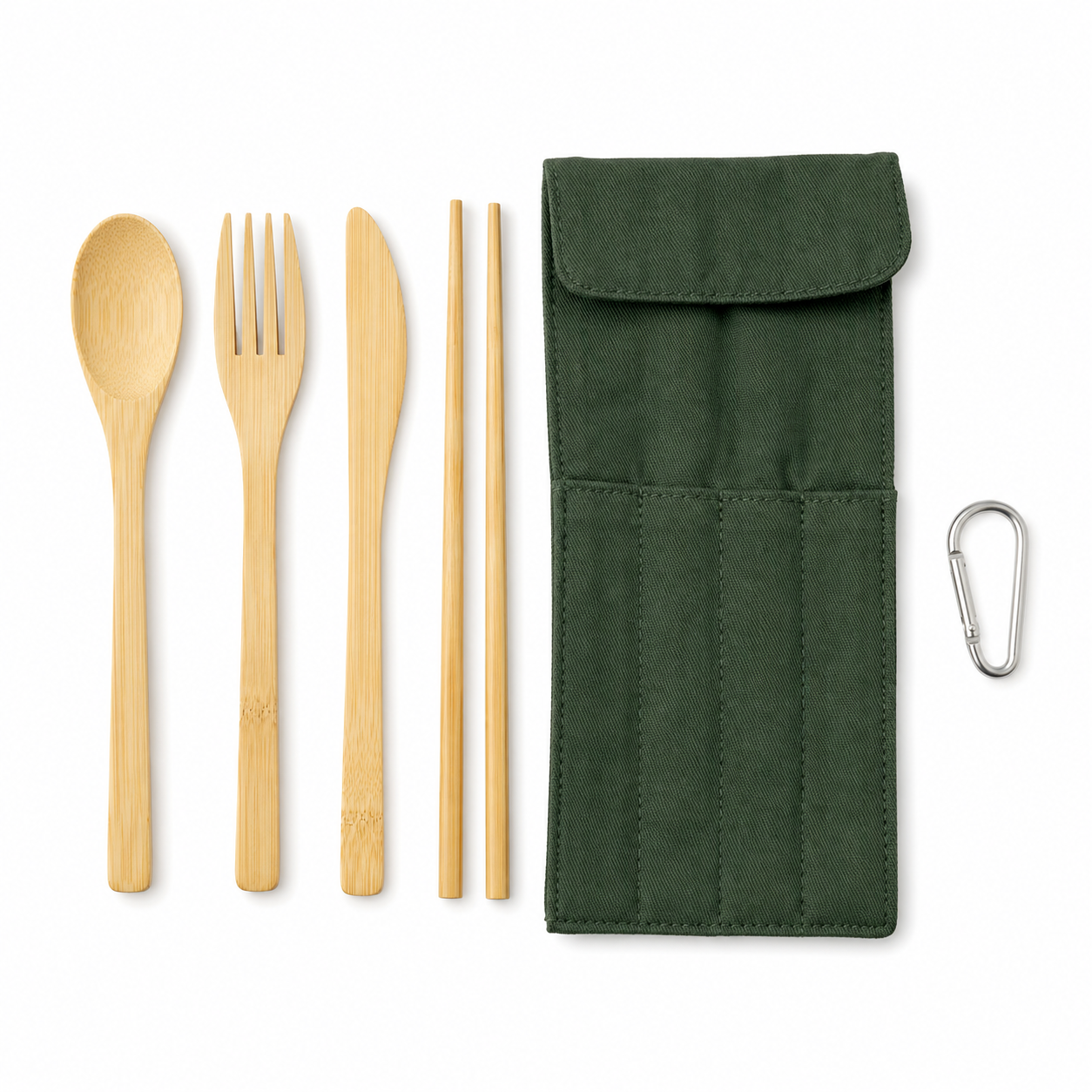
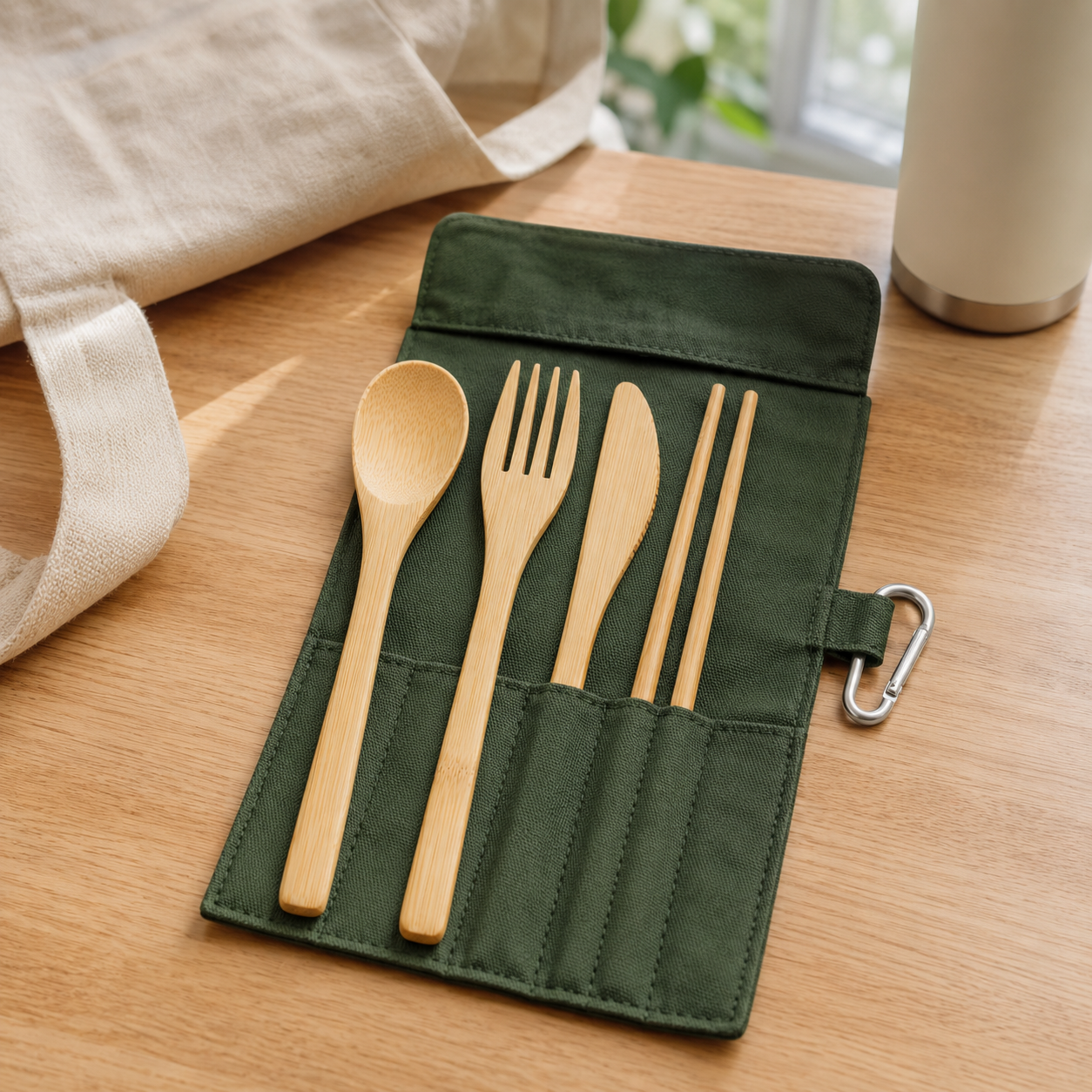
Create a compact dining kit for travel, lunch and private-label programs. This portable travel cutlery set with pouch is shown with a bamboo-look spoon, fork, table knife and one pair of chopsticks, together with a green fabric pouch and metal attachment clip. The photographs provide a visual reference for the proposed configuration; they do not establish the final material, dimensions, finish, textile fiber, coating, component count or cleaning instructions. Each order should follow an approved bill of materials, component drawings, packing list and pre-production sample.

The format is relevant to importers, retailers, hospitality suppliers, promotional-product distributors, meal-service programs and brands developing an on-the-go dining accessory. It is intentionally positioned around portability and pouch presentation rather than bulk disposable cutlery. Buyers developing full-size cooking tools may instead review our wooden cooking utensil set or pakkawood kitchen utensils set; those products have separate specifications and applications.
If a sourcing brief requires confirmed bamboo rather than a visual material direction, use our bamboo cutlery wholesale guide and bamboo flatware material guide to frame the material, construction and approval questions before selecting a portable configuration.
Reference Travel-Set Configuration
The visible assortment places several personal dining tools in a roll-up or fold-over textile pouch. A metal clip appears attached to the pouch, offering a possible connection point for a bag or loop. Its construction, opening method and intended load are not confirmed. The clip should be treated as a convenience accessory only unless a written specification and test establish another purpose.
Component counting needs special attention. A pair of chopsticks may be described commercially as one pair, one utensil type or two individual sticks. Some buyers count only the dining tools, while others include the pouch and clip in the advertised set count. To prevent differences among quotations, labels and inspections, the purchase order should state both the number of tool types and the number of physical pieces.
Visible Components and Counting Method
| Reference Component | Visible Quantity | Recommended BOM Description | Confirmation Point |
|---|---|---|---|
| Spoon | 1 | One dining spoon | Confirm bowl size, depth, edge and handle profile |
| Fork | 1 | One dining fork | Confirm tine count, spacing and tip geometry |
| Table knife | 1 | One table-knife form | Confirm edge shape, tip, thickness and intended use |
| Chopsticks | 1 pair / 2 sticks | One matched pair comprising two individual sticks | Confirm length, taper, profile and matching standard |
| Green pouch | 1 | One fabric carrying pouch | Confirm fiber, construction, color and closure |
| Metal clip | 1 | One attachment clip | Confirm metal, finish, dimensions and attachment method |
A clear commercial description might state “four dining-tool types, including one chopstick pair, plus one pouch and one clip.” The exact front-of-pack wording remains the buyer's decision and must match the final physical contents.
Reference Specification for Quotation
| Specification Item | Current Reference | Required Approval |
|---|---|---|
| Product type | Portable personal dining-utensil kit | Confirm intended users, channel and use environment |
| Utensil appearance | Bamboo look shown | Confirm material, grade and construction in the BOM |
| Tool assortment | Spoon, fork, table knife and chopstick pair | Approve component drawings and physical samples |
| Dimensions | Not confirmed | Approve overall and critical dimensions with tolerances |
| Surface treatment | Not confirmed | Approve finish or coating specification and sample |
| Pouch | Green textile presentation shown | Confirm fiber, weight, weave, color, sewing and closure |
| Clip | Metal appearance shown | Confirm material, finish, mechanism and intended duty |
| Packaging | To be developed | Approve unit pack, artwork, labels and carton specification |
Potential Uses and Sales Channels
The compact format can be evaluated for packed lunches, offices, school or campus programs, commuting, travel accessories, picnics, events and hospitality welcome kits. Suitability for a particular environment depends on the approved tool geometry, pouch closure, care method and local requirements. Buyers should test the kit with the meal types and carrying conditions expected in their market.

Retailers may merchandise it near lunch containers, travel accessories or tableware. Promotional distributors may use a branded pouch or product mark, subject to approval of the marking method. Food-service and corporate programs should define how kits will be issued, collected, cleaned, stored or replaced. No performance or hygiene statement should be added until the corresponding material and test evidence has been reviewed.
Portability Does Not Define Performance
Compact packaging can improve organization, but it does not by itself verify resistance to moisture, temperature, staining, repeated cleaning or mechanical loading. Those properties depend on the materials and production specification. The clip is not climbing equipment, a safety connector or a rated load device unless it has been separately designed, marked and tested for such a purpose. User instructions should state the intended function clearly.
OEM and ODM Development
OEM projects can begin with the reference tool assortment and the buyer's branding or packaging requirements. Reviewable elements may include utensil profiles, handle shape, chopstick section, pouch dimensions, closure style, fabric color, thread color, label placement, clip finish and retail presentation. ODM work can start from a target user, meal occasion, retail price objective and distribution channel, followed by component and pack development.
Every variation should receive a distinct item number and revision-controlled BOM. A pouch color change may also require a new textile standard and approved color sample. A different utensil shape can affect pouch size and carton loading. Logo placement may require trials on the confirmed utensil surface or textile. Customization feasibility, sampling and commercial conditions depend on the selected construction and project requirements.
Learn more about product development and production scope on the About our factory page. Buyers can send drawings, artwork and target specifications through the contact page.
Branding and Retail Packaging
Possible brand locations include the utensil handles, pouch exterior, sewn label, paper band, insert, hangtag, color card or box. The chosen marking process must suit the confirmed material and finish. Buyers should supply vector artwork, brand colors, minimum mark size, placement dimensions, legal copy, language requirements and barcode data. A digital proof controls layout; the approved sample controls the final appearance.
The unit pack should keep the complete assortment together, protect tool tips and edges, and allow the required retail information to remain visible. The pouch may serve as part of the presentation, but additional protection could be needed for distribution. Confirm whether the clip ships attached or separated, whether each utensil occupies a dedicated pocket, and how the set count is stated on the label. Outer-carton planning should reflect the final packed dimensions and route.
Quality Control Framework
A pre-production sample should establish component identity, physical count, appearance and pack arrangement. Incoming and in-process checks may cover utensil material, dimensions, shape, surface condition, edge profile, fork tines, knife geometry, chopstick matching, pouch fabric, color, stitching, closure, clip operation and marking. The inspection checklist should distinguish appearance criteria from functional criteria.
Functional tests need written methods, sample quantities and acceptance limits. Depending on the approved design, buyers may request bending or load checks, repeated utensil use, cleaning cycles, finish adhesion, color transfer, pouch seam tests, closure cycling, clip cycling or pack-out checks. Destination-market material and chemical requirements should be supplied with the RFQ. Final inspection should verify that the label count matches the actual physical pieces.
What to Include in Your RFQ
- Target order quantity by item, pouch color and destination.
- Exact component list, including how the chopstick pair is counted.
- Required utensil dimensions, profiles, tolerances and material preference.
- Pouch fiber, weight, construction, closure, color and sewing standard.
- Clip material, finish, size, mechanism and intended use.
- Required finish, coating, cleaning instructions and test methods.
- Logo artwork, placement, label copy, language and barcode files.
- Unit packaging, carton quantity, shipping marks and distribution route.
- Destination-market documents, inspections and retailer requirements.
Complete inputs help separate visual references from confirmed product data and support a comparable quotation. Visit our bamboo and wooden products homepage to review the broader range.
Frequently Asked Questions
1. What utensils are shown in the reference set?
The photographs show a spoon, fork, table-knife form and one pair of chopsticks, plus a green pouch and metal attachment clip.
2. How many pieces are in the set?
That depends on the agreed counting convention. The BOM should state four dining-tool types, two individual chopsticks, one pouch and one clip, then define the advertised set count.
3. Are all utensils confirmed as bamboo?
They have a bamboo appearance in the images. The exact material, grade, construction and finish must be confirmed in the signed BOM and approved sample.
4. What is the green pouch made from?
The fiber is not confirmed. Approve the textile composition, weight, weave, color, stitching, closure and labeling before production.
5. Can the pouch and utensils carry a private-label logo?
Branding methods can be evaluated after the material and finish are selected. Approve placement, artwork and physical samples for the chosen method.
6. Is the metal clip designed to carry heavy loads?
No load rating is established here. Treat it as an attachment accessory for the pouch unless a separate specification and test define another duty.
7. How should the utensils and pouch be cleaned?
Cleaning instructions depend on the verified utensil material, finish, pouch fiber, dyes and construction. Finalize care text only after sample evaluation and required testing.
8. What packaging options can be reviewed?
Paper bands, cards, hangtags, bags, inserts and boxes can be considered. The selection should support presentation, component control, shipping protection and destination labeling.
Request a Confirmed Travel-Set Quotation
Send your required utensil shapes, counting convention, dimensions, material preferences, pouch specification, clip requirements, branding files, packaging brief, quantity and destination. We can review the portable travel cutlery set with pouch, identify open development points and prepare a project-specific sample and quotation plan. Contact us to discuss your OEM or ODM travel-utensil program.
Reviews
There are no reviews yet.