


Acacia Cutting Board with Handle | Wholesale
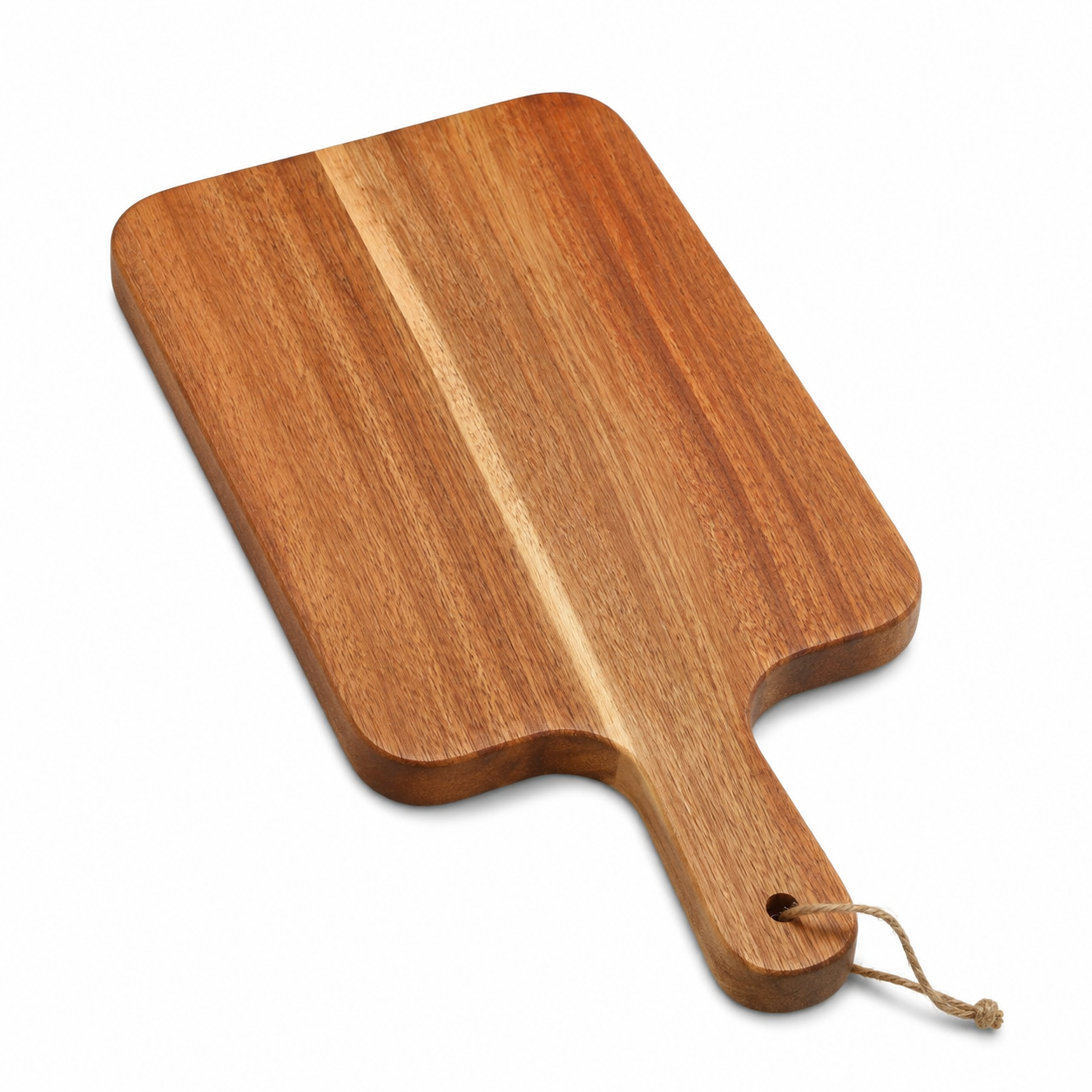
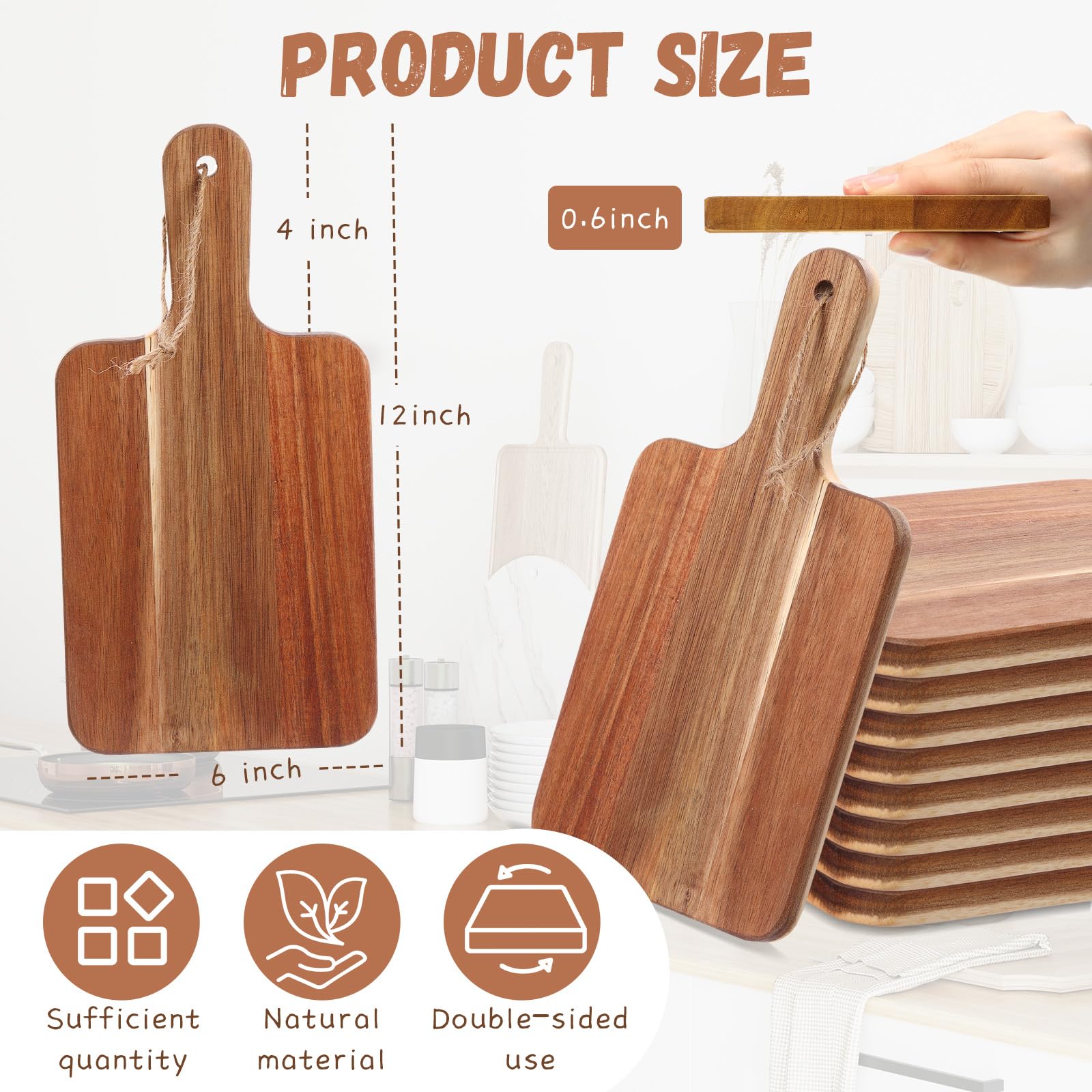
This acacia cutting board with handle is presented as a warm-brown paddle-style board with rounded corners, an extended handle and a hanging hole for wholesale or private-label programs. One gallery graphic shows a 12 × 6 × 0.6 in reference. Final species, dimensions, pack count, finish, food-contact documents and packaging follow the approved BOM, drawing, sample and quotation.
설명
Acacia Cutting Board with Handle for Wholesale Programs
Built around a clean, elongated silhouette, this acacia cutting board with handle concept gives buyers a versatile foundation for kitchen preparation, countertop presentation, and casual serving collections. The gallery shows a warm-brown rectangular board with softly rounded corners, an extended handle, and a hanging hole. Its restrained shape can move comfortably between everyday kitchenware, gifting, and entertaining assortments.
The imagery supports a paddle-style product direction, but it is not a production specification. Acacia species, grade, construction, dimensions, finish, pack count, food-contact status, and packaging remain subject to written confirmation. Wholesalers, importers, retailers, and private-label teams should treat the final bill of materials (BOM), technical drawing, approved sample, and supplier quotation as the controlling records for every order.

Visible Form of an Acacia Cutting Board with Handle
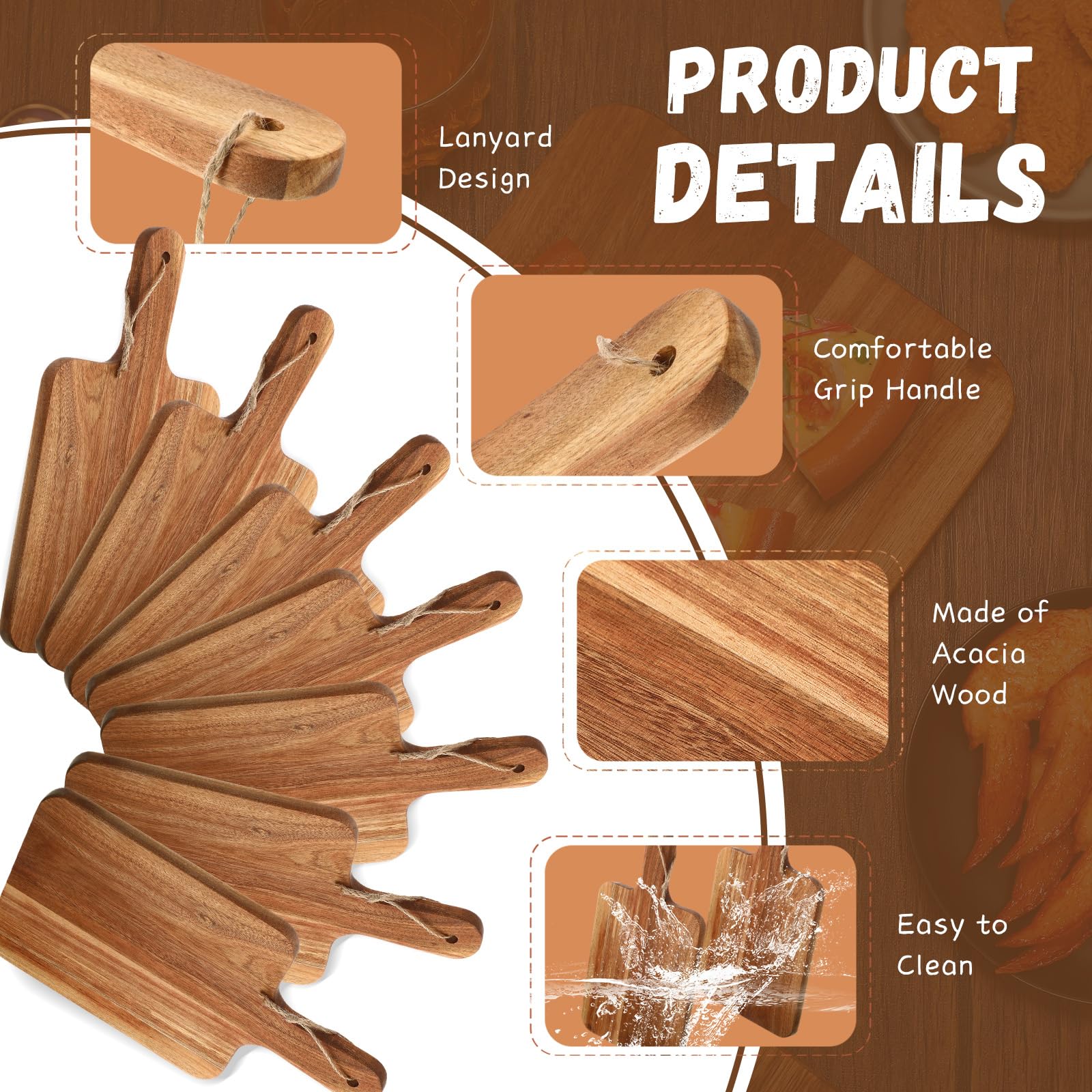
The board’s visual identity comes from proportion rather than ornament. A long rectangular body provides a straightforward working or presentation area, while the extended handle creates a recognizable paddle cutting board profile. The hole at the end of the handle may support hanging display or storage, subject to the approved hole diameter, placement, board weight, and intended fixture.
- Warm-brown appearance: the photographed surface shows varied brown tones and visible wood character. A signed sample should define the acceptable production range.
- Extended handle: the handle visually separates the board from a standard rectangle and may assist carrying. Final comfort and strength should be evaluated on a physical sample.
- Hanging hole: useful for merchandising concepts and compact storage when the chosen hook, cord, or display method is confirmed as compatible.
- Rounded corners and softened outline: these details create an approachable retail look. Edge radius, sanding level, and profile need measurable drawing callouts.
- Uncluttered face: the visible face is well suited to logo placement and food styling, but the usable area depends on final dimensions and decoration.
Photography cannot establish performance or tolerances. Convert visible features into drawings, inspection points, and an approved sample.
Reference Specification Table
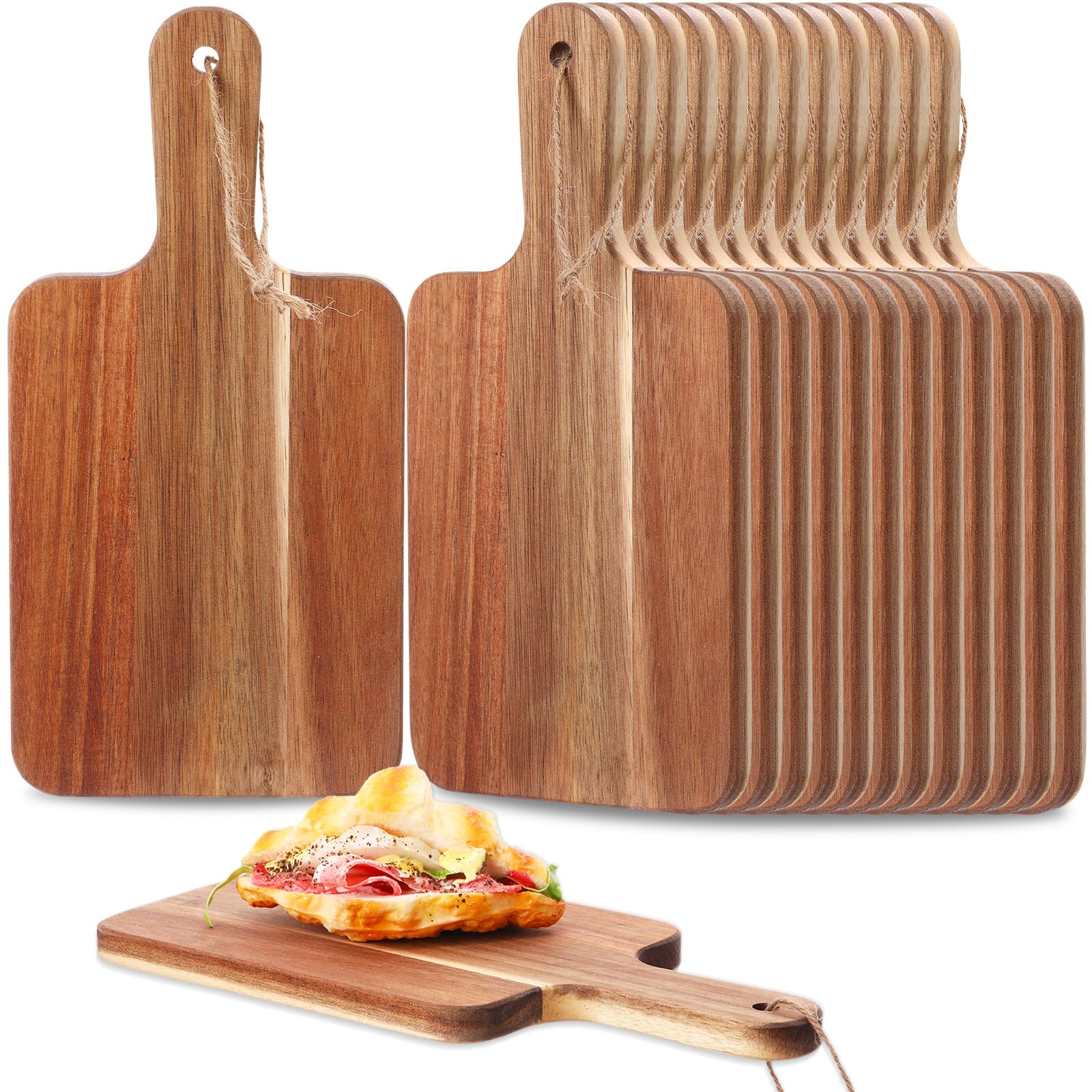
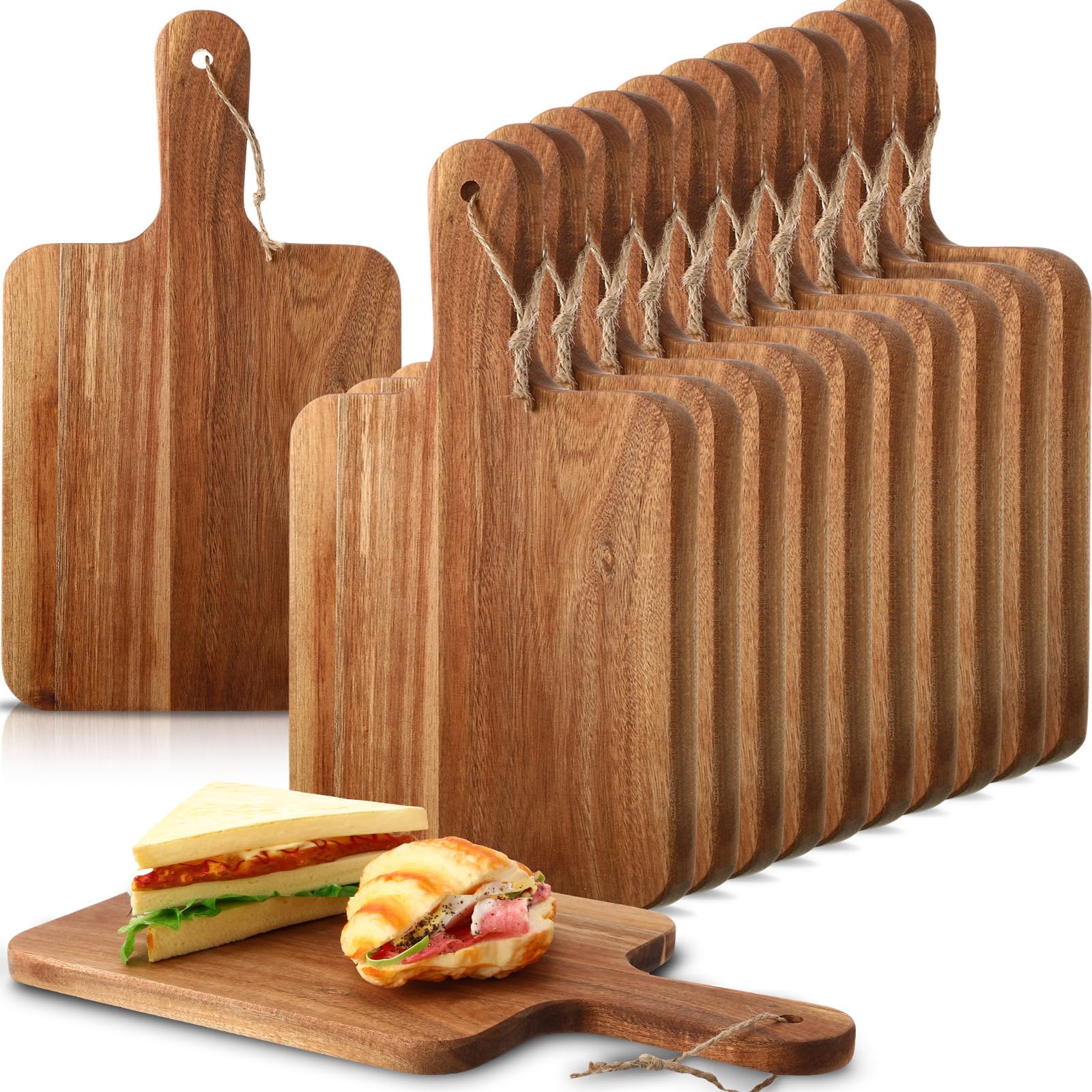
The references below are starting points for an RFQ, not confirmed sale specifications. In particular, the reported 12 × 6 × 0.6-inch size and 16-piece configuration must be checked against the current quotation and production documents.
| Attribute | Current reference | Required buyer confirmation |
|---|---|---|
| Shape | Long rectangle with extended handle, hanging hole, and rounded corners | Approve dimensioned outline, edge radius, and hole position |
| Size | 12 × 6 × 0.6 inches, unverified reference | Confirm actual length convention, thickness, tolerances, and metric values |
| Pack quantity | 16-piece reference is unconfirmed | Define units per retail pack, inner carton, and master carton |
| Material | Commercial concept uses acacia terminology | Confirm species, scientific name where relevant, grade, and construction |
| Working faces | Reversible use not verified | Confirm approved faces, decoration, and use instructions |
| Surface treatment | Not confirmed | Approve finish system, application, appearance, and care directions |
| Food-contact documentation | Not confirmed | Specify destination market, intended use, and required evidence |
| Packaging and accessories | Not confirmed | Quote the exact retail pack, protection, labels, and inclusions |
Assign a revision code to the specification and record whether total length includes the handle. This small detail prevents inconsistent comparisons between supplier drawings, catalog data, and carton calculations.
Preparation, Serving, and Retail Merchandising
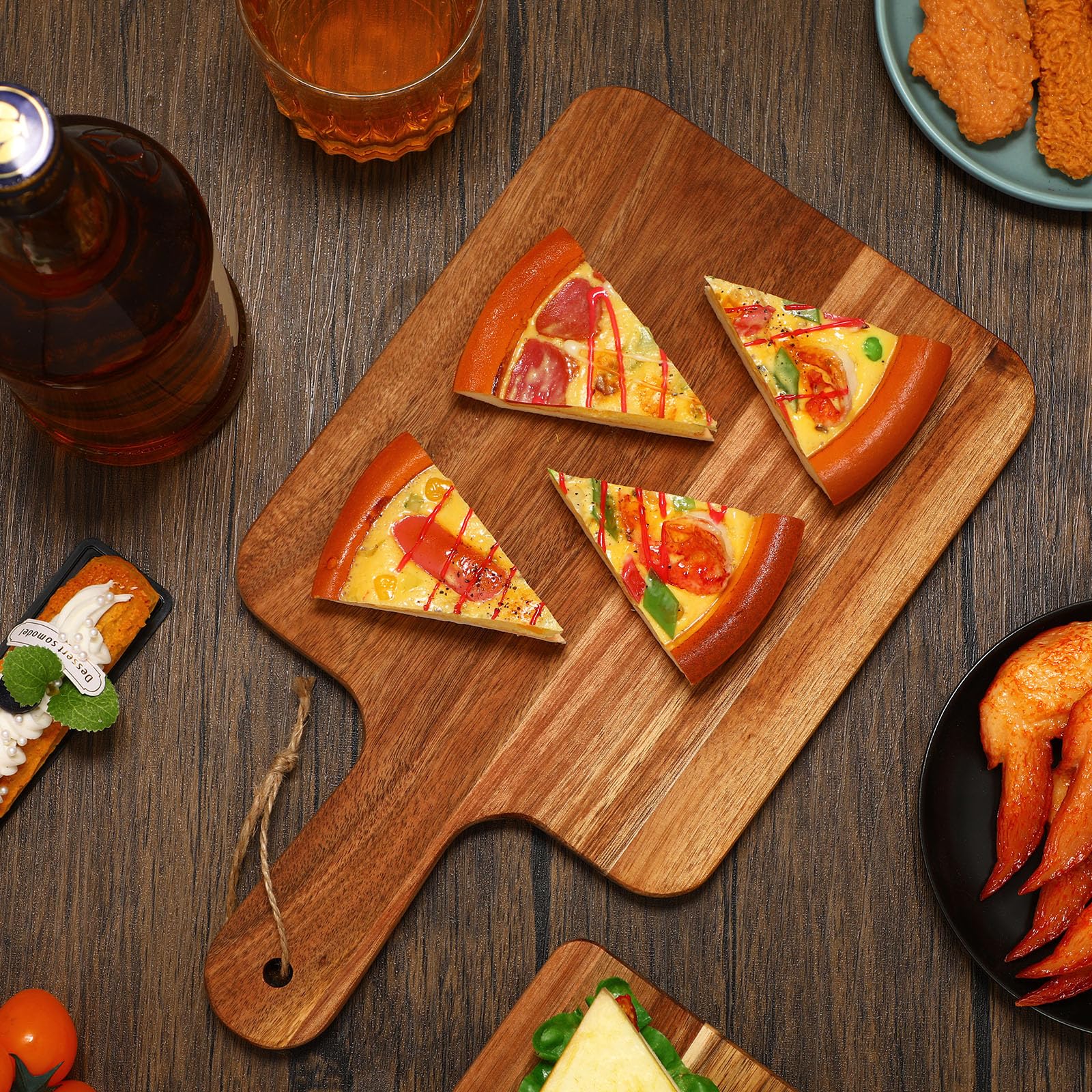
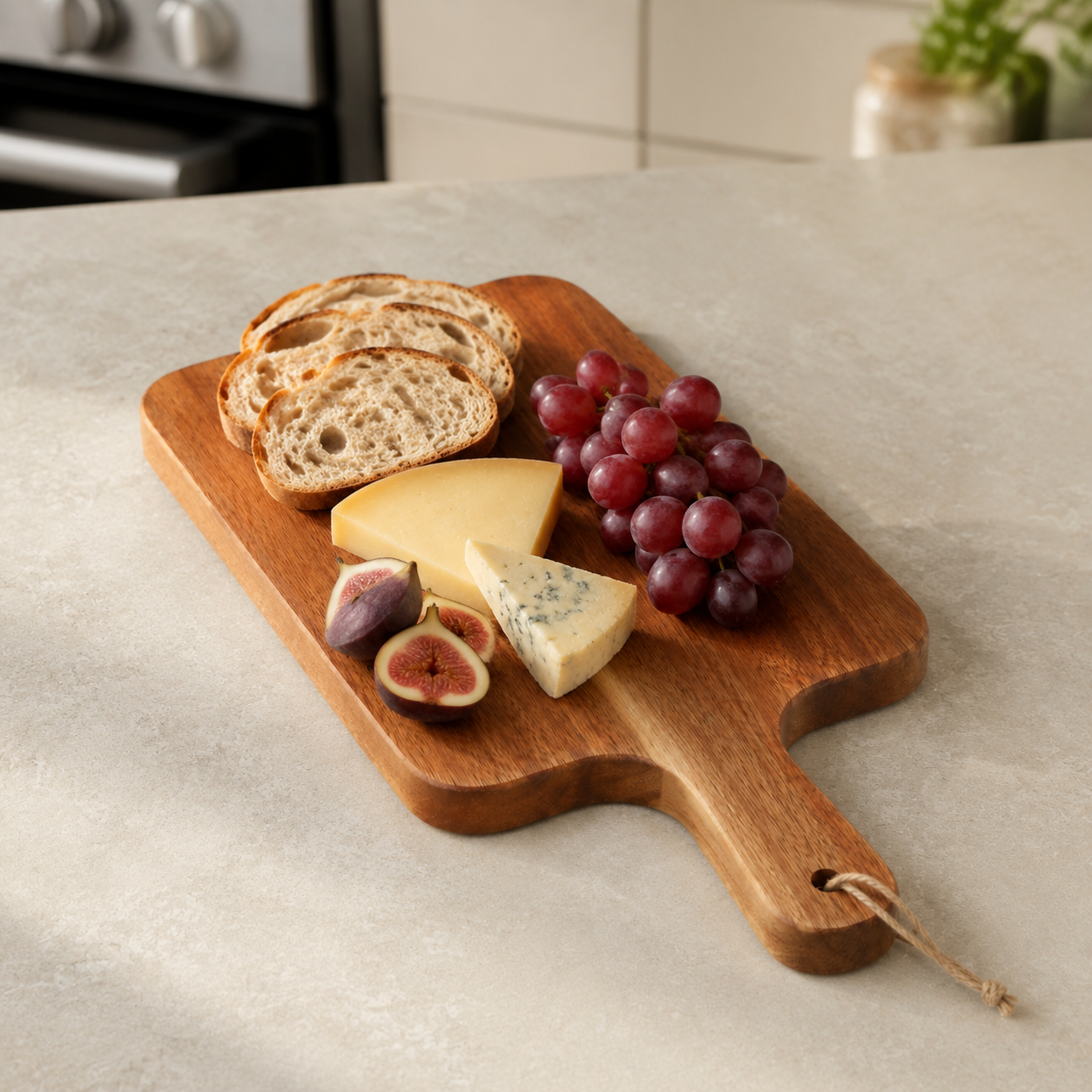
The gallery styles the board for food preparation and for serving bread, cheese, and pizza. That breadth gives retailers several merchandising routes. An approved acacia wood cutting board can sit with kitchen tools, while a wooden charcuterie board story can connect with tableware, entertaining, bakery, or gifting displays. Buyers planning a coordinated collection can explore related kitchenware products.
Use scenes are creative direction rather than verified performance claims. Suitability for particular foods, cutting tasks, temperatures, or serving conditions should be established from the final material, finish, construction, and food-contact review. Pizza and cheese styling does not by itself confirm heat resistance, stain resistance, knife performance, or a specific serving capacity.

Assortment Planning for an Acacia Cutting Board with Handle
The handled format can be a single everyday board, a giftable serving piece, or one size in a coordinated family. Buyers may vary proportions or decoration across channels. No variant or bundle is automatically included.
When comparing bulk cutting boards, separate the unit configuration from the shipping configuration. “16 pieces” could refer to a retail set, an inner pack, or a carton count unless the quotation defines it precisely. SKU-level pack data also helps retailers plan shelf space, fulfillment, and landed-cost calculations.
OEM, ODM, and Private-Label Options
Private-label development should begin with the destination channel, target price, forecast volume, and non-negotiable compliance needs. OEM enquiries may follow an approved board shape; ODM projects may explore new proportions, handle profiles, hanging-hole details, or coordinated sizes. Feasibility, minimum order quantity, tooling, sample fees, lead time, and available customization require project-specific confirmation.
Branding options may include a proposed logo position, method, size, and orientation, but the supplier must confirm which processes are available for the chosen material and finish. Review decoration on a production-representative sample because natural color and grain variation can change contrast. Packaging artwork should account for barcode, language, importer information, warnings, care directions, and any required country-of-origin marking.
A controlled approval sequence can include a material proposal, drawing, undecorated board, branded sample, and packaging mock-up. Record each change by revision and identify who has authority to approve it. For a broader view of the supplier’s positioning, visit the About page; actual capability for this SKU remains subject to written confirmation.
Material, Finish, and Food-Contact Evidence
The product name acacia cutting board with handle is a commercial keyword, not proof of botanical identity. Before placing an order, request the stated species and scientific name where applicable, grade, component breakdown, construction method, joining details, adhesive specification, moisture target, and any permitted repairs or fillers. If certifications or chain-of-custody claims are needed, name the exact scheme and document scope in the RFQ.
No oil, coating, lacquer, wax, or other surface treatment is confirmed by the gallery. Define the desired appearance and maintenance approach, then request the exact finish specification and supporting technical or safety data. Do not infer that the board is unfinished, vegetable-oiled, mineral-oiled, reversible, self-healing, knife-friendly, non-slip, or dishwasher safe.
Food-contact claims must match the intended market and the exact production BOM. Ask which component or finished-article reports are available, which regulations and test conditions they cover, and whether the tested sample matches the quoted materials, adhesive, finish, and decoration. The buyer or its compliance adviser should review report date, laboratory, sample identity, scope, and validity before approving retail claims.
Packaging and Quality-Control Framework
Packaging is open for confirmation. Request a line-by-line quote for retail wrap or box, inserts, protective materials, labels, inner quantities, master-carton dimensions, gross and net weight, carton marks, and pallet assumptions. A hanging presentation may also require a tested fixture or tag solution; the hole in the board should not be treated as proof that any accessory is supplied.
For wholesale cutting boards, inspection criteria should translate the sample into measurable decisions. Typical checkpoints may include length, width, thickness, handle and hole geometry, corner radius, flatness, surface preparation, color range, grain variation, glue-line appearance, odor, logo placement, pack count, label accuracy, and barcode readability. Agree sampling level, defect classifications, and inspection timing before the purchase order.
Match testing and transit plans to the final materials, claims, market, and route. Keep all reports and production files aligned to the purchase order’s SKU and revision.
Conservative Care Until the Finish Is Approved
Pending confirmation of construction and finish, treat care copy as a provisional label draft for supplier approval. It may recommend hand washing with mild detergent and a soft sponge, prompt rinsing, and drying with airflow around the board. Do not print soaking, standing-water, heat, dishwasher, re-oiling, or resurfacing guidance until the supplier approves it for the production finish.
Validate the final care card against the approved sample. If the board is authorized for one working face only, or if decoration changes how either face may be used, state that clearly rather than making a generic reversible claim.
RFQ Checklist for a Comparable Quotation
To source an acacia cutting board with handle efficiently, send a structured brief covering:
- Target market, sales channel, forecast volume, target date, destination, and Incoterm.
- Dimensioned shape, total length convention, thickness, tolerances, handle, and hole details.
- Required species, grade, construction, adhesive, moisture target, and finish—or a request for documented options.
- Exact units per retail pack, inner carton, and master carton.
- Logo artwork, branding method, placement, packaging format, labels, languages, and barcode data.
- Food-contact evidence, retailer protocols, testing, inspection level, and sample approval process.
Ask the quotation to identify every assumption, exclusion, tooling charge, and sample cost. Before deposit or mass production, reconcile the quotation with the latest BOM, drawing, approved sample, and packaging artwork. Those final records govern the supplied product if they differ from gallery images or marketing copy.
Frequently Asked Questions
1. Is this acacia cutting board with handle confirmed as acacia?
The product is marketed as acacia, but photography alone cannot confirm botanical identity. Verify species, scientific name where relevant, grade, construction, and documentation in the final BOM, sample, and quotation.
2. Does one order include 16 boards?
Not necessarily. The 16-piece reference is unverified and could describe a packaging level rather than a retail set. Require the quotation and packing specification to state units per pack and carton.
3. Is 12 × 6 × 0.6 inches the confirmed size?
No. Treat it as an unverified reference. Confirm whether length includes the handle, approve metric equivalents and tolerances, and use the signed drawing for production and inspection.
4. Can both sides be used?
Reversible use is not confirmed. It depends on construction, surface treatment, branding, and approved use instructions. Request confirmation and evaluate both faces on the sample.
5. Is the hanging cord or retail packaging included?
No accessory or packaging format is confirmed. Specify every included item, protection material, label, retail pack, and master-carton requirement in the RFQ.
6. Can the handle shape and logo be customized?
OEM and ODM customization can be discussed, subject to feasibility, MOQ, tooling, sample approval, and lead time. Send a dimensioned concept and vector artwork for evaluation.
7. Is it certified for food contact?
No specific certification or compliance is claimed here. Request destination-market evidence linked to the final material, adhesive, finish, decoration, and production specification.
8. Is it dishwasher safe or supplied with a maintenance oil?
Neither point is confirmed. Use conservative hand-care guidance and list any maintenance product as an inclusion only when the BOM, packaging specification, and supporting documentation say so.
Turn the visible acacia cutting board with handle concept into a controlled private-label SKU. Send dimensions, pack count, material requirements, branding, compliance needs, quantity, and destination through the Contact page. Final BOM, drawing, approved sample, and quotation govern the order.
상품평
아직 상품평이 없습니다.