

Making a bamboo hand fan is a small project with surprisingly precise geometry. The finished fan must open into an even arc, close without catching and feel comfortable at the pivot. Those results depend on the relationship among the bamboo fan staves, the two outer guard sticks and the paper or fabric leaf—not on decoration alone.
This practical guide explains how to make a bamboo hand fan from a reusable template, how to select and finish the frame, and how to attach a paper or silk leaf. It also shows how the process changes for a mini bamboo fan, a standard folding fan and a large bamboo hand fan. The dimensions below are starting points for prototypes, not universal historical standards.
This guide answers a practical question: how do you make a bamboo hand fan that opens evenly and closes without catching? The first decision is whether the intended object is a folding leaf fan, a rigid paddle fan or an all-stave design; the method below focuses on a folding leaf construction.

Understand the Parts of a Bamboo Folding Fan
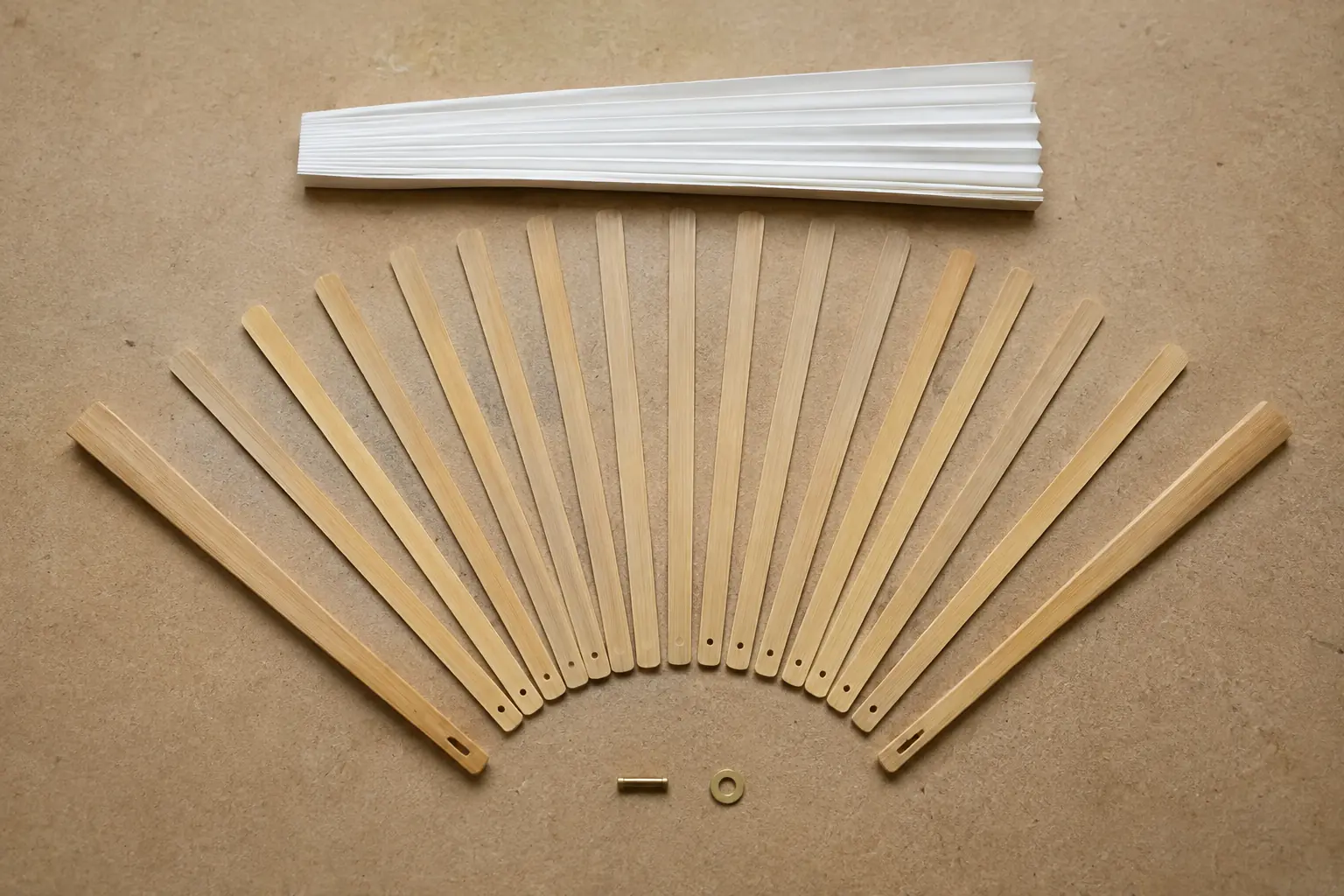
A folding bamboo fan is built around a pivot. The narrow inner sticks rotate around that point and support the leaf. The two outer guards are normally wider or stronger because they protect the folded leaf and form the visible outside of the closed fan. Makers use several terms for the inner pieces, including sticks, ribs and staves. In this guide, bamboo fan staves means the rotating frame members, while “ribs” may also describe the portion that supports the leaf.
The leaf is the pleated paper or fabric surface that moves air. It occupies the upper part of the open fan and helps control the spacing of the sticks. A pivot pin, small rivet or purpose-made fastener holds the frame together. Depending on the design, a washer and decorative loop may be added, but every fitting must remain smooth and secure.
| Part | Function | Prototype check |
|---|---|---|
| Guard sticks | Protect the closed leaf and provide the outer grip | Matching shape, smooth edges and enough stiffness |
| Inner staves | Open radially and support the pleated leaf | Consistent length, thickness and pivot position |
| Pivot | Allows controlled rotation while retaining the frame | No sharp projection, excessive looseness or binding |
| Paper or silk leaf | Creates the fan surface and fixes the open spacing | Even pleats, secure bonding and clean folding |
Choose Materials and Tools
Bamboo for the frame
Choose dry, straight bamboo stock without visible cracks, insect damage or loose fibers. Thin strips should flex slightly without splitting, but they should not be so soft that the open fan sags. Staves cut from different stock can vary in color and stiffness, so prepare more pieces than the final count and match them before assembly. A hand fan made of bamboo still includes other materials at the pivot, leaf, adhesive and finish; describe those components accurately if the fan will be sold.
Paper, silk and other leaf options
A bamboo paper fan is generally the easiest first prototype. Medium-weight paper holds a crease, accepts many decoration methods and can be replaced inexpensively during development. Very thin paper may tear at the stave edges, while heavy board resists folding. A bamboo silk fan can feel lighter and more fluid, but silk or silk-like fabric requires controlled cutting, suitable adhesive and careful edge finishing. Confirm fiber content rather than identifying every shiny fabric as silk.
| Leaf option | Useful qualities | Watch for |
|---|---|---|
| Paper | Crisp pleats, printable surface, accessible for prototypes | Tearing, ink bleed, humidity response and excessive thickness |
| Natural silk | Lightweight surface and soft visual finish | Fraying, fiber verification, adhesive marks and higher handling skill |
| Synthetic fabric | Potentially consistent color and availability | Heat sensitivity, fraying and accurate material labeling |
Safe tool setup
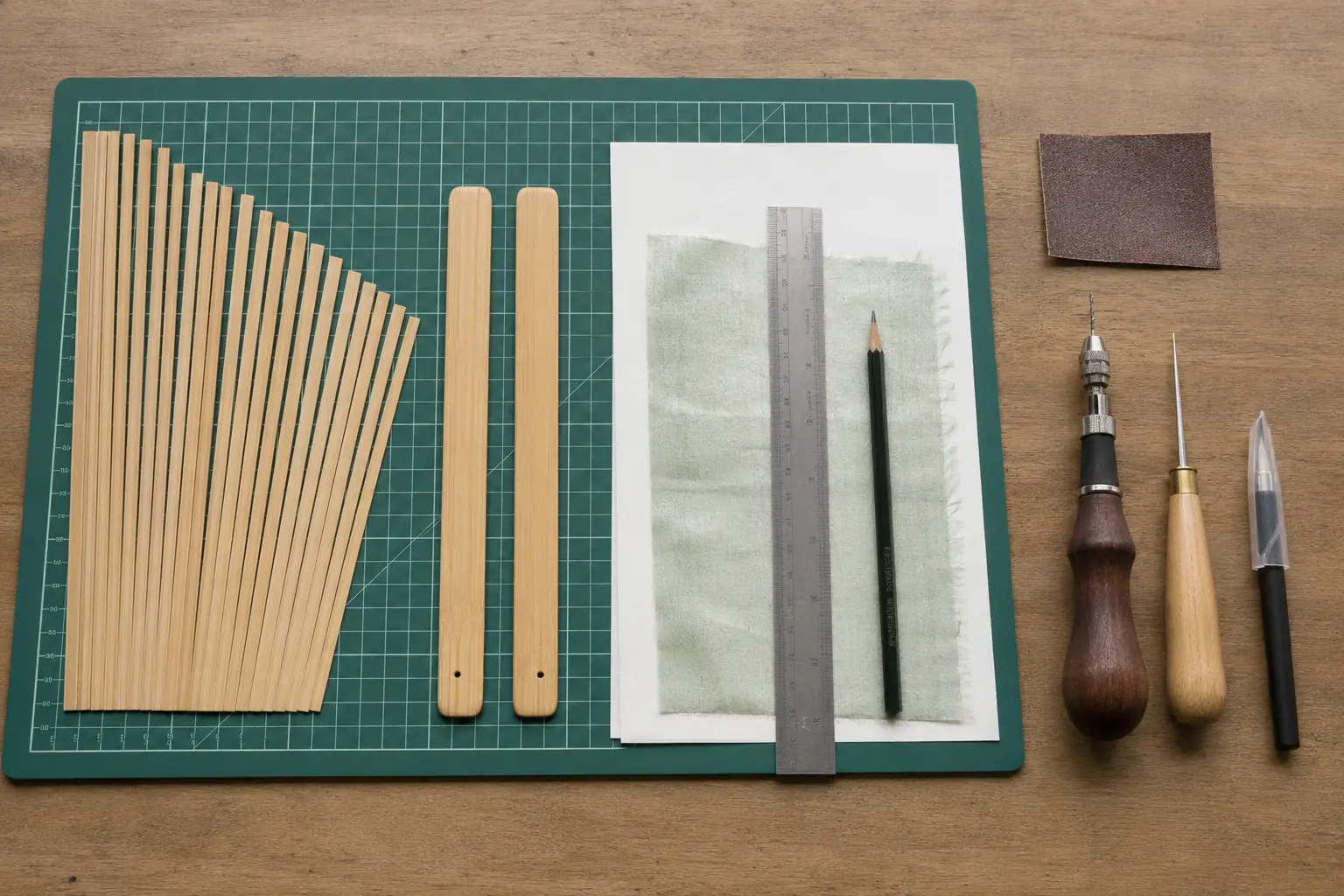
Use a cutting mat, metal ruler, pencil, fine saw or craft knife appropriate to the stock, fine abrasives, small clamps and a drill or hand punch suited to the pivot hole. Sharp blades and drill bits can cause serious injury. Clamp the bamboo; keep both hands outside the cutting path; cut away from the body; and use eye protection when cutting or drilling. Control bamboo dust with suitable extraction and respiratory protection for the task. Minors should not perform cutting or drilling without direct, capable adult supervision. If you lack the tools or experience, buy prepared bamboo fan sticks and begin at the assembly stage.
Create a Bamboo Fan Template
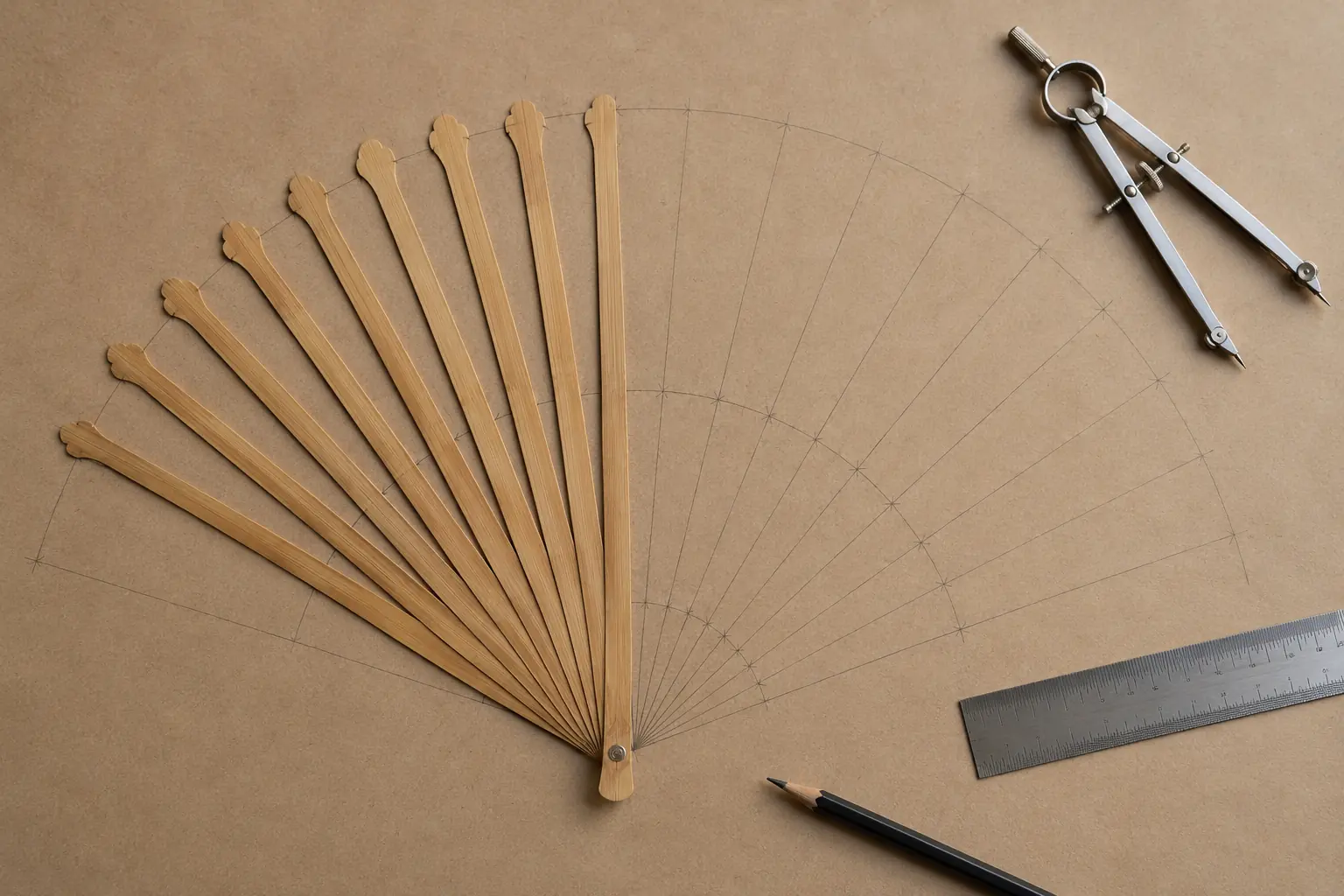
Start with the open shape. Draw a baseline through the pivot center, then mark an outer arc for the top of the fan and an inner arc for the lower edge of the leaf. Divide the intended opening angle into equal sections—one for each stave space. This radial plan becomes the reference for stick placement and pleating.
For a first standard prototype, choose a comfortable closed length and a moderate open arc rather than copying dimensions from an image. Test the paper model in your hand. A mini bamboo fan needs enough distance between its pivot and leaf to avoid cramped folds. An oversized or large bamboo fan needs proportionally stronger staves and may be better classified as a performance or display item after stability testing.
Make a full-size paper mock-up before cutting bamboo. Mark the pivot, guard outline, stave centerlines, leaf arcs and overlap allowance. Open and close the mock-up several times. Correcting a crowded fold on paper is faster than remaking a complete bamboo hand fan frame.
How to Make a Bamboo Fan Frame Step by Step
1. Prepare matching bamboo fan sticks
Transfer one approved stave profile to the bamboo. Cut the blanks slightly oversize, then bring them to the template line gradually. Stack and compare them frequently. Consistency matters more than achieving a decorative contour immediately. Prepare the two guard sticks separately because they may be wider and thicker.
2. Shape and finish every edge
Refine the sticks with fine abrasives, working with the grain. Round only the edges that should feel comfortable; retain enough flat surface for bonding the leaf. Remove splinters around the ends and inspect under side lighting. Wipe away dust before fitting or finishing.
3. Mark and drill the pivot
Use one drilling jig or master template so every hole shares the same center. Clamp a sacrificial backing piece beneath the stack or each stave to reduce breakout. Do not hold small strips in your fingers while drilling. The hole should suit the selected fastener without forcing the bamboo apart.
4. Dry-assemble and adjust the pivot
Place one guard, the inner staves and the second guard on the fastener. Tighten only enough to remove uncontrolled play while allowing smooth rotation. A pivot that is too tight makes the fan difficult to open; one that is too loose allows the frame to collapse. Ensure the fastener ends are retained and cannot scratch the user.
5. Lay the frame on the template
Open the dry frame across the radial lines. Check that the guards reach the intended boundaries and that each inner stave sits near its centerline. If the spacing drifts, identify whether the cause is a misplaced pivot hole, unequal stave length or inconsistent thickness before attaching the leaf.
Attach a Paper or Silk Leaf
Cut the leaf using the inner and outer arcs plus the required side overlap. Test decoration on scrap material before assembly. Some inks, paints, coatings and adhesives can bleed, discolor, stiffen or weaken the leaf. Follow the material supplier's directions, provide ventilation where required and let decorated surfaces dry or cure fully.
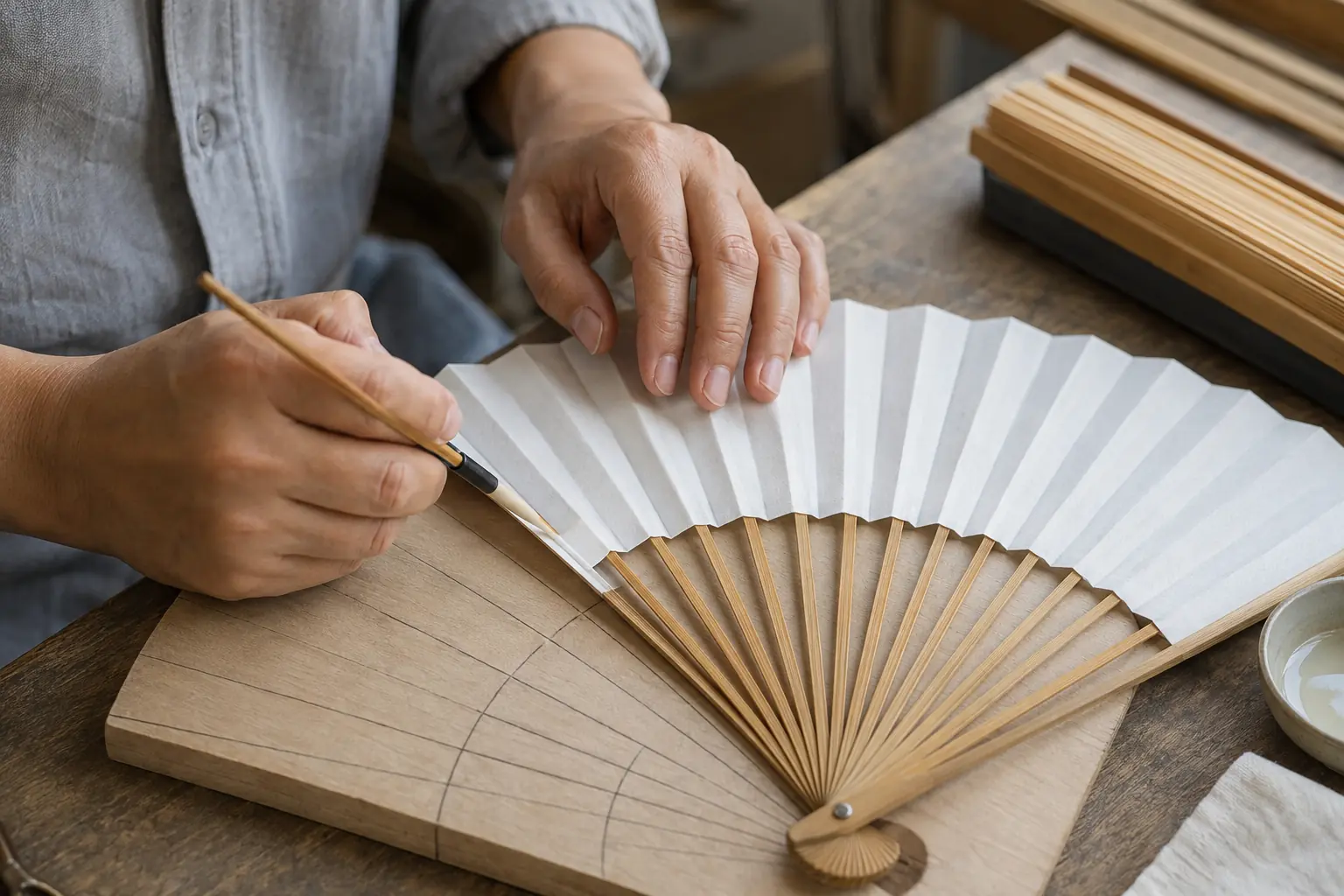
With the frame open on the template, mark each stave position lightly on the back of the leaf. Apply a thin, controlled layer of compatible adhesive only where required. Attach the two guards first or follow the validated assembly sequence for the chosen construction, then align the inner staves. Keep adhesive away from the pivot and moving joints.
After the bond has set according to the adhesive instructions, form the folds between neighboring staves. Close the fan slowly, guiding each pleat rather than forcing the bundle. Open it again and inspect for bubbles, wrinkles, detached edges and folds that pull sideways. A bamboo gift paper fan may add a printed message or sleeve, but those features should be tested with the same folding cycle and packaging used for the final item.
Decoration and Custom Bamboo Fan Design
Decorate before final pleating when the process needs a flat surface, but plan the artwork around the folds. Keep essential marks away from deep crease lines and trim allowances. For a custom bamboo fan, test engraving or printing on the actual guard-stick finish; natural grain can change contrast. Avoid unsupported claims such as “100% bamboo,” “chemical-free” or “biodegradable” unless the complete product and evidence justify them.
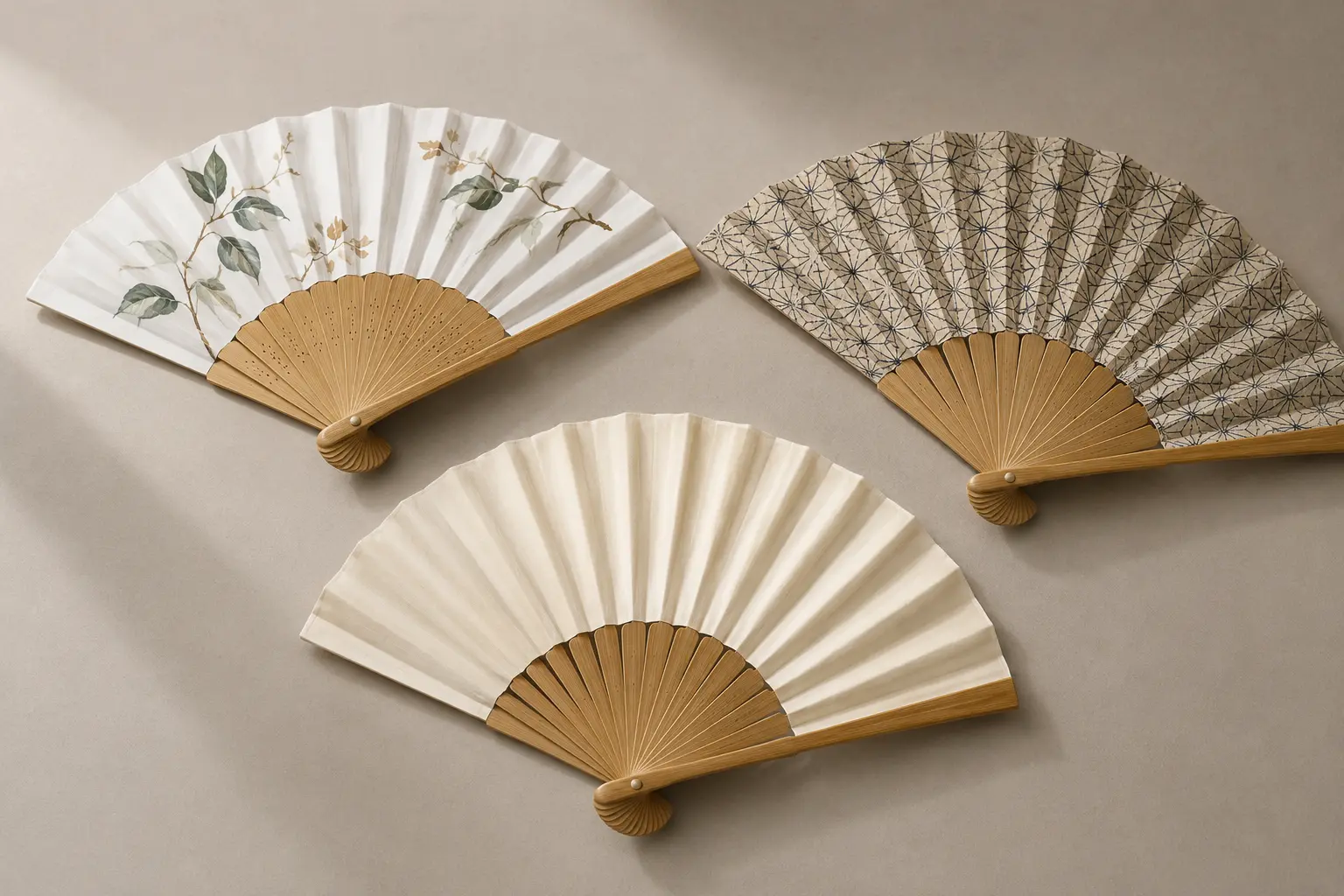
A simple bamboo fan design may use an unprinted leaf, restrained guard engraving and a fabric loop. A more decorative version can use repeating artwork that remains coherent when the fan is both open and closed. Do not label a generic motif as belonging to a specific Chinese, Japanese or other cultural tradition without accurate design references and context.
Adjust the Construction for Mini, Standard and Large Fans
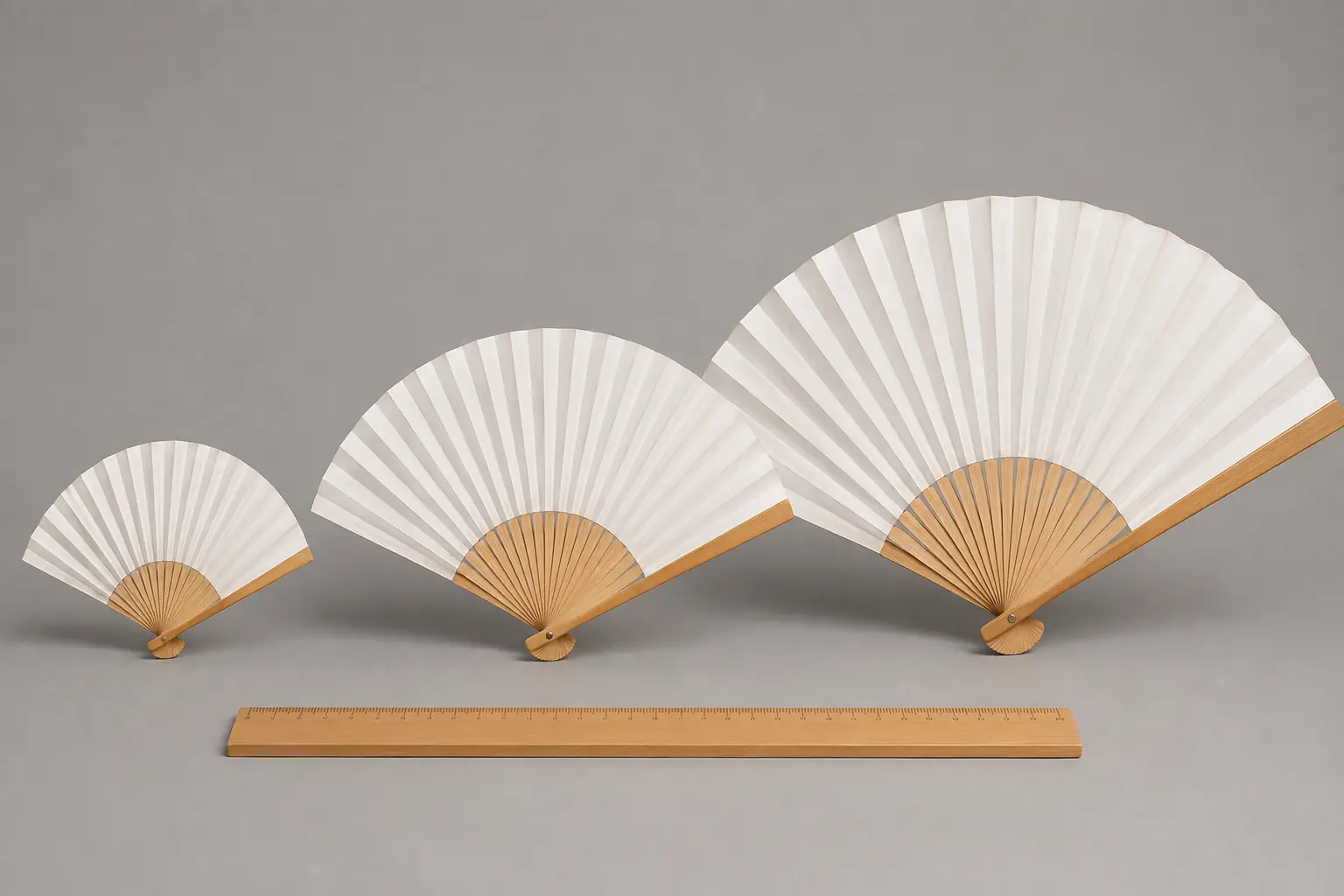
| Format | Design priority | Common prototype risk |
|---|---|---|
| Mini bamboo fan | Fine tolerances and a compact, protected pivot | Thick paper or adhesive crowding the closed bundle |
| Standard bamboo foldable fan | Comfortable grip, even arc and repeatable opening | Unequal stave spacing or rough guard edges |
| Large bamboo hand fan | Stiffness, reinforced leaf attachment and intended-use testing | Excess weight, sagging, high leverage at the pivot |
Scaling is not simply enlarging or shrinking a drawing. Miniature parts become difficult to drill and handle safely, while larger parts place more leverage on the pivot and attachment lines. Produce a physical prototype for each size. If a giant fan is intended only for wall display, say so clearly; a decorative object has different performance and safety expectations from a handheld fan.
Troubleshooting a Bamboo Folding Hand Fan
| Problem | Likely cause | Practical correction |
|---|---|---|
| Fan will not close neatly | Uneven pleats, excess adhesive or crowded pivot | Open slowly, identify the first displaced fold and correct the template or bonding process. |
| Open arc is uneven | Misplaced pivot holes or unequal staves | Compare the frame with the master template before replacing the leaf. |
| Paper tears at a stick | Sharp edge, rigid adhesive line or unsuitable paper | Smooth the contact area and test a more compatible leaf-and-adhesive combination. |
| Pivot binds | Fastener too tight, debris or misaligned holes | Disassemble safely, inspect and refit; do not force the guards sideways. |
| Frame splinters | Weak stock, breakout or poor edge finishing | Retire the damaged part and improve stock selection, drilling support and inspection. |
From One Prototype to a Repeatable Product
For a workshop kit, retail line or wholesale project, turn the successful sample into a written specification. Record overall closed length, open span, stave count, guard and inner-stave profiles, pivot construction, leaf material, adhesive, decoration, finish, tolerances, packaging and intended use. Keep an approved sample, but do not rely on the sample alone.
Quality checks should cover cracks, splinters, pivot security, opening arc, closing sequence, leaf adhesion, printing position, surface cleanliness and pack-out. If the item is intended for children, events or repeated performance use, arrange the appropriate product-safety review for the actual configuration and destination market. Never assume that a general bamboo material statement proves finished-product compliance.
Frequently Asked Questions
How many bamboo fan sticks should I use?
There is no universal number. The fan size, leaf material, desired spacing and stave thickness work together. Draw equal radial divisions on the template, make a paper mock-up and adjust before cutting the complete frame.
Can I make a bamboo folding fan without drilling?
A conventional folding frame needs a controlled pivot, but beginners can buy pre-drilled sticks or a prepared frame. Avoid improvised fasteners that can loosen, protrude or split the bamboo.
Is paper or silk better for a first fan?
Paper is generally easier for a first prototype because it holds creases and is simple to mark. Silk requires more control over cutting, fraying and bonding. Test the actual material rather than choosing by appearance alone.
Can I enlarge one template to make a large bamboo fan?
Use the template as a visual starting point, not a final engineering solution. A larger fan creates more weight and leverage, so the staves, pivot, leaf attachment and intended use must be reassessed.
How do I store a bamboo foldable fan?
Close it gently, keep it dry and protect it from crushing, high heat and prolonged direct sunlight. Store it only after any moisture has dried, and do not force a warped or damaged frame.