
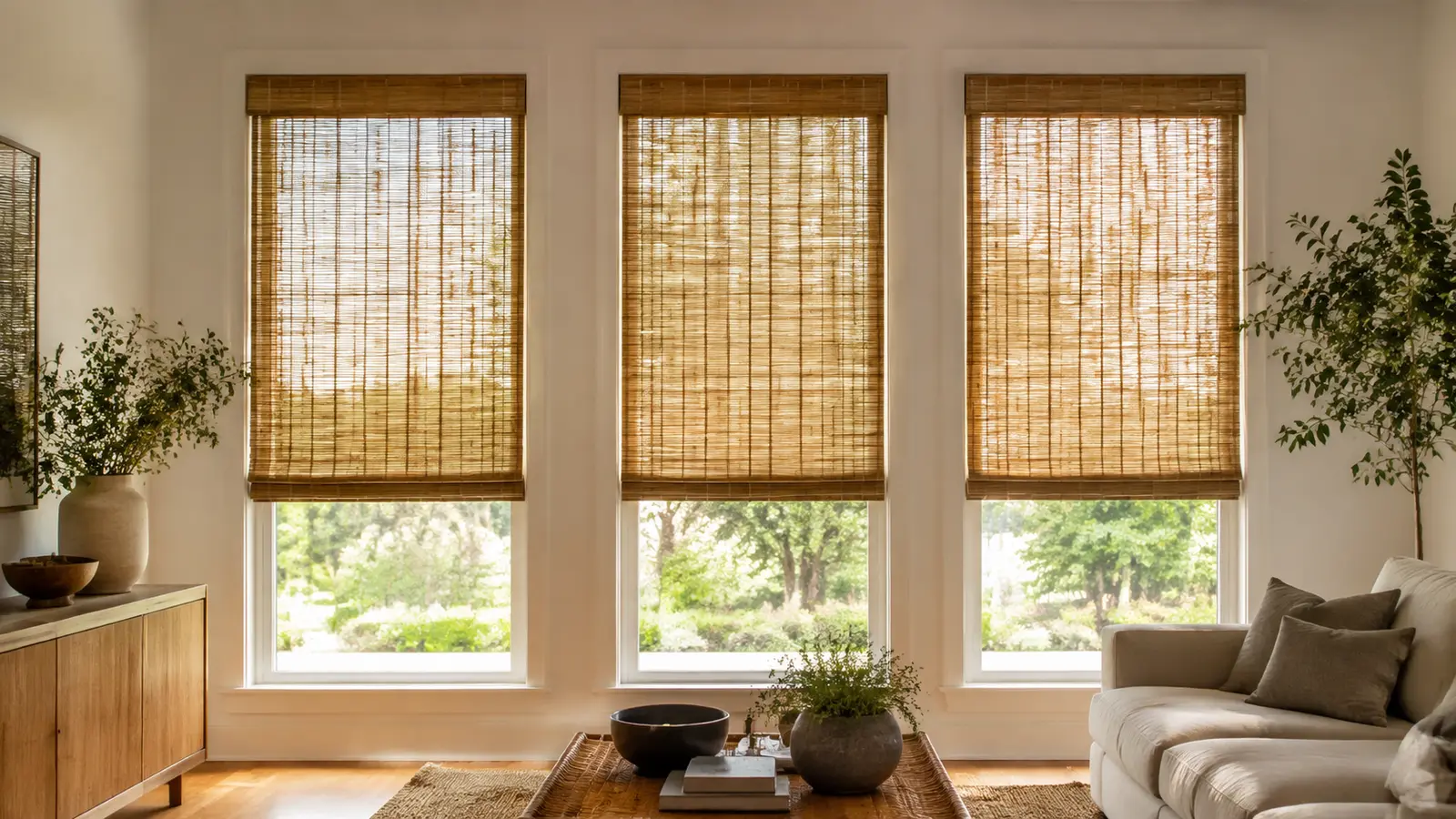
Custom bamboo shades combine the warm texture of natural woven materials with made-to-measure window coverage. For retailers, window-treatment brands, interior designers and project buyers, the correct product depends on much more than color. Shade style, finished dimensions, mounting method, weave density, lining, operating system and the intended indoor or covered-outdoor environment all affect performance.
This guide compares custom outdoor bamboo shades, custom bamboo Roman shades and custom bamboo roller shades. It also explains how to specify custom size bamboo shades, evaluate samples and prepare an accurate wholesale or OEM inquiry.
Why Buyers Choose Custom Bamboo Shades
Standard window coverings can leave large gaps, interfere with trim or look inconsistent across a project. Made-to-measure bamboo shades are produced for an approved width and drop, allowing the finished product to coordinate with specific window openings. Natural woven bamboo also filters light differently from solid fabric or plastic blinds, creating a softer and more organic interior atmosphere.
For commercial buyers, customization creates a complete product program rather than a single shade. A collection may include several weave colors, Roman and roller mechanisms, optional lining, different bottom rails and retail packaging. The key is to control these options through one clear specification per SKU.
| Shade Type | How It Opens | Best-Fit Applications | Important Buying Point |
|---|---|---|---|
| Custom bamboo Roman shades | Material rises into horizontal folds | Living rooms, bedrooms, dining rooms and design-led interiors | Fold spacing, lining and lift consistency |
| Custom bamboo roller shades | Material rolls around a top tube | Clean modern interiors and compact headrail requirements | Roll diameter, edge tracking and material flexibility |
| Custom outdoor bamboo shades | Usually roll-up or suitable exterior-rated system | Covered patios, pergolas, porches and shaded hospitality areas | Weather exposure, hardware and installation environment |
Custom Outdoor Bamboo Shades for Covered Spaces
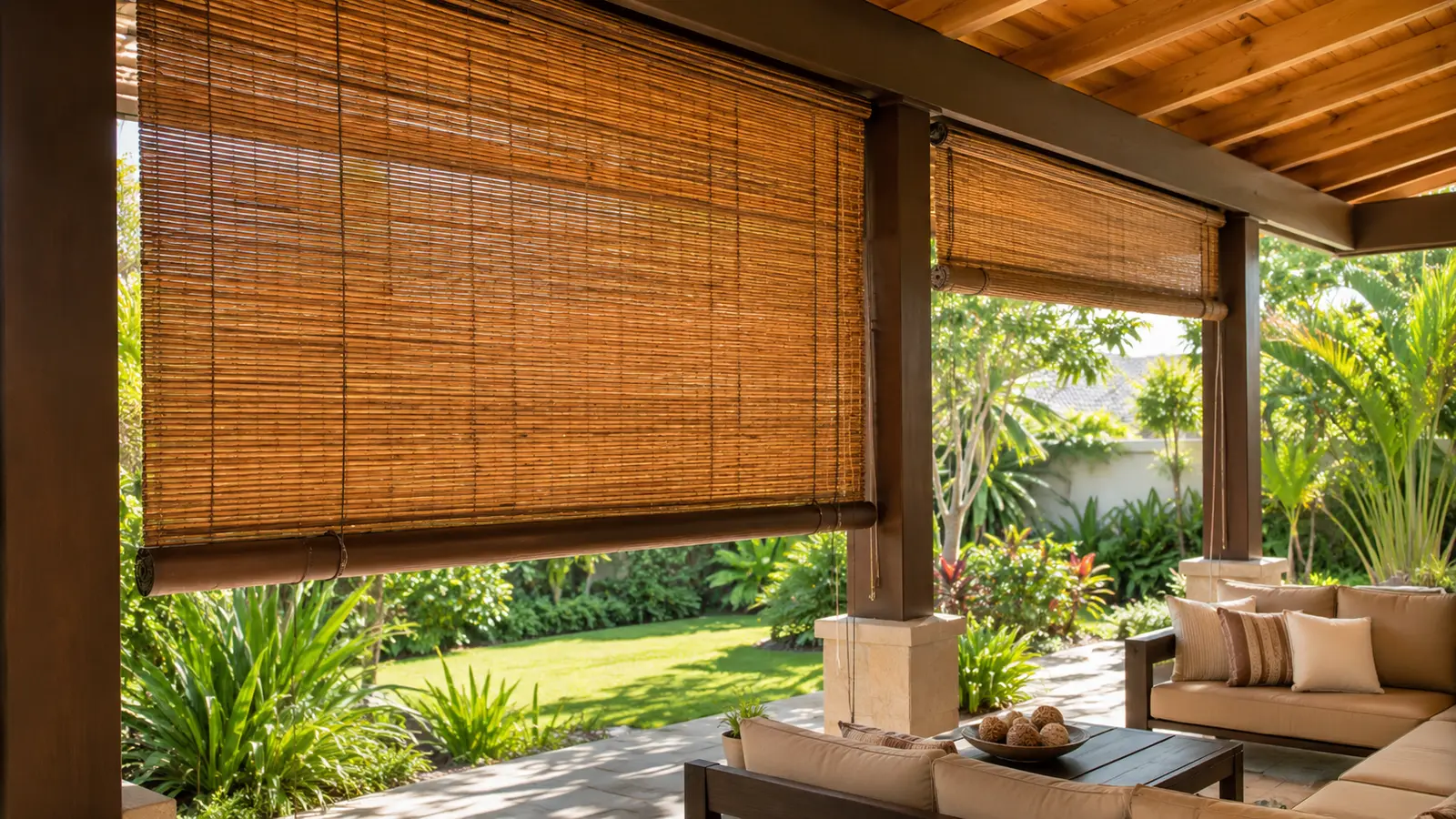
Custom outdoor bamboo shades are commonly considered for covered patios, porches, pergolas, balconies and hospitality terraces. They can reduce glare, filter strong sunlight and create a sense of enclosure while retaining the natural look of bamboo. The product must be specified for the actual environment; a shade protected by a deep roof has different exposure from one installed at the edge of an open structure.
Natural bamboo and woven plant materials can change with moisture, sunlight and temperature. Buyers should never assume that an indoor shade is automatically suitable for outdoor use. Confirm the material treatment, binding cords, hardware, coating, expected exposure and care instructions. For areas exposed to direct rain, strong wind or coastal conditions, ask the supplier whether a different outdoor-rated material or system is more appropriate.
Outdoor Specification Checklist
- Covered, partially covered or exposed installation position
- Expected direct sunlight, humidity, rain splash and wind
- Mounting surface and available fixing points
- Manual roll-up, roller or another approved operating system
- Corrosion resistance and finish of brackets and fasteners
- Bottom-rail weight and any safe hold-down requirement
- Maximum finished width and drop for the selected weave
- Care, drying and storage instructions
The search phrase custom bamboo shades outdoor often reflects the same purchasing need as custom outdoor bamboo shades. In both cases, the buyer should describe the installation environment before requesting a price.
Custom Bamboo Roman Shades
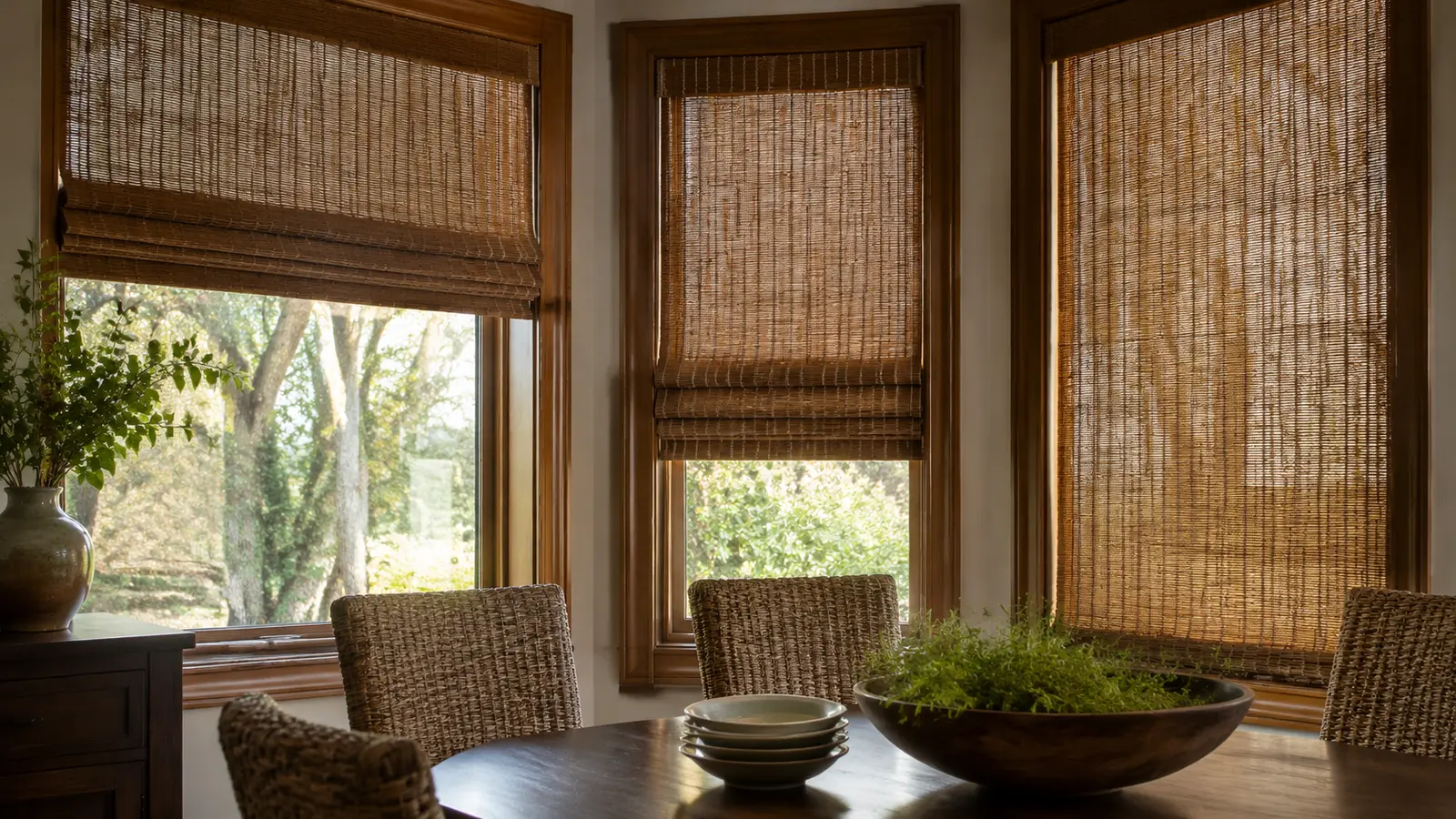
Custom bamboo Roman shades lift into a series of horizontal folds. This construction emphasizes the texture of the weave and gives the window a softer, more furnished appearance. It is well suited to residential interiors, boutique hotels, restaurants and design projects where the raised shade remains visible as part of the room.
A quality Roman shade needs evenly spaced lift points, controlled folds and a bottom rail that helps the product hang straight. Very wide shades may require additional lift lines or a different system. Buyers should approve both the fully lowered appearance and the stack depth when the shade is raised.
When to Add a Lining
Unlined woven bamboo usually filters light rather than blocking it completely. A privacy or room-darkening liner can reduce visibility and change the amount of transmitted light, but it also adds weight and may affect how the shade folds. The sample should represent the exact combination of weave, liner and mechanism.
Custom Bamboo Roller Shades
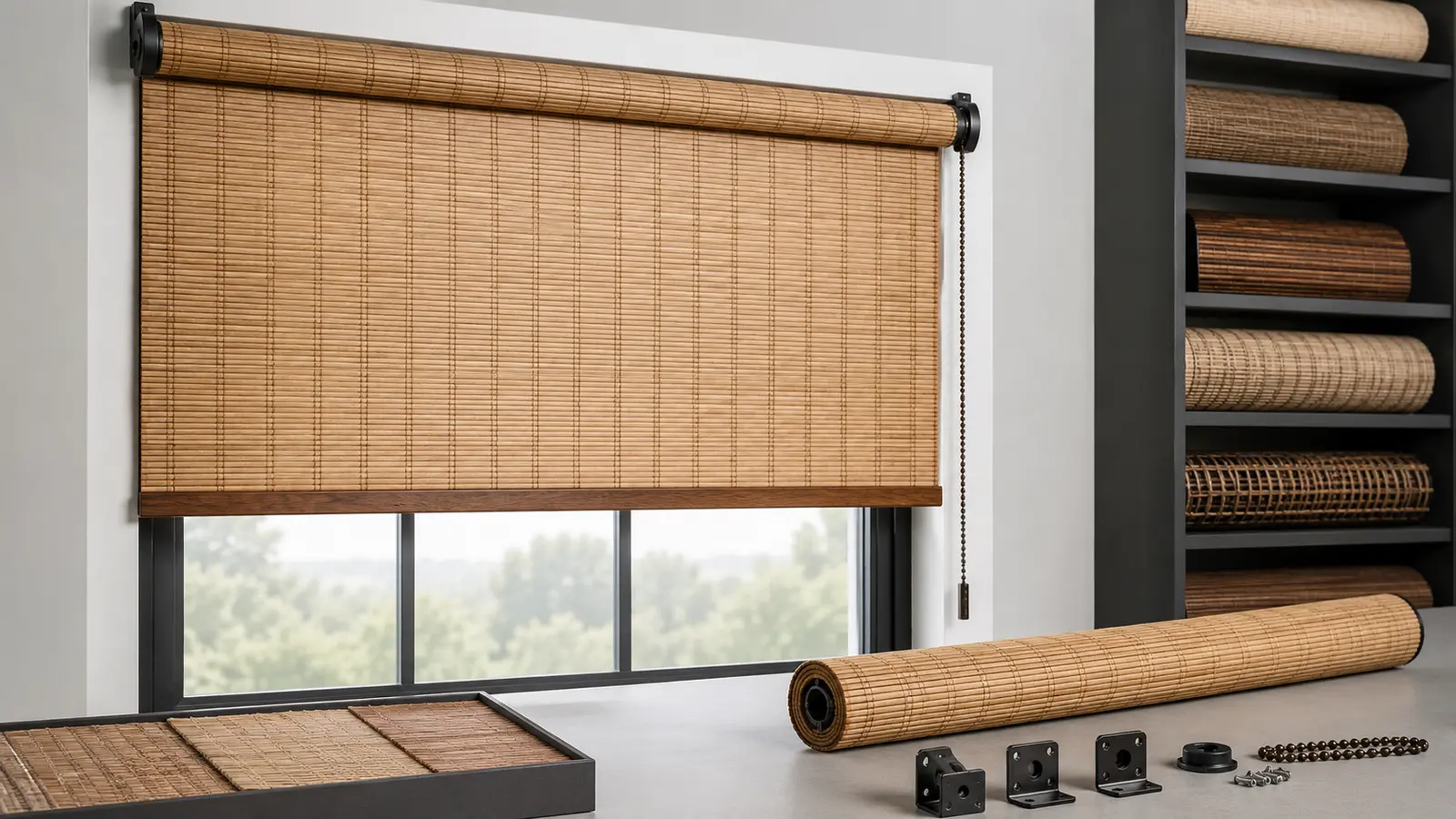
Custom bamboo roller shades roll around a tube at the top of the window, creating a cleaner profile and a compact raised position. The woven material must be flexible and stable enough to roll evenly. Not every heavy or irregular bamboo weave is suitable for a roller mechanism, so material selection and width limits are critical.
During sample approval, check whether the shade tracks straight, whether the edges curl, how large the roll becomes, and whether the bottom bar remains level. The tube diameter, clutch capacity or motor specification must match the finished shade weight. A roller design may look simple, but the mechanism needs to be engineered for the selected material and dimensions.
Roman vs. Roller: Which Bamboo Shade Is Better?
| Decision Factor | Bamboo Roman Shade | Bamboo Roller Shade |
|---|---|---|
| Raised appearance | Visible layered folds | Compact roll at the top |
| Design character | Softer and more decorative | Cleaner and more minimal |
| Material requirement | Must fold consistently | Must roll evenly without excessive curl |
| Stack or roll space | Requires fold stack depth | Requires suitable tube and roll diameter |
| Key sample check | Fold spacing and lift balance | Tracking, edge curl and mechanism capacity |
Neither construction is universally better. Roman shades are often chosen for decorative interiors, while roller shades suit a compact, streamlined look. The best option depends on window size, selected weave, installation space, lining and operating requirements.
How to Order Custom Size Bamboo Shades
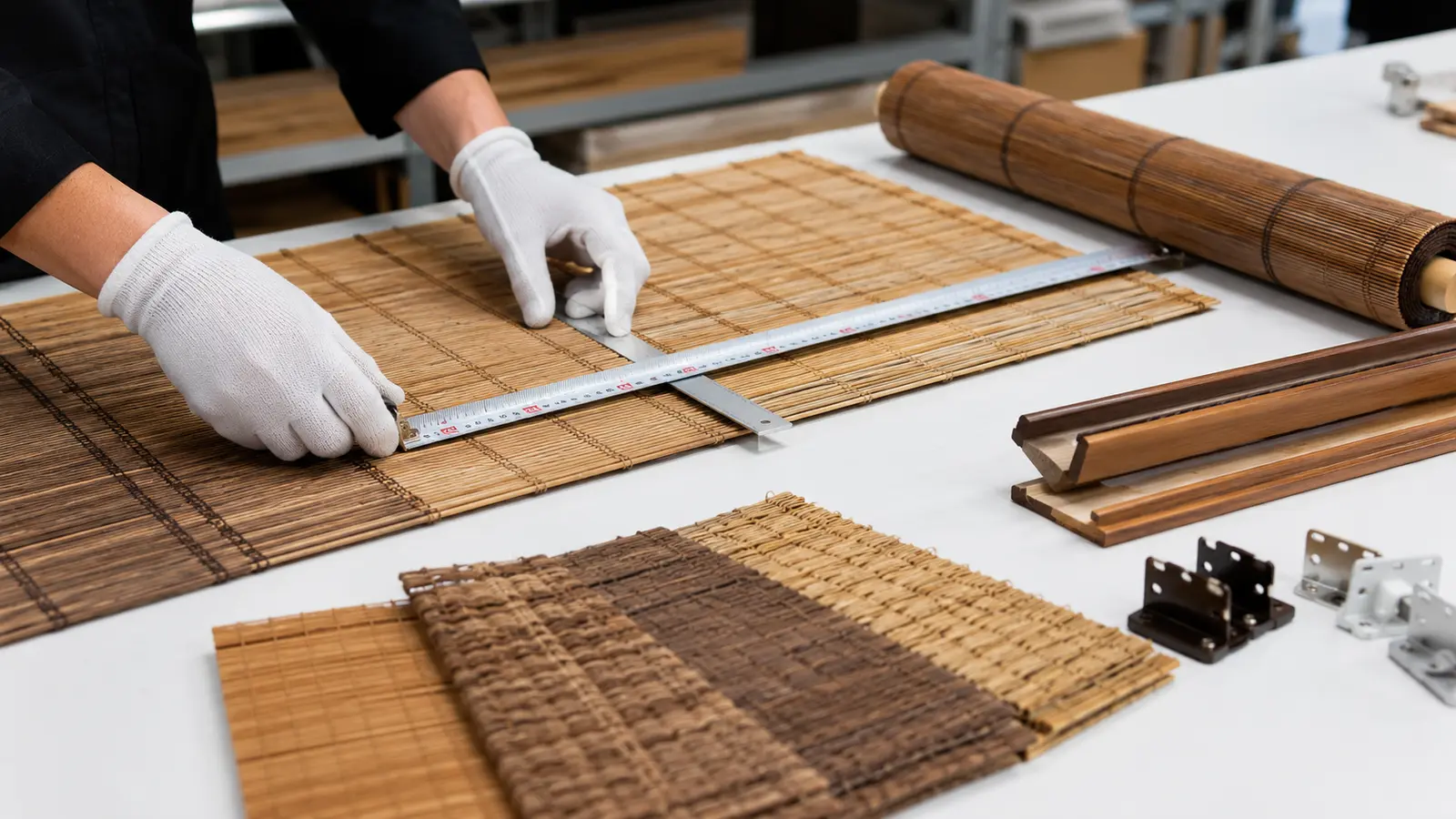
Custom size bamboo shades should be ordered using finished product dimensions and an agreed measuring method. Do not assume the factory will make an automatic deduction unless the quotation and order form state it clearly. The buyer must identify whether the measurement is the window opening, the ordered shade size or the final fabric-and-hardware size.
Inside-Mount Measurement
For an inside mount, measure the opening width at the top, middle and bottom, then measure the height at several positions. Record the smallest relevant width and check the available mounting depth. Windows may not be perfectly square, so a single measurement can create fitting problems.
Outside-Mount Measurement
For an outside mount, define the desired finished coverage beyond the opening. Confirm the mounting surface, overlap, headrail position and any obstacles such as handles or trim. A project drawing should show which dimension is the product width and which is the area to be covered.
Information to Put on the Order Sheet
- Finished width and finished drop
- Inside or outside mount
- Roman, roller or outdoor roll-up construction
- Weave or color reference
- Unlined, privacy lined or room-darkening lined
- Headrail, bottom rail and bracket finish
- Control type and control position
- Quantity for each exact size
- Retail label, instruction sheet and packaging
Light Filtering, Privacy and Color Selection
Natural bamboo shades are made from woven materials with visible spaces between fibers. The openness of the weave determines how much light and outside detail can pass through. Product descriptions should distinguish light filtering, privacy lining and room darkening instead of promising complete blackout without testing the finished shade.
Color should be approved from a physical sample because natural materials vary. A useful approval range may include acceptable differences in bamboo tone, nodes, fiber width and weave character. If several shades will be installed side by side, request production matching and mark the shades by room or window position.
Operating Systems and Child-Safety Requirements
Operating options can include cordless, manual clutch, continuous loop, motorized or other systems supported by the product design. The correct choice depends on shade weight, width, installation height, market requirements and project budget. Corded products may be subject to child-safety rules, warnings, tension devices and testing requirements in the destination market.
Buyers should confirm current regulations and documentation for the exact country and sales channel before ordering. Do not reuse safety labels from a different product or market. Hardware, instructions, warnings and packaging must match the finished shade and operating system.
Custom Bamboo Shades Houston: What Project Buyers Should Specify
Buyers searching for custom bamboo shades Houston often need made-to-measure products for bright interiors, covered patios or hospitality projects in a warm climate. This section is a sourcing guide for Houston-area projects; it does not imply that the manufacturer operates a local Houston showroom or installation service.
For a Houston project, provide the installation environment, sun direction, indoor or covered-outdoor location, humidity exposure, opening dimensions and required mounting method. Confirm whether a local installer will make final measurements and install the shades. For outdoor applications, clarify protection from wind-driven rain and strong weather before selecting natural bamboo.
Wholesale and OEM Quality-Control Checklist
A wholesale order includes natural woven material, cut dimensions, hardware, operating components and packing. Each part needs a written acceptance standard. Sample approval should cover both appearance and operation.
- Dimensions: finished width, drop, headrail and bottom-rail tolerances.
- Weave: color range, openness, broken fibers, joins and surface cleanliness.
- Operation: smooth lifting, balanced folds or straight rolling, stopping and control position.
- Hardware: bracket type, finish, screws, tension devices and installation compatibility.
- Lining: attachment, color, light performance and effect on folding or rolling.
- Side-by-side matching: shade sequence, color matching and aligned drop where required.
- Labels: size, SKU, room position, safety information and barcode.
- Packaging: protection for headrails, bottom rails, woven surfaces and accessory bags.
For custom-size orders, inspection should compare each finished shade with the approved production list. A correct average size is not enough if individual shades are labeled for specific windows.
MOQ, Samples, Pricing and Packaging
What Affects the MOQ?
Minimum order quantity can depend on the chosen weave, color, lining, headrail, operating system, packaging and number of unique sizes. A project with many one-piece sizes requires more setup and tracking than a wholesale program with repeated dimensions. Ask the supplier to separate material MOQ, mechanism MOQ and minimum quantity per size.
What Affects the Price?
Price is influenced by finished width and drop, material usage, lining, mechanism capacity, hardware, motorization, labeling, packaging and testing. For accurate comparison, send every supplier the same size schedule and specification. A low unit quote may exclude brackets, accessories, special packaging or testing.
Sample and Packaging Plan
Begin with material swatches, then approve a complete working shade in a representative size. Test lifting or rolling repeatedly, inspect alignment and install the sample using the intended brackets. Packaging should prevent crushing of the rolled or folded material and protect the headrail, controls and bottom rail. Accessories should be counted, bagged and clearly linked to the correct shade.
How to Choose a Custom Bamboo Shade Supplier
- Provide the target market, indoor or outdoor environment and expected sales channel.
- Define Roman, roller or another approved construction.
- Send the complete size schedule and mounting method.
- Select the weave, color, lining, rails, hardware and controls.
- Approve a working sample and written tolerances.
- Confirm applicable safety and labeling requirements.
- Arrange production inspection and verify size labels before shipment.
A capable supplier should explain material and mechanism limits rather than accepting every dimension without review. You can learn more about our manufacturing and OEM/ODM background on the About page.
Frequently Asked Questions
Can bamboo shades be made to custom sizes?
Yes. Width, drop, mount type and operating system must be confirmed within the limits of the chosen weave and hardware. The order should state finished dimensions and any agreed deductions.
Are custom outdoor bamboo shades waterproof?
Do not assume they are waterproof. Natural bamboo shades are often better suited to covered outdoor areas. Suitability depends on the material, treatment, hardware and exposure to rain, humidity, sunlight and wind.
Do bamboo shades provide complete privacy?
Unlined woven shades may allow light and some visibility through the weave, especially at night with interior lights on. Add an appropriate privacy or room-darkening liner when the project requires greater coverage.
What is the main difference between Roman and roller bamboo shades?
Roman shades rise into visible folds, while roller shades wrap around a top tube. The chosen bamboo material and hardware must suit the intended movement.
Request a Custom Bamboo Shade Quotation
A reliable custom shade program begins with a clear size schedule, suitable woven material, tested operating system and market-specific safety requirements. Whether you are sourcing indoor Roman shades, compact roller shades or custom bamboo shades outdoor for protected spaces, approve a complete working sample before bulk production.
Send your shade type, dimensions, installation environment, material reference, lining, controls, quantity and packaging requirements through our Contact page. Our team can review the project and discuss a suitable custom or OEM solution.